Meme 123 – Birds with Arms

My word, doesn’t Sunday roll around quickly these days.

This week, I thought I’d take our little tour of the internet and pop culture to a slightly different corner. I don’t know if you’ve heard of the phenomenon that is Birds with Arms, but it’s something you should be made aware of.

birds with arms - Matthew Hague - Medium

Now, obviously the Birds with Arms movement is ridiculous. I mean, birds already have arms, we call them wings. Giving them an extra two limbs is the equivalent of making them insects, as far as I’m concerned. 

Nope, Birds Should Not Have Human Arms | Funny good morning images ...

Of course, with arms they are more able to perform daily tasks, like eating a meal.

Birds with arms - Posts | Facebook

Entering the exciting world of photojournalism.

Birds with human arms / Boing Boing

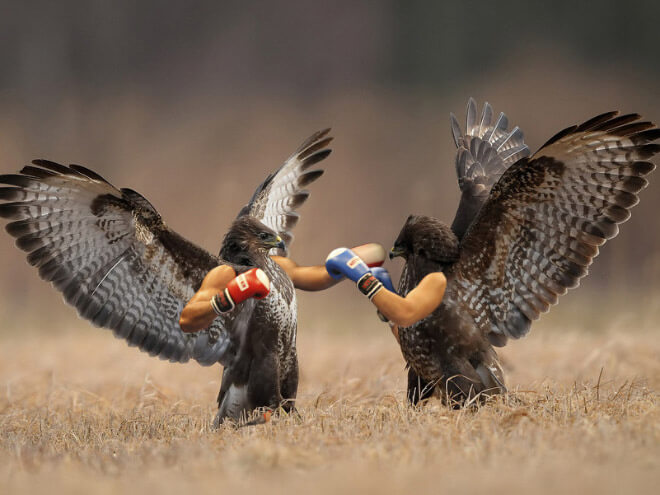
They can also compete in new sporting events. Like boxing.

23 Birds With Arms You Need To See Today. Seriously!

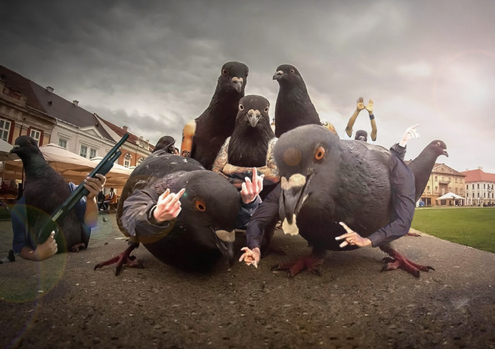
And this flock of gangster pigeons will straight up murder you for a slice of bread.

Birds with arms

So yeah … that’s the zany world of Birds with Arms. Are you not entertained?

Birds With Arms' subreddit top submissions - Business Insider

01/04/2020

Bird 122 – White Tern

Today we’re going to look at one of the most delightful birds, the White Tern (Gygis alba)

Fairy Tern aka Angel Tern (Gygis alba) by Kris Krug. | Animals ...

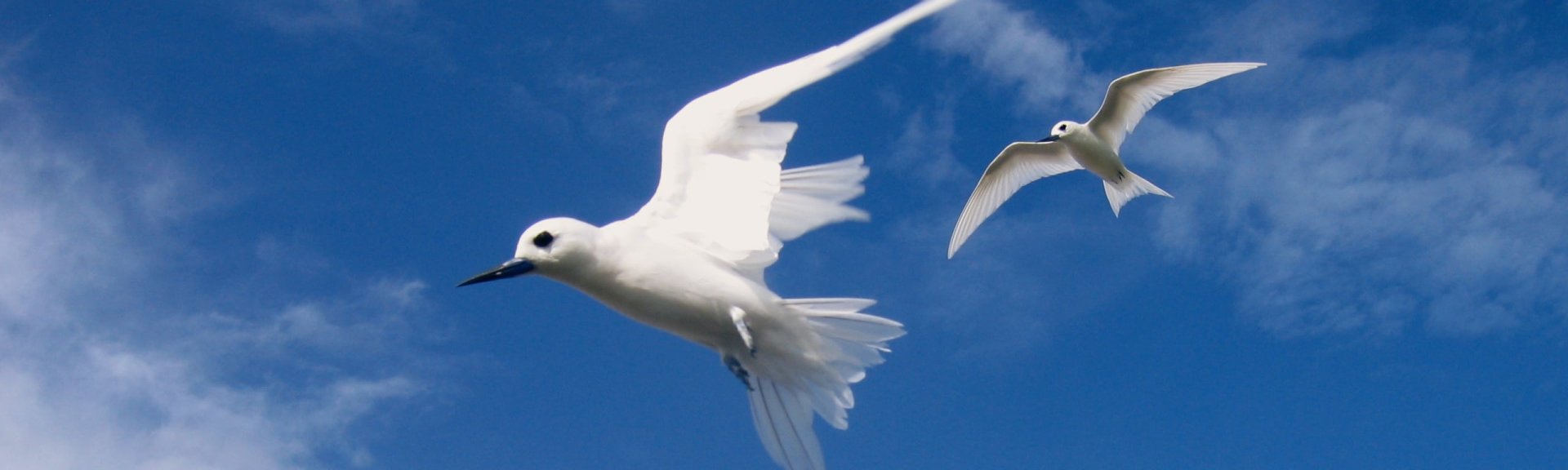
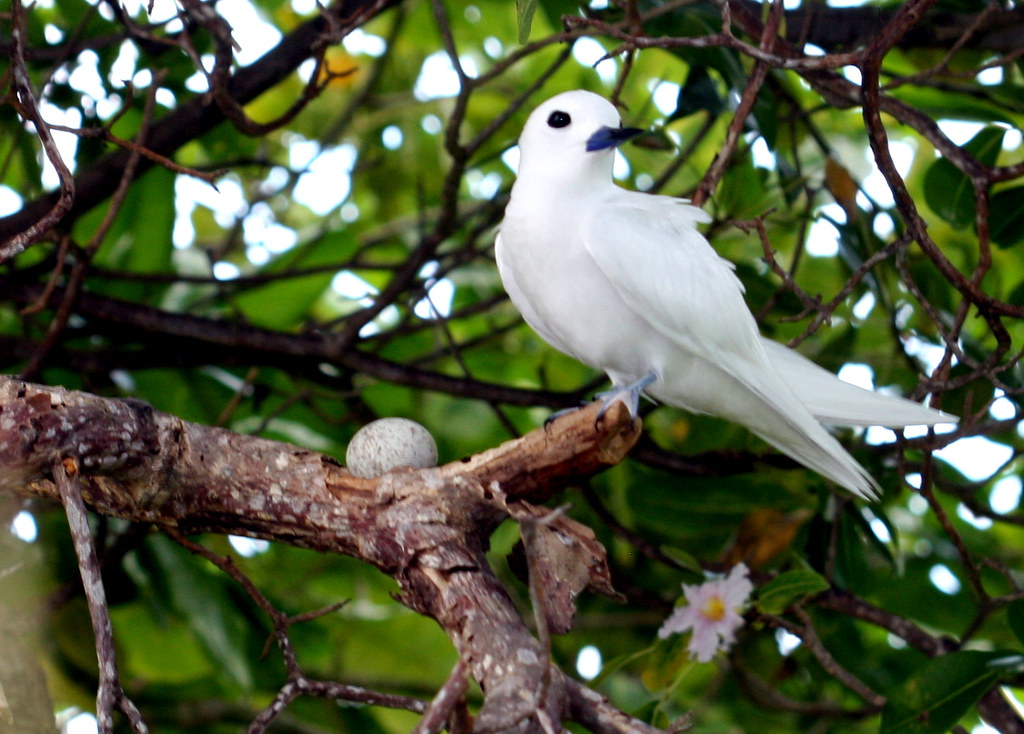
These are a small, elegant Tern, pure white with glossy black eyes. They’re sometimes understandably known as Angel Terns and, to be fair, they’re basically the Doves of the ocean.

White Tern (Gygis alba)

For my money they’re one of the most graceful and peaceful looking birds.

White tern | Pulu Keeling National Park

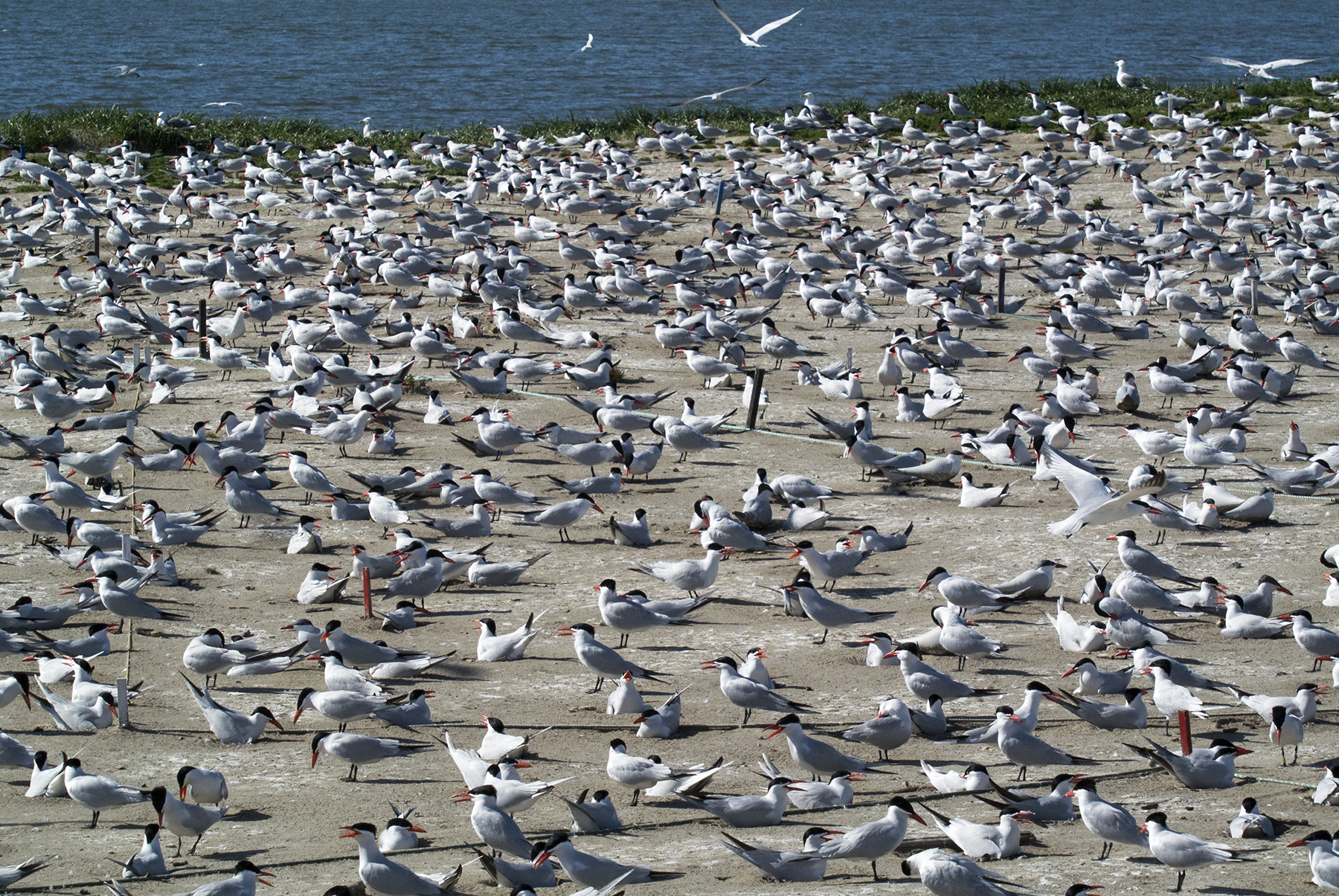
But, the White Tern has a peculiar quirk. As you may know, when Terns nest, they gather into large colonies and lay their eggs on the ground. But the White Tern didn’t want none of that. Seems like a risky enterprise. One second you’re putting your egg on the ground, the next second some yahoo in a four wheel drive is scrambling it. No thank you. 

The Caspian Tern Colony in the Columbia River Estuary - CRITFC

So the Tern said, well, I’ll do what all the other birds do and put it in a tree. Unfortunately the White Tern never really looked into what other birds do and somewhere along the way it missed the memo about “making” nests and instead just literally lays its egg straight onto a bare branch.

White Fairy Tern | I have no idea how this egg stays on the … | Flickr

It finds a little divot or something on the branch and just balances the egg there. Job done. 

Birding Poole Harbour & Beyond: 13 Nov 14 - Back On Dry Land Again

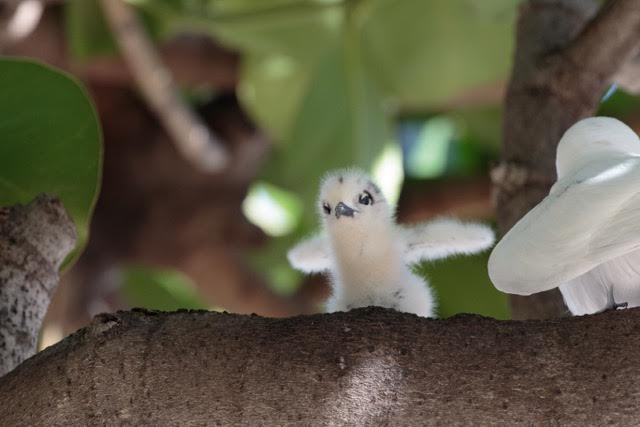
And when the chick hatches it just clings on for dear life until it’s old enough to fly.

Get to know Manu-o-Kū - HUI MANU-O-KŪ

Now, you’re probably thinking this seems like a dumb way to go about raising your young. Surely a stiff breeze would result in many eggs and chicks being lost. And you would be right. Every year babies are frequently lost. Babies like this little chap named Mung-bean, who fell from his nest (branch) on Lord Howe Island after a lazy zephyr passed through. Now he’s being raised on a piece of bark by some human parents.

Image preview

Somehow though, the White Tern has been quite the successful bird. They’re rather common and can be found from Chile and Mexico all the way through the Pacific and Indian Oceans to Madagascar, so I guess they must be doing something right.

Ah, you beautiful little irresponsible parents, I love you guys.

29/03/2020

Bird 121 – Mauritius Pink Pigeon

So last week I mentioned that Mauritius lost all of their native pigeons except for one. Well, this week we look at that little survivor. That’s right, it’s a pigeon bonanza, back-to-back, double-header going into golden point overtime!!

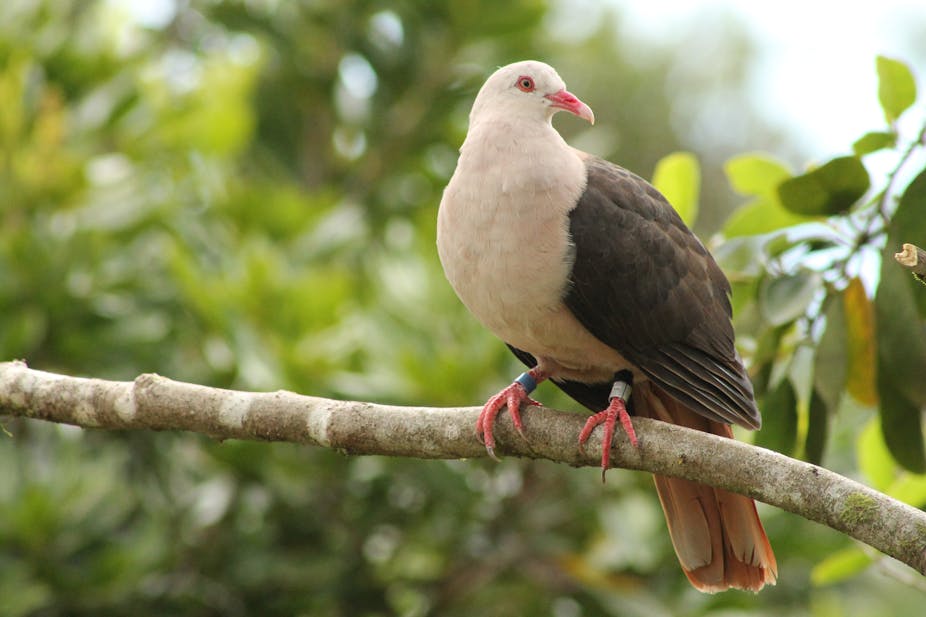
And that pigeon is the Mauritius Pink Pigeon (Nesoenas mayeri). Oh yes, last week did a pigeon for the boys, this week we do a pigeon for the girls. 

Image result for mauritius pink pigeon

On first blush (pun intended) our pigeon looks like most other pigeons, except for its rosy veneer and chocolate wings. But this pigeon is special, mostly because it’s still alive. Like many birds on Mauritius, the Pink Pigeon was shaping up to go the way of the Dodo. In 1991, thanks to the culminating pressures of introduced predators and major deforestation, there were only 10 Pink Pigeons left, making them one of the rarest birds in the world.

Image result for mauritius pink pigeon

A massive effort was made to rescue the bird, including captive breeding programs and supplemental feeding. This was necessary, because of habitat loss they quite often didn’t have enough foraging land to support their population.

Image result for mauritius pink pigeon
A specially designed feeder that prevents other animals from stealing the food.

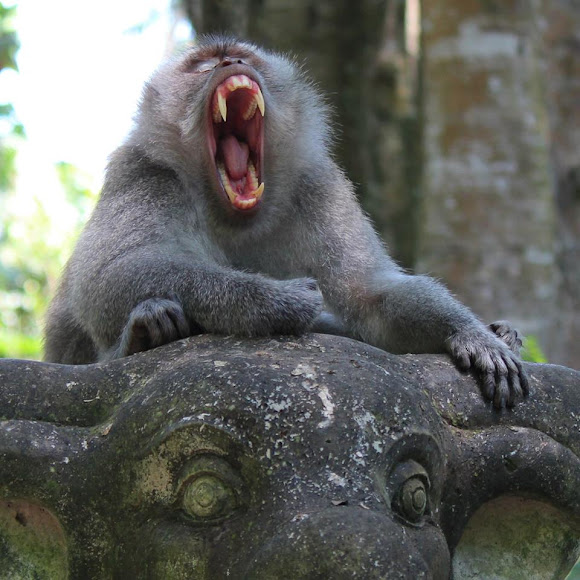
The rescue effort was a success. Today there are around 400 wild pigeons, with an additional captive back up population. While their numbers are still small they are now considered out of danger for the most part. Currently, their biggest threat are introduced predators, like the Mongoose and the Crab-eating Macaque. I’ve got to say that’s pretty lousy, why don’t you eat the thing you’re supposed to eat, the thing that’s in your name, stupid Macaque.

Image result for crab eating macaque
Look at those teeth. You can just tell it’s a jerk.

After having had their native avian life decimated in the 19th and early 20th centuries, Mauritius really got their act together. Through major conservation work they managed to save not only the Pink Pigeon from extinction, but other native birds that were also hanging on the brink like the Echo Parakeet, Mauritius Kestrel and Mauritius Fody.

Thanks largely to the work of the Mauritian Wildlife Foundation, Mauritius is now a world leader in wildlife conservation and a shining example of what can be achieved when, you know, we actually try to do something.

Keep on flappin’ little Pink Pigeon. 

Image result for mauritius pink pigeon

22/03/2020

Bird 120 – Mauritius Blue Pigeon

Okay people, I know you’ve all been waiting for another fancy pigeon, well wait no longer. So, smack dab in the middle of the Indian Ocean is the island of Mauritius, famous as the home of that long dead bird, the Dodo. The Dodo was a giant flightless pigeon. But did you know, Mauritius is (was) also home to another extinct pigeon, the Mauritius Blue Pigeon (Alectroenas nitidissium)

Image result for mauritius blue pigeon

Which, unlike the Dodo, looks more like what you’d expect from a pigeon. But these were no normal pigeons, these were the lions of the pigeon world. You’ll notice that impressive (well, let’s be honest … tatty) ruff of white feathers around its head. These are called hackles, and males would puff them up into great manes when courting the ladies. Male birds also had bare red faces. The combination of a red face, white mane and blue body reminded early explorers of the Dutch flag, so for a while they were known as Pigeon Hollandais.

Image result for mauritius blue pigeon

Not much is known about these birds. They were first described in the early 1600s, but it’s suspected they were extinct by 1830. In that time, only one drawing was ever made of a live bird, and today only three complete skins remain.

Now, if you skip across the pond to the islands of the Seychelles, there is another species of blue pigeon that’s still kicked around, known coincidentally enough as the Seychelles Blue Pigeon; so in all likelihood our one from Mauritius probably looked and behaved in a similar way.

Image result for sychelles blue pigeon

Mauritius actually has a terrible track record when it comes to birds; the Dodo is the most famous casualty, but many of their birds went extinct. Of the five species of pigeon unique to Mauritius, only one remains today. Deforestation and over-hunting for food are usually sited as the reason for the Blue Pigeon’s demise. 

Isolated on islands, animals have a chance to evolve in kooky ways. Do you want to become a red-headed, white-maned lion of a pigeon? I mean, it seems like a strange way to go; but yeah, you can totally do that. But island habitats are small, and if something goes wrong there is nowhere to hide, nowhere to flee to. That’s why it’s so important to protect our island birds. It’s a lesson you’d think we would have learnt by now.

15/03/20

Bird 119 – Gang-gang Cockatoo

Today we’re covering off what has easily been my most requested bird, the Gang-gang Cockatoo (Callocephalon fimbriatum)

And you know what, I get it. It’s like a cockatoo, but it’s a bit special. Most people have seen them about, but they’re not so common as to be an everyday sorta bird. To top it off, they’re also Canberra’s official bird. And when local artist, Laura Bergmann, shared some of her paintings of them with me, I thought it was high time to feature these pretty parrots.

They’re distantly related to Australia’s other Black Cockatoos, but these parrots really went their own way. First up, they’re rather unique among cockatoos because of their sexual dimorphism. Usually it’s pretty hard to tell male and female cockatoos apparent, but not for these guys. The males have that bright red head that really pops against their grey scales.

Image result for gang gang cockatoo

Gang-gangs also have a really fancy crest compared to the other cockatoos, theirs is a lot more frilly.

But maybe the best thing about the Gang-gang is the sound they make. I read a few weeks back that their call is often described as sounding like a cork being pulled from a wine bottle. A few days after that I happened across a pair, and you know what, it totally does. Look out for that the next time you hear one. 

Image result for gang gang cockatoo

I feel the Gang-gang Cockatoo knows where it’s at. It’s trying to talk to you. It’s trying to tell you to have another glass of wine, and then practice mutual preening. I think we should all respect the Gang-gang’s wishes, it’s the least we can do. 

Image result for gang gang cockatoo

08/03/2020

Bird 118 – Mallee Emu-wren

After looking at the Emu, it’s now time to look at their closest relative, the Mallee Emu-wren (Stipiturus mallee)

Unlike their colossal cousin the Emu-wren is a tiny wee little thing. They’re rather similar looking to the Fairy Wrens you’ll be familiar with, except for that special tail of theirs.

And this is where they get their name from, as the six or so filamentous feathers that make up its tail are reminiscent of Emu feathers.

Now, the Mallee Emu-wren is one of Australia’s rarest birds. As their name suggests, they like to hang out on top of Emus. But if there are no Emus around, they also get about in the Mallee. They can be found in two main areas, one in western Victoria and one in eastern South Australia. That is, they used to have two main areas. After the 2014 bushfires in South Australia they were wiped out leaving only a couple of pockets of population in Victoria.

Image result for mallee emu wren

But conservationists got stuck in and started a massive captive breeding program. They used the closely related Rufus-crowned Emu-wren as a surrogate parent for the chicks, and starting in 2018 they were able to introduce the Mallee Emu-wren back into South Australia. Finally a win!

These birds a bit picky though. They don’t like fire, but at the same time they do best in habitat which has burnt between 16 and 30 years ago. So they need intermittent fire…?Damn it guys. 

As the land burns more frequently, and as back burning becomes more essential, it will put increasing pressure on these little fuss-pots.  

We will keep our fingers crossed that conservationists can find a way to hit the right balance and keep these pint-sized beauties around. 

01/03/2020

Bird 117 – Emu

I’m sure way back in school you all learnt about Australia’s important military battles: Gallipoli, Kokoda, Tobruk. But did you ever hear tell of the Great Emu War of 1932?

The one time in our glorious past when we declared war on a bird, the Emu (Dromaius novaehollandiae)

Image result for emu

Nearly 1.5 metres tall, weighing 60Kg, with a top speed of 50Km/h. During the Great Depression 20,000 of these birds were running amok in Western Australia’s pastoral land, eating grain, destroying fences and generally being rude to farmers.

Image result for emu flock

But were we going to take that lying down? No we were not. A group of farmers sent a petition to the Minister of Defence, Sir George Pearce, requesting him to break out the army and deploy machine guns against the pests. And Pearce thought, yes, that seems like a reasonable and measured approach to the problem.

Major G. P. W. Meredith was given command of the operation, who, armed with two Lewis Machine Guns, made his way to Western Australia to show those Emu what was what.

Things however did not go to plan. They attempted to ambush the first group of Emu they sighted, but the birds were too crafty. They all scattered, running off in different directions. Their second attempt also failed when their guns jammed.

Image result for emu war

By the fourth day of the operation Meredith reported that the birds were now organised, he noticed that each group had a lead Emu, six feet tall that would keep watch and warn their comrades if danger approached.

Meredith tried mounting the guns on a jeep, but even so they were unable to keep pace with the Emu and the ride was so rough the gunners were unable to aim. The troops were forced to retreat in shame, having only managing to officially kill ‘a number’ of birds. Meredith later reported:

“If we had a military division with the bullet-carrying capacity of these birds it would face any army in the world.”

Image result for emu head

The soldiers were to return to the field later that year, this time enjoying more success, managing to take down about 1,000 birds. However, when it came out that it had taken some 10,000 rounds to knock out such a small number, and with huge flocks still reaping havoc in the farmlands, the Opposition in Parliament declared the Emu the victors and suggested medals be handed out to the birds.

And you know what, I agree. Birds forever! Go forth my majestic army, go forth and conquer. 

The Emu plague was eventually solved when the farmers starting using better fences…

The Great Emu War of 1932, that one time the Australian Army lost to a flock of birds.

23/02/2020

Bird 116 – Common Potoo

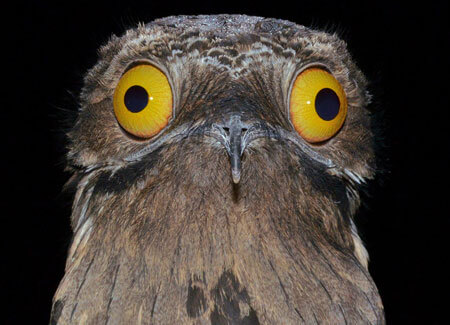
Serious question. Have you ever wondered what would happen if one of those googly-eyed rocks you made as a child came to life?

Well good news, I have an answer, and it’s the Common Potoo (Nyctibius griseus)

Image result for common potoo
Hello there, eyeball man.

If you wanted to know what a bird looked like after you hit it with a frying pan, well … there it is.

Image result for common potoo

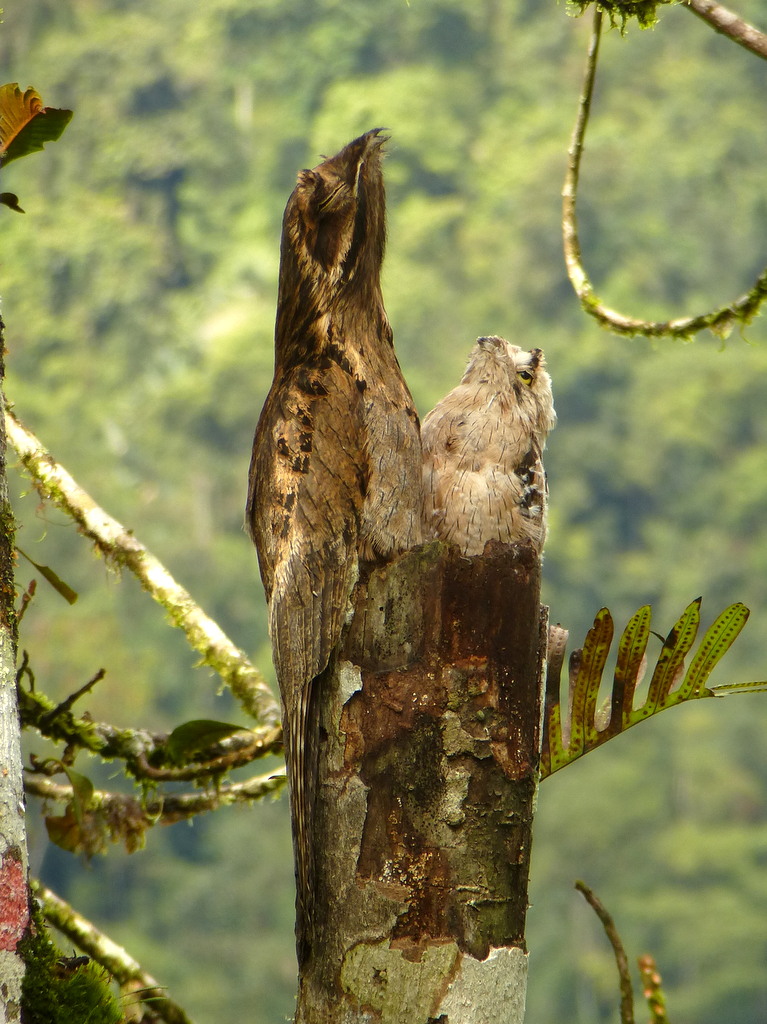
These are a South American bird from the same family as our old friends the Common Poorwill and the Tawny Frogmouth. This fact becomes evident when you see how good they are at hiding. I know right, you wouldn’t think a bird with peepers that yellow wouldn’t be one for blending in, but actually, camouflage is what they’re all about.

Image result for common potoo
Yes, child. Learn from your mother.

During the day they hang out, pretending to be a tree branch, not moving a whisker no matter what happens around them. Then when night comes, they use those big old eyes to go a hunting.

Image result for common potoo

These guys mainly dine out on insects. But I know what you people come here for, and it’s birds looking like freaks, and the Potoo delivers on that.

Image result for common potoo

It’s got all sorts of nonsense going on. Just go with it. 

Image result for common potoo

No judgement, it’s comfortable with who it is, as a log-imitating, googly-eyed bird of the night.

I don’t know if that bird has taken a sweet hit of something, or if it’s ready for night hunting, but dang those eyes dilate!

16/02/2020

Bird 115 – White-booted Racket-tail

Okay guys, have I got something super special for ya’ll today.

I would like you to meet a dear friend of mine, the White-booted Racket-tail (Ocreatus underwoodii)

Image result for white booted racket tail hummingbird

I feel like I don’t need to say anything about this bird. Because just from looking at it, you can see it basically sells itself.

Image result for white booted racket tail hummingbird

It’s a Hummingbird, with booties. 

God. Dang. Booties. They’re technically called ‘leg puffs’, which is possibly even more adorable.

Image result for white booted racket tail hummingbird

The two males above are engaged in a territorial face off. They need to decide who has the fluffiest leg puffs. It’s a serious situation, guys.

I can’t even! Not only that, but it has a sweet little racket tail as well. Only the males have the fancy tails, which they use for courtship dances. But both males and females are endowed with leg puffs.

Image result for white booted racket tail hummingbird

LEG PUFFS.

They’re like tiny gymnasts with super fluffy leg warmers.

It’s another face off! Cower before my fluffy legs, fool.

Just try to keep it together people. Leg puffs. On a Hummingbird.

This has been Bird of the Week.

09/02/2020

Bird 114 – Hoatzin

So here’s the problem: statistically speaking, you, my dear subscriber, joined Bird of the Week sometime after Bird 82. Over 50% of subscribers have joined since then. And I know, I know, that means there’s a lot of fab fowls you’ve missed out on. What was Bird of the Week 36? Who can even say? Only 25 people ever got that email. Well good news: today I have finally, finally, launched an online archive of every bird we’ve ever featured. Now you can explore them at your leisure. Or not … I don’t know what you people do in your spare time.

To mark this milestone I am going to do what I have never done before, and re-visit an old bird (unless you count the common pigeon, which I’ve technically done four times and will do again – what of it). We’re going to look at a very special bird, the original bird, Bird of the Week 01 — the Hoatzin (Opisthocomus hoazin)

Image result for hoatzin

You can tell by looking at this bird that there’s something strange going on. I mean … it looks like a freak. And you would be right. The Hoatzin is one of the most unique birds, nay, animals in the world. So much so, that it is the only member of its Order, Opisthocomiformes. (There is literally no other animal alone in its taxonomic order. That would be like if there was only one mammalian carnivore in the world).

So why are they strange? First up, get a load of this.

That’s right, their babies have claws on their wings. It’s an evolutionary throw back from when they were dinosaurs. Hoatzin babies are super inquisitive and use their claws to crawl about the vines and branches of their jungle home. They lose the claws when they become adults, which is a bit of shame, but hey.

Next, the Hoatzin has a rather unique diet. It’s one of the few birds that feeds primarily on leaves. Most animals can’t handle that kind of diet. Those that can are mammals with complex stomach systems to break up the super fibrous, low nutritious food, like cows and sheep and whatnot. Well, the Hoatzin has a digestive system more similar to a cow than other birds, they use bacterial fermentation and have complex multi-chamber lower intestines to break it all down. 

Image result for hoatzin diet

Their guts are so strange and large that they actually displace some of their flight muscles, making them rather clumsy.

Also, as a result of their diet, their poops smells a lot like cow dug, which is how they got their other common name, the Stink Bird.

Yes indeed, the Hoatzin is a bizarre beast, which is why it got to be Bird 01.

That was a fun throw back. And now all the birds are there for you to enjoy.

Until next time this has been, and will always be, Bird of the Week.

02/02/2020

Design a site like this with WordPress.com
Get started