Bird 84 – Jamaican Mango

Today I would like to introduce you to something a little special: The Jamaican Mango.

Seafood Mango Stir-Fry Recipe

Like all mangoes, the Jamaican Mango is a tropical stone fruit renown for it sweet flavour and juicy texture. Fun fact, the mango should be extinct, as the megafauna that used to eat and disperse its giant seeds died out thousands of years ago. And yet, here it is.

The Jamaican Mango (Anthracothorax mango) is also a species of hummingbird native to Jamaica.

Image result for jamaican mango bird

They’re a medium sized, rather beautiful hummingbird with purple cheeks and a metallic sheen, as you can plainly see.

The genus of hummingbird they belong to, Anthracothorax, contains six other hummers, and they’re all collectively known as Mango Hummingbirds. You got the Green Mango, the Antillean Mango, the Black-throated Mango … you get the idea.

Related image

Like me, you might now be wondering why these birds are called mangoes. Well, after about a week of digging around the internet, I finally found, buried deep in the Smithsonian Library archive, a paper titled, ‘Eleazar Albin in Don Saltero’s coffee-house in 1736: how the Jamaican Mango Hummingbird got its name‘. I know right, I thought it was the best title of any academic paper I’d ever read as well.

So here’s the story. In England, in 1736, this guy, Eleazar, was in a coffee house (presumably owned by the aforementioned Don) studying two bird specimens. One was our Mango, the other was an Indian Golden Oriole (Oriolus kundoo).

Way back in the day, the Golden Oriole was also commonly known as a ‘Mango Bird’, because they were actually associated with Mango trees. It seems that at some point Eleazar mixed up his notes and the name got applied to the Hummingbird by mistake, and it just kinda stuck… To the extent that every other Hummingbird in the same genus of Anthracothorax is also now known as a Mango too. What makes it more amusing, is mangoes weren’t even introduced to Jamaica until 1782. So even though the mango in the bird’s name is the same as the fruit, it’s only because of a series of mistakes that it retains it today. Yet another gift from a blundering white dude; whoever said colonialism gave us nothing? 

And that’s the story of the Jamaican Mango.

Related image

Jamaican Mango: more than just a fruit.

07/07/2019

Bird 83 – Peregrine Falcon

If I was to ask you, what’s the fastest animal, you might say the Cheetah. And then I would have to slap you in the face. Now, don’t get me wrong, those cats can move at up to 120Km/h, which is pretty dang fast. But a Cheetah ain’t got nothing on this bird.

The Peregrine Falcon (Falco peregrinus

Image result for peregrine falcon

These little guys can hit speeds of 320Km/h without even trying when they go into their attack dive. The fastest ever recorded speed was around 390Km/h, that’s over 100m in a second. You get hit by that and you’re gunna get messed up. So how do they do it?

The Peregrine is maximised for speed. Obviously, everything about their shape is tweaked and streamlined to minimise wind resistance to get those high speed. 

Their attack dive is known as a ‘stoop’.

Those are some nice lines. But they’ve also evolved to get over all the bad things about going fast.

Problem 1) How do you keep your eyes open when air is hitting your face at that speed? They have a third transparent eyelid that allows them to see while wind is rushing past.

Problem 2) The pressure created when travelling that fast makes it impossible for normal animals to breath. So they have a special bone in their nose that breaks up the air flow and allows them to breath while travelling at high speed.

Image result for peregrine falcon beak

Problem 3) G-force. Somehow, and I don’t know how, they are able to withstand up to 25Gs when they pull out of their death dives (actually I lie, they can do it because of the physical relationship between volume and surface area, but its more interesting to say it’s a mystery. Mysteryyyyyyyyy!!!).

All of these adaptations have made them quite successful, and you can find Peregrines on every continent that isn’t a frozen wasteland. They even do quite well in cities, not least because that’s where their favourite prey lives.

And at this point it becomes heart-breaking, for the Peregrine’s favourite prey is also one of the darlings of Bird of the Week – the Pigeon.

Nooooooooooooooooooooooo, Pigeon darling!!

But I guess we can forgive them for that.

30/06/2019


Bird 82 – Nightingale

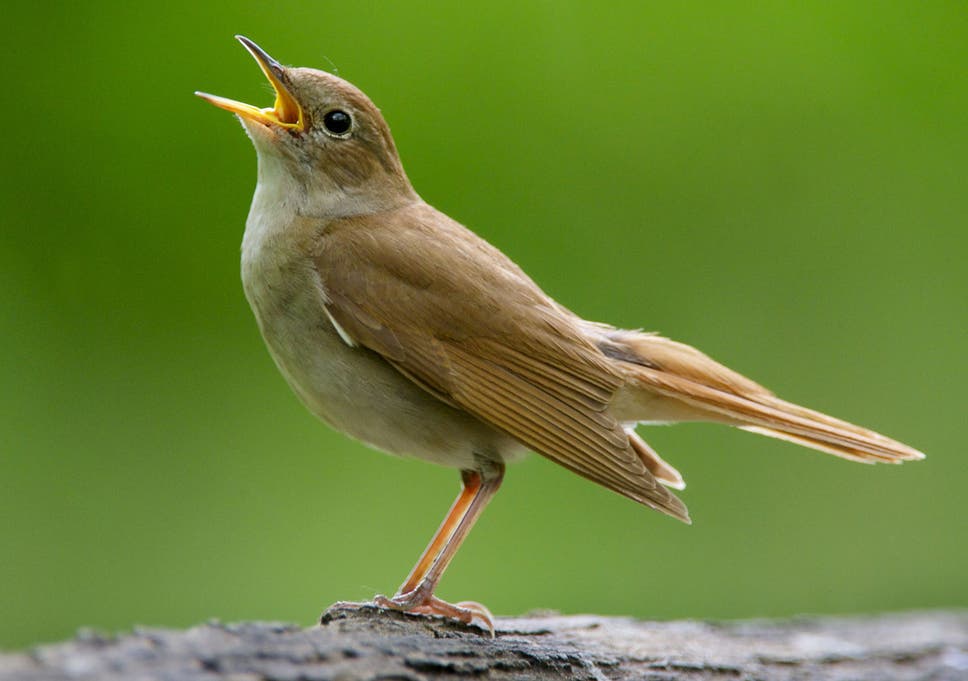
Sometimes there are birds that really work their way into the arts. And when it comes to literature, I can’t think of a bird more famous than the Nightingale (Luscinia megarhynchos)

Image result for nightingale

To look at a Nightingale is to be unimpressed. They are a plain, grey-ish, brown-ish looking bird, from the Flycatcher family. 

So the Nightingale is famous for exactly one thing, and that’s singing … during the night, as its name suggests. It’s hard to describe exactly what they sound like, so if you have the inclination, and the time, here is a  three hour video of a Nightingale singing.

Three hours of Nightingale singing, for such a low price, how could you possibly say no.

It was originally believed to be the female that sung, but it is now known that only unpaired males sing as a way to attract a mate.

Image result for nightingale

The impressive vocal range, and their strange habit of singing at night served as inspiration for many writers. They were usually used as a symbol of creative expression and have featured in the works of Homer, Virgil, Shakespeare, and most famously in Keats’ poem, Ode to a Nightingale. But my favourite appearance of the Gale is in Oscar Wilde’s fairy tale, The Nightingale and the Rose.

In the story, a Nightingale scarifies its life by singing all night while pressing its heart into a rosebush thorn so a red rose may bloom (apparently that’s the only way to get a red rose: with the blood and song of a Nightingale, go figure). A love-sick student needed to find a red rose to entice his sweetheart to dance with him. And the Nightingale, overhearing his woe, decides that to sacrifice its life for love would be a worthy deed. In the end, the girl dances with a wealthy man’s son, because he sent her jewels. What can I say, girl was a gold digger. Meanwhile, the rose gets thrown in the gutter and the Nightingale’s sacrifice goes unnoticed. It’s a heartbreakingly beautiful story.

Related image

Funnily enough, in the same collection of fairy tales there’s also a story about a Swallow that sacrifices its life to do a good deed that goes unnoticed… Guess Oscar Wilde felt birds were more noble and pure than us people.

And you know something? I think he was right. 

Image result for nightingale

23/06/2019

Bird 81 – Pink-necked Green Pigeon

As long time subscribers will know, here at Bird of the Week we have a deep, undying and highly normal appreciation for Pigeons, (see Birds of the Week: 06, 24, 32, 34, 40, 41, 48, 51, 61 and 72). 

So the time has once again come to shine a light on a Pigeon that needs appreciation. And this week it’s the Pink-necked Green Pigeon (Treron vernans)

Image result for pink-necked green pigeon

I don’t need to tell you that this is an especially handsome pigeon. It’s all about the pastel feathers.

I also really like a bird that does what it says on the label. How do you identify this bird? Quite simple, it’s a green pigeon with a pink neck.

Image result for pink-necked green pigeon

Unless it’s female, then it’s just a green pigeon doing a great little camouflage job.

File:Treron vernans female - Kent Ridge Park.jpg - Wikimedia Commons

These fine columbiformes, live in South East Asia where they spend most of their time stuffing their faces with fruit.

Image result for pink-necked green pigeon

And sometimes they give their babies hugs.

Image result for pink-necked green pigeon

What a bird! What a Fancy Pigeon!

16/06/2019

Bird 80 – Common Green Magpie

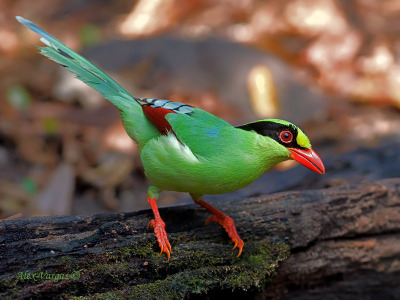
I think it’s time to take a look at the Magpie. But not just any old common Magpie, no, no. For the Magpie you all know and love check out Bird of the Week 11. Today I want to talk about the Common Green Magpie (Cissa chinensis)

Image result for common green magpie

And as you can see, there ain’t nothing common about this Magpie. They are a cheeky little bird that belongs to the same family as Crows, the Corvidae. But as is plainly evident, they’re rather a bit more flamboyant than the humble Crow.

The common green magpie is anything but | Magpie image, Wildlife  photography, Bird species

What is particularly neat about them, though, is their magic feathers. You may notice that the Common Green Magpie isn’t always green, sometimes it’s blue.

The thing is, they have feathers that change colour. Much like if we hang out in the sun for too long our skin turns red. If these little guys hang out in the sun for too long their feathers turn blue.

Magic!!!

Common Green-Magpie, 蓝绿鹊, 藍綠鵲, Cissa chinensis, ヘキサン, GAGA… | Flickr

But no, not magic. Science. You see, the green colour in their feathers is made by two processes: a yellow pigment made out of carotenoids, which they get from their diet, and a blue made by microscopic structures in their feathers which scatters blue light. (You may recall from Bird of the Week 42 — the Bluejay, that this is how all birds make blue feathers, via light scattering instead of pigments). But anyway, yellow + blue = green.

Turns out the carotenoid pigment breaks down in sunlight, leaving behind the blue to shine through. In order to maintain their green colour, they need a steady diet of carotenoids, and to minimise their sun exposure. So if you ever see a Common Blue Magpie, you’ll know it’s been sunbathing for too long.

Tanning is skin cells in trauma!

10/06/2019

Bird 79 – Shoebill

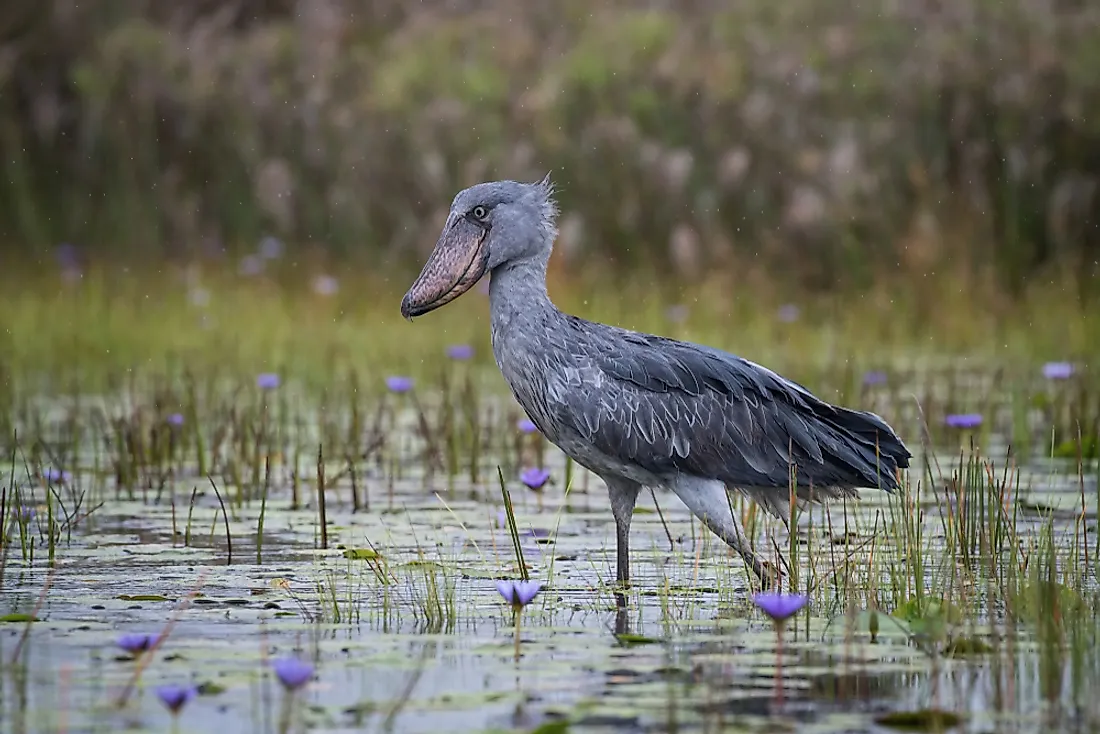
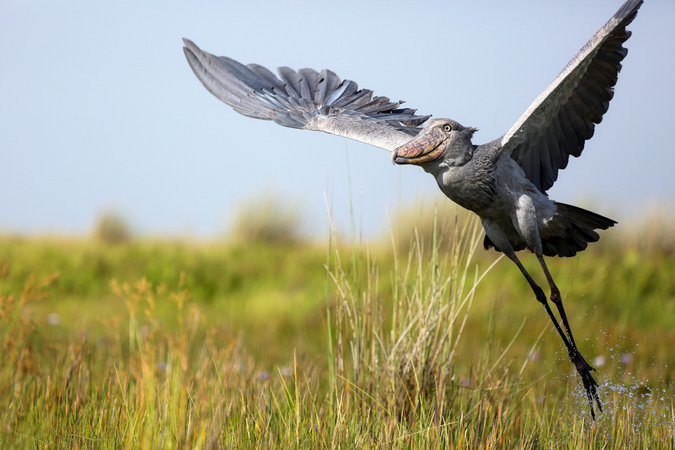
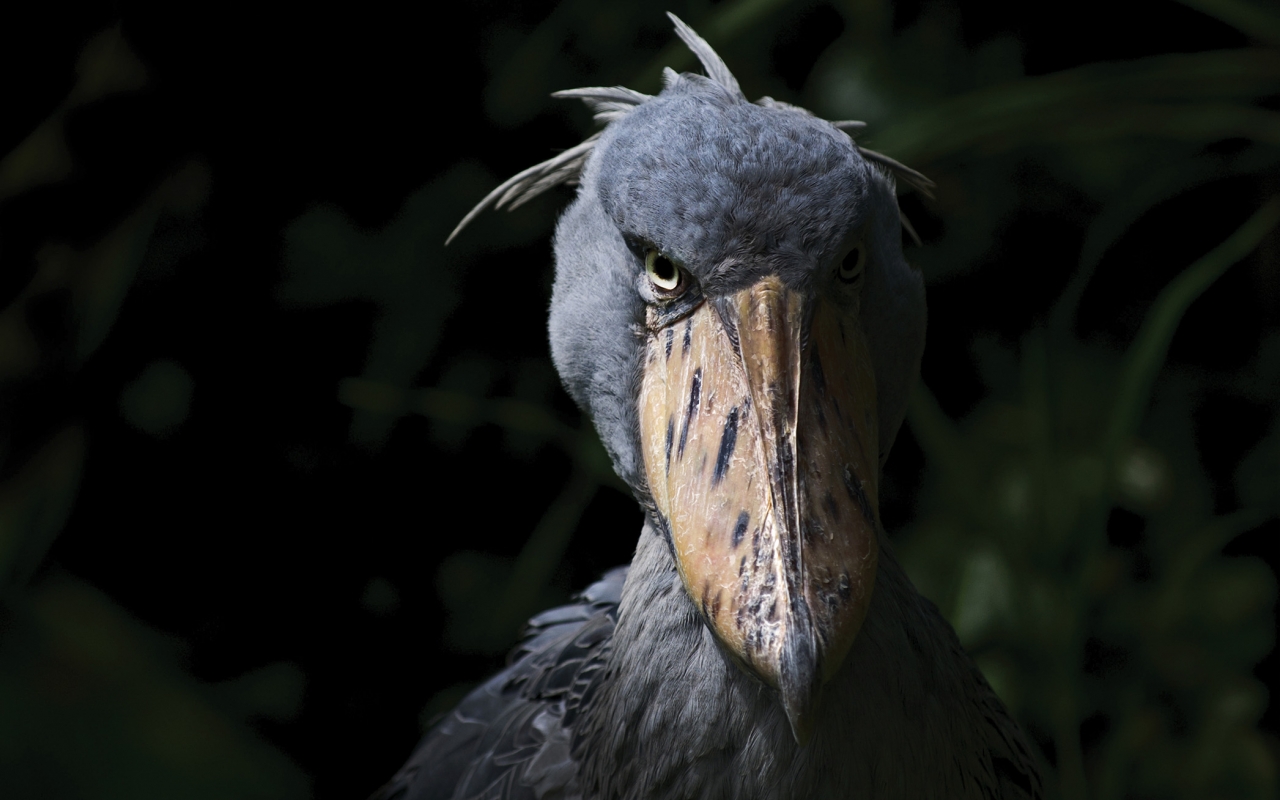
Now for maybe one of the most striking birds: the Shoebill Stork (Balaenicepts rex)

Image result for shoebill

T-rex it may not be, but they are fittingly sometimes referred to as Dino birds, and as we shall see, they are also stone cold killers.

Related image

And with a face like that, you know you don’t want to mess with it.

But let’s clear up some things. Technically, it isn’t a stork at all. Its part of the order Pelecaniformes, which, unsurprisingly, means it belongs to the same family Pelicans do. I mean, just look at that beak and you’ll understand why! 

Image result for shoebill beak

But what this bird lacks in storkness, it makes up for in stalking. Shoebills are famed for being one of the stillest and most silent of birds. The will very very very slowly sneak up on their prey, maintaining the same pose for great lengths of time before moving. And then they strike with that beast of bill. It’s actually sharp enough to decapitate young crocodiles, so that’s a thing.

Image result for shoebill

And they’re also not great parents. The Shoebill always lays two eggs. But only one chick ever makes it to maturity. The second chick is just insurance in case the older one dies. Usually when the older chick reaches a certain age it will start picking on the younger one, and eventually the parents just give up on the weak one and let it die.

So just remember, every adult Shoebill killed its sibling while it was a chick.

Image result for shoebill beak

Stone cold.

01/06/2019

Bird 78 – Greater Roadrunner

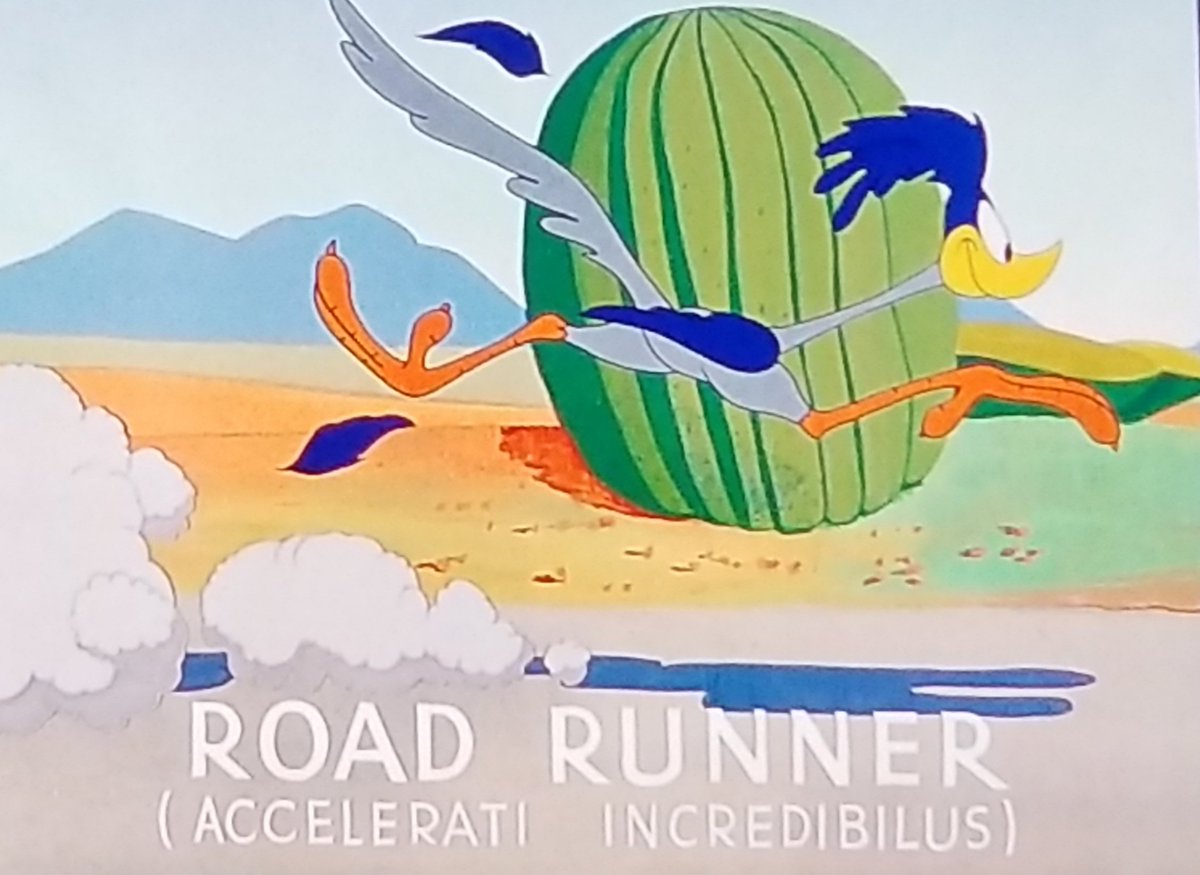
Today, let’s take a little look at a bird from everyone’s childhood. The Roadrunner:

Related image

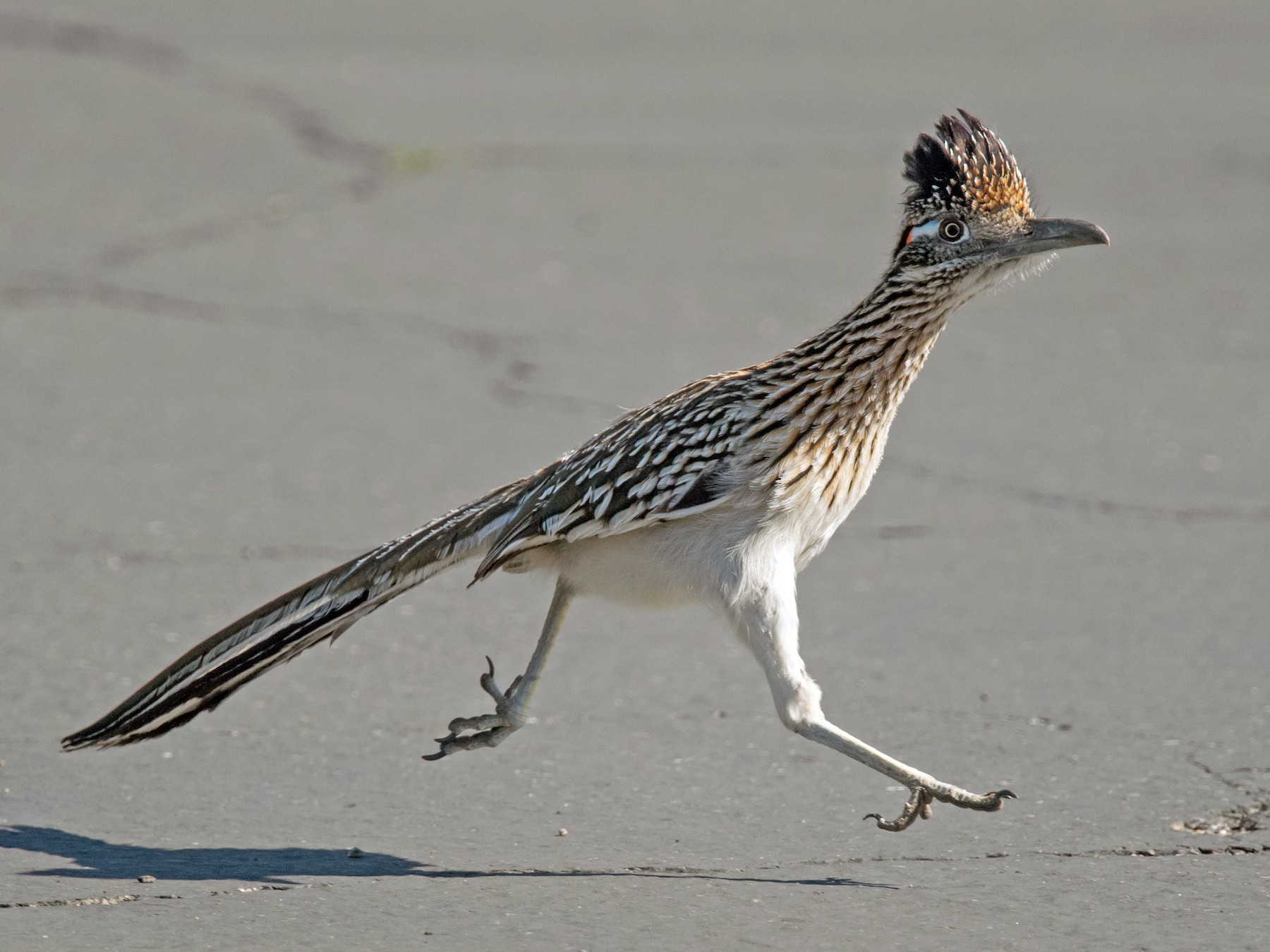
Would you believe the Roadrunner is indeed a real bird? Actually, there are two species, the Lesser and the Greater Roadrunner (Geococcyx californianus). I know right, I was disappointed its taxonomic name wasn’t Accelerati incredibilus, too. More lies from our childhood.

Greater Roadrunner - eBird

Roadrunners are interesting little critters. For starters, they belong to the order Cuculiformes, which means it’s a type of Cuckoo. But here’s the real story, Cuckoos are famous for exactly two things: Swiss clocks, and laying their eggs in other birds’ nests. Roadrunners don’t feature in clocks, and of the 149 species of Cuckoo only 59 are actually deadbeat parents. All the others raise their young themselves. The Greater Roadrunner is one such Cuckoo.

Image result for greater roadrunner

So on reflection they really fail at the whole Cuckoo thing. But what do they do?

They can fly, albeit weakly; but as their name suggests, running is what they’re all about. The fastest clocked Roadrunner came in with a running speed of 42km/h. Which isn’t too shabby; not as fast as an Ostrich (which is like a million times bigger so unfair advantage), but it does make them the fastest bird on two legs that’s still capable of flight.

Interestingly, Native American’s believed they warded off evil spirits. The Roadrunner leaves an X shaped footprint, which makes it hard to determine which direction it’s heading in. Apparently that meant it could lose evil spirits, so many tribes used an X glyph for spiritual protection.

Is it coming or going? Who can say?

For all that though, the old cartoons did get one thing right. The Coyote is a natural predator of the Roadrunner. Although I suspect in real life, their kill rate is a little higher…    

Image result for wile e coyote acme

Next week the Bird will return to its usual schedule, until then I wish you good bird.

24/05/2019 

Bird 77 – Keel-billed Toucan

This is a bird that has been a long time coming. It’s Toucan time. Keel-billed Toucan time to be specific (Rampastos Sulfuratus). And I have to be specific because there are 43 different species of Toucan. Will some other Toucans get a week later? I mean, who can say?

They belong to the order Piciformes, which on the family tree of birds makes Woodpeckers their closest relatives. Toucans come in a wide range of colours and sizes, but our Toucan looks a little something like this:

Let’s not mince words, they are one bizarre bird. For starters it has blue feet, but really it’s that crazy beak that does it. Why do they call them keel-billed? I mean, who can say?

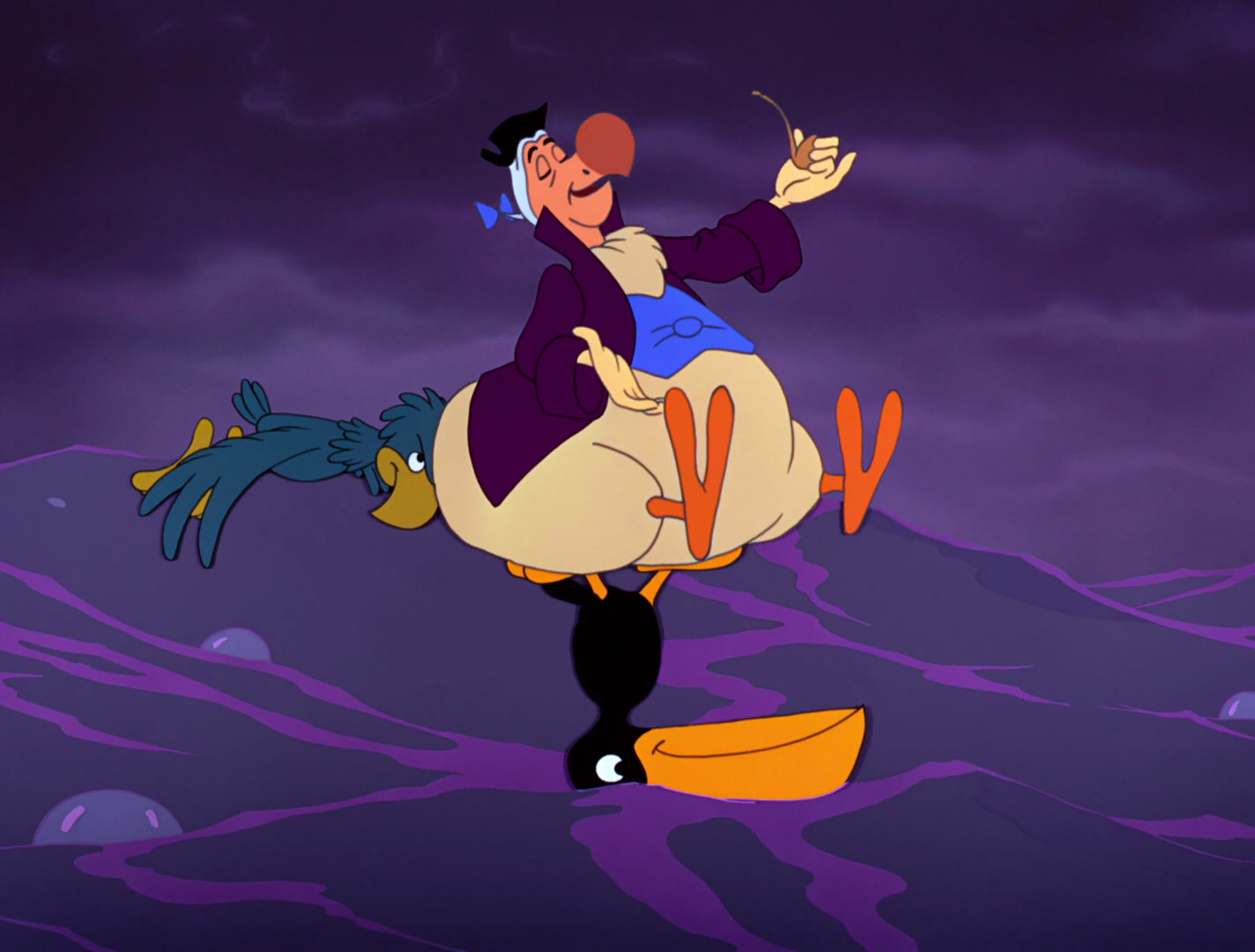
Image result for dodo alice in wonderland

They’re beaks make up about one third of their total length, which means they’re nearly more beak than bird. And if you look closely you’ll see their beaks are actually serrated. 

How about that. For a while people to believe Toucans were carnivorous and used their beaks for fishing. Turns out they exclusively eat fruit. For its size the beak is also quite light, as it’s made out of keratin (the stuff hair is made of).

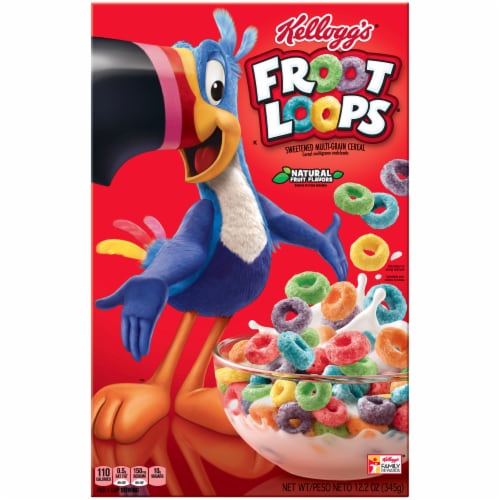
What I like about Toucans, though, is how they worked their way into popular culture … mainly in advertising campaigns. We all remember Toucan Sam, right.

Related image
Now, not only does Sam have hands, which is strange, but he also has three fingers and a thumb. And I mean, gees, we all know birds have three digits, not four. Amateurs!

But that brings us to this week’s sponsor: Froot Loops. Froot Loops, start your day the right way with a literal bowl of sugar, now with added corn flower!

But I think my favourite depictions of Toucans were those drawn by naturalist John Gould in the 1850s.

They were so good he even got a Toucan named after him, Gould’s Toucanet. His collection of every Toucan species is what brought the birds to popular attention. So I’ll leave you with his one of the Keel-billed.

19/05/2019 

Bird 76 – Superb Fairywren

I feel it’s time for an Australian favourite. The Superb Fairywren (Malurus cyaneus).

Image result for superb fairy wren

Most of us will be familiar with these super cuties. They bounce about, rarely pausing for more than a couple of seconds as they flit in and out of underbrush.

Related image

They usually live in small social groups and will defend a tiny territory from other wrens and small birds.

The males have a sweet little courtship practice, where they bring yellow leaves and petals to potential suitors. Apparently they think it makes their blue feathers pop.

They even bring leaves in the non-mating season. I guess they just like giving gifts.

But the most interesting thing about the Superb Fairywren is the high drama that takes places under the cover of night. For you see, Fairywrens mate for life, and through the day they live happily together. But in the evening, the lady wrens sneak away to mate with rival males. They’re a type of animal which is socially monogamous but sexually promiscuous.

They’re the swingers of the bird world. 

Related image

Who knows who those babies belong to. Such cheating little cuties.

Apparently cheating is good for creating greater genetic diversity, so you know, I guess they’ve got an excuse.

12/05/2019 


Bird 75 – Indian Paradise Flycatcher

Today I’ve got a bird which is all about that tail.

The Indian Paradise Flycatcher (Terpsiphone paradisi). And you know with a name like that, it’s going to be fancy. And my word, is it fancy.

Image result for indian paradise flycatcher

It’s a smallish bird, of only about 20cm. But what it lacks in size it makes up for in tail length. Its tail can grow up to 30cm long, so it’s really more tail than bird.

Image result for indian paradise flycatcher

It also comes in two flavours, the rufous (as seen above) and the white:

Image result for indian paradise flycatcher

Just like with Peafowl though, only the males mess around with all that tail action. The females are much more sensible, albeit less eye catching.

They’re a bird where the name says it all. They live in India and catch flies. And, they are also coincidentally somewhat related to the actual Birds of Paradise from Papua New Guinea.

Related image

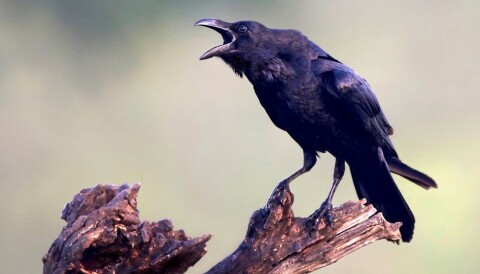
While they’re in different taxon families, (the PNG Paradise birds belong to the Family Paradisaeidae, while our Paradise bird belongs to a Family know as the Monarchs) they are both in the same Superfamily, Corvoidea — the Superfamily is so named because it’s also the one Crows belong to.

Image result for raven

That sure is one diverse family reunion those birds get to have.

What does all this mean? Nothing really … I just need some filler for the end of the email.

Birds!

05/05/2019


Design a site like this with WordPress.com
Get started