Bird 143 – Great Horned Owl

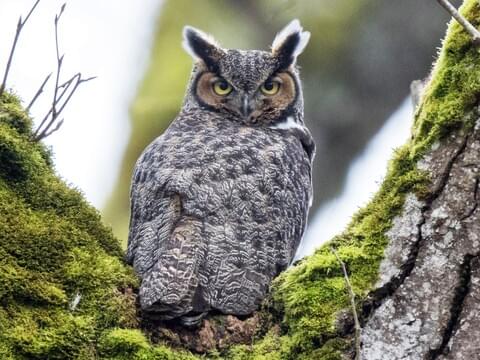
Today we have a bird from a family I don’t feature very often: the owls, specifically the Great Horned Owl (Bubo virginianus).

And really, I don’t know why I don’t talk about owls more, they’re pretty cool. These guys in particular. They’re the largest owl in North America and are highly adaptable, ranging from Alaska all the way down to Central America.

And they’ve got horns, or ears … or some sort of feather tuft thing going on up there. No-one knows why they have these tufts. They’re not ears, and they don’t seem to do anything. But I’m fine with that. No-one ever asked John Howard why he thought it was a good idea to grow those eyebrows, and this owl was like, yeah, I’ll have a slice of that action.

It’s uncanny.

Now, you may be familiar with the fun fact that owls can turn their heads the whole way around. Well, bad news, they can’t. They can only manage 270 degrees. Which is still pretty impressive. If you turned your head 270 degrees, you would be dead. They can do it without dying thanks to two fancy features. First, you, my dear primate, have only 7 vertebrae in your neck. Owls have 14, making them much more flexible. Second, owls also have specially enlarged grooves in the vertebrae for their blood vessels to rest in so that when they do an extreme head-turn they don’t pinch or tear the blood vessels and give themselves a stroke by accident. 
Great Horned Owl Identification, All About Birds, Cornell Lab of ...

Why would an owl need this adaptation? Well, while we certainly can’t to turn our head like we’re possessed by the devil, we can hold our head still and move our eyes around in our sockets. Owl eyes are fixed in place with a bone called the sclerotic ring, so if they want to look somewhere else, they literally have to move their whole face. As a benefit though, you won’t get any side-eye from an owl.

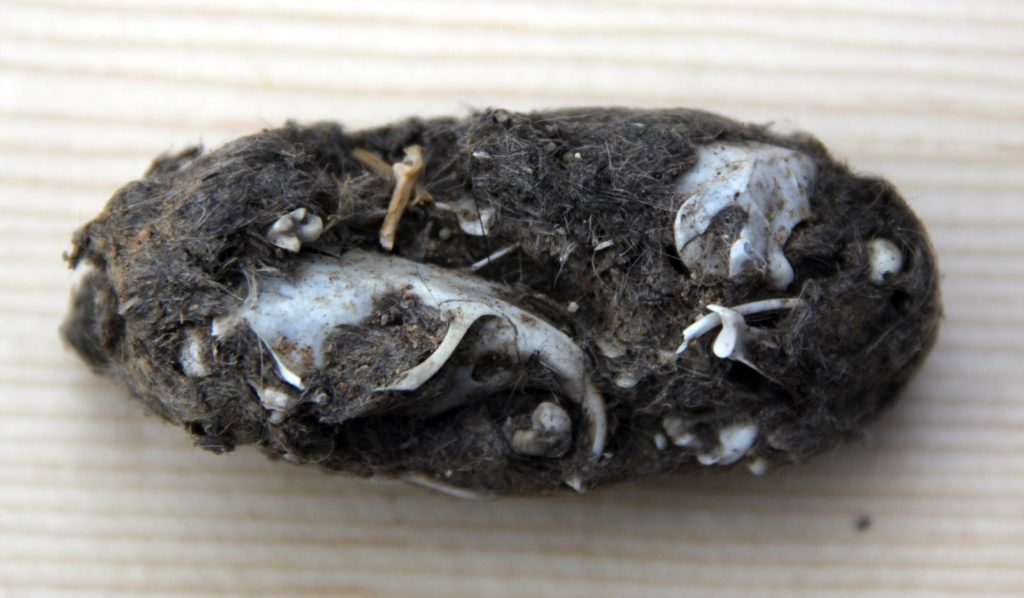
Another fun thing about owls: they’re hunters of the night, feeding mainly on rodents and vermin, which they swallow whole. Fur and bones though, they don’t digest so much. Instead, they throw it back up as a hairball, boneball, mucus covered thing, known as an owl pellet. Which sounds delicious.
Owl Pellet Dissection - Science World

Owls: they be crazy, yo.   

19/07/2020
Bird 142 – Crimson Rosella

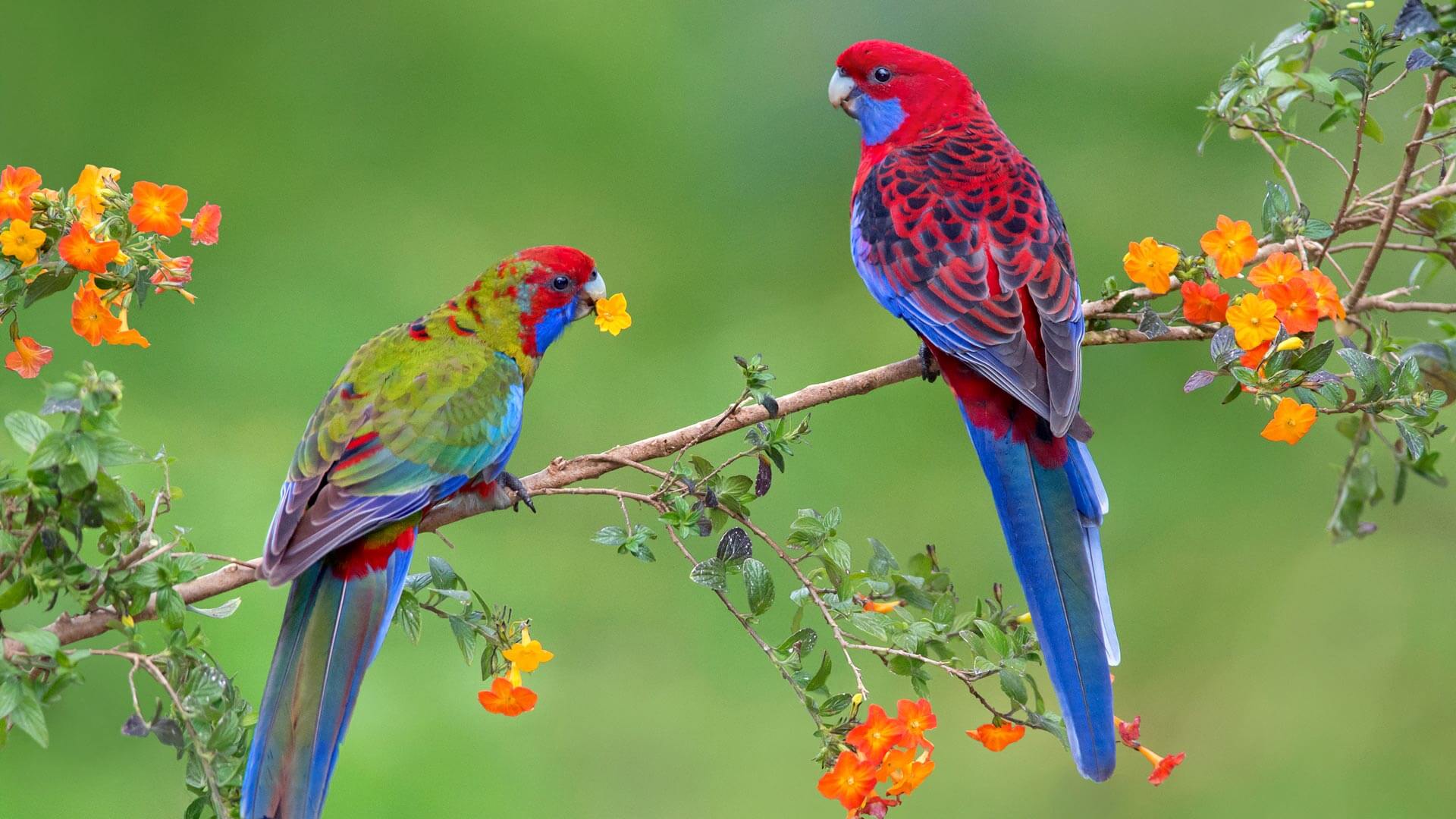
Today I thought we’d take a look at one of my favourite Canberra birds, the Crimson Rosella (Platycercus elegans)

Australian Birds - Crimson Rosella

A common and gorgeous sight here in Canberra, what with their brilliant red plumage, cute little blue cheeks and delightful chattering sounds they make. I defy you to see one and not feel uplifted. Now, I was pretty familiar with these birds before I moved to Canberra, but not long into my residency here, I spotted this green bird.

I’d never seen a parrot like that before, and it drove my mad for a couple of weeks trying to figure out what it was, until I learnt it was a Crimson Rosella too. This is what the babies look like before they take on their red colouring. The lack of black scalloping on their wings, which is distinctive to all Rosellas, also threw me through a loop. No doubt it’s a camouflage strategy the young use.

Snack time for the crimson rosella by Microsoft | Wallpapers ...

The Crimson Rosella also hides in other ways. Have you ever come across a Yellow Rosella or an Adelaide Rosella? For a long time these birds were thought of as distinct species, but in recent years it’s been found that they’re just Crimson Rosellas in different clothes. The Yellow Rosella lives mainly along the Murray River, and the Adelaide Rosella seems to be a hybrid that has sprung up due to Yellow and Crimson ones interbreeding. While their colours are different, the blue cheek they all share is the clue to their common heritage.

That’s all a bit of fun, but the thing I love about the Crimson Rosella is that they’re one of the most compassionate birds getting around. When raising chicks many birds use the ‘heir and a spare’ strategy. They’ll have two chicks, but put all their energy into raising the eldest and only bother with the younger if something happens to the first one. Usually this means the younger one will be killed by its sibling at some point. We saw previously that Shoebills do this.

Not so with the Crimson: not only are the parents inscrutably fair, making sure all their children get an equal portion of food, but if an older chick thinks the younger ones aren’t getting enough it will feed them itself. Crimson Rosellas also mate for life and form strong pair bonds. There was a recent report of a Crimson Rosella stuck in a hole in Canberra. No-one knows how it got in there, but when rescuers arrived, they found its mate had been feeding it for several days to keep it going while trapped.

So yes, they’re a super sweet looking bird with a personality to match.

11/07/2020

Bird 141 – Madagascan Pochard

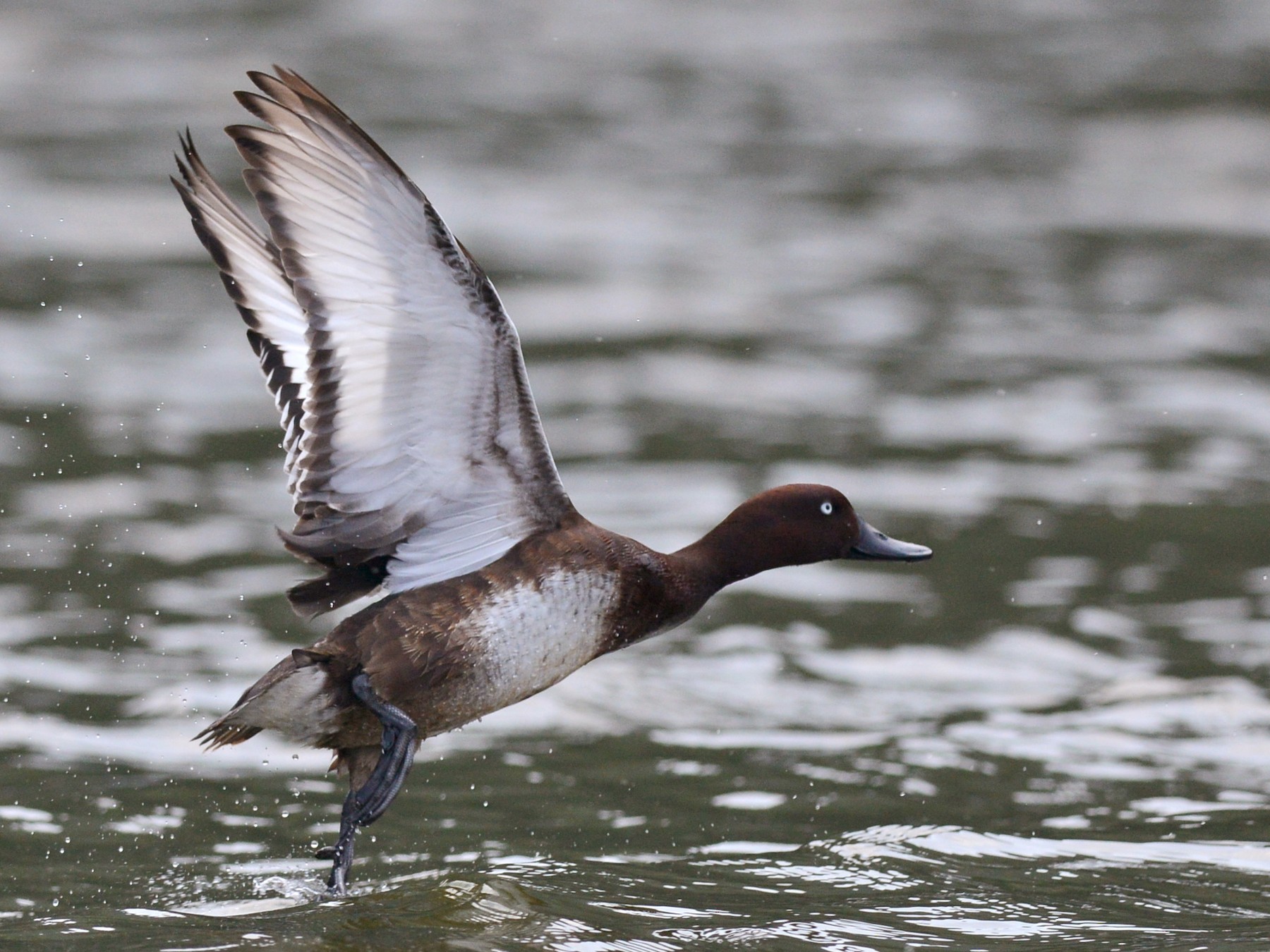
Let’s stay in Madagascar for another week and take a look at a little-known bird that almost went the way of the Elephant (bird): the Madagascan Pochard (Aythya innotata). Now, you may be wondering what a Pochard is, but it’s really just a fancy word for a duck.

How to save one of the world's rarest ducks - Discover Wildlife

On the surface they don’t seem all that remarkable. They’re a little brown duck, with striking bright eyes. Even when they were first discovered, no-one payed much attention, because people thought they were just a Ferruginous Duck. To be fair, they do look almost identical. See if you can tell them apart.

The giveaway probably should have been that the Ferruginous Duck lives nowhere near Madagascar.

Now, these are one of the rarest ducks in the world. During the 20th Century their population collapsed following the destruction of their habitat. In 1991 a single male was captured from the wild and then for the longest time no-one saw them again. Extensive searches were conducted in 1993, 1994 and 2001: all unsuccessful. It was thought these ducks were extinct.

Madagascar Pochard - eBird

But then in 2006 a small flock of 25 birds was found on a remote lake in the north of the island. Conservationists began removing the eggs to raise the chicks in captivity to ensure they would reach adulthood. This program has been largely successful. As of 2018 there are now over 100 ducks and they’ve been re-introduced to a second lake.

Rare Madagascar Pochard takes step toward recovery - BirdWatching

I should also note that the Pochard is a type of diving duck. When you think of a duck, you probably picture something that floats about on a pond, ducking its head (no pun intended) under the water while its bum stays in the air. 

Dabblers | Cute animals, Animals, Animals beautiful

This behaviour is called dabbling and they are Dabbling Ducks. Their butts are actually too buoyant to dive underwater and they can only feed in the shallows. Ducks like the Pochard are less buoyant and hunt most of their food while scooting about totally submerged.

There is a surprising range of diversity among ducks. Not only are there Dabbling and Diving Ducks, but there are also SeaducksStiff-tailed Ducks and Shelducks. But they’re all birds for another week. 

05/07/2020

Bird 140 – Elephant Bird

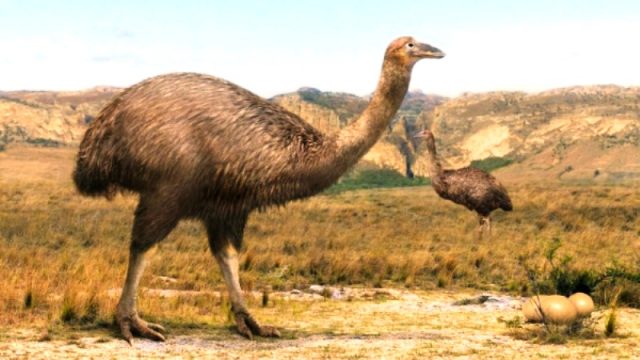
Today we’re going to look a famous extinct bird. No, not the Dodo, we did the Dodo a long time ago. But don’t worry, we’re still going to an African island to visit the Elephant Bird (Aepyornis maximus).

Who Killed The Elephant Bird? | Youngzine

These birds were locals of Madagascar. Now, you, like me, are probably wondering, well if this is an Elephant Bird where’s its trunk? I know, disappointing. These birds aren’t about elephant trunks, but they’re built thick … like a tree trunk…? Don’t worry, I’ll show myself out after that awful pun.

But in all seriousness, they were very vertical. They make the Ostrich look positively pathetic. They stood over 3m tall and weighed more than 500Kg. Hefty. 

Knowing this, it may surprise you to learn that their closest living relative is actually the Kiwi. Although there are some clues that the midget and the giant are cousins. The Kiwi lays the largest egg in relation to its body size, which biologists have long suspected meant it was once a much larger bird that became small over time.

The Elephant Bird | Amusing Planet

There are two phenomenon which can happen to island dwelling animals, one is island dwarfism, the other is island gigantism. Depending on conditions, such as the presence of predators and the abundance of food, animals that find themselves isolated on islands (like New Zealand and Madagascar for example) have a tendency to either shrink or expand. For example, there used to be island dwelling Dwarf Elephants. So, I’m guessing maybe Kiwis went one way and the Elephant Bird went the other. But hey, I ain’t no science-talkin’ guy.

But what happened to the Elephant Bird? It’s thought they went extinct around 1000AD. The cause of their extinction is still a matter of some speculation. Humans, those ever-popular exterminators, are generally blamed. David Attenborough agreed, although he thinks it may be more complicated. He was doubtful that the Elephant Bird was hunted directly, instead it was the eggs people took. 

And when you compare their egg to a chicken’s, you can understand why they might have been interested. You’d have omelettes for days with one of these bad boys. He also speculates that the birds were already under stress before people turned up due to a changing climate that turned the forests where they lived into desert. Still today, you can easily find the shattered remains of their eggs scattered on the dunes.

Either way, this bird hasn’t been with us for at least a millennium, but what a sight it must have been. 

28/06/2020

Bird 139 – Grey Crowned Crane

It has come to my attention that I have never featured a Crane. This is an inexcusable oversight on my part, but in my defence, there are a lot of birds. This week, though, it’s all about Crane royalty: the Grey Crowned Crane (Balearica regulorum) — try saying that ten times fast.

These are an African bird, and you probably don’t need me to point their most excellent feature … their feet.

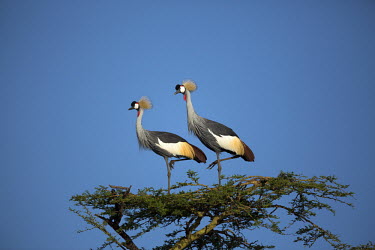
I joke, but actually, they do have unique feet. They are the only genus of Crane capable of perching in trees, thanks to a long hind toe that can grasp branches. All other Cranes seem to have lost this adaptation and now hang out exclusively on the ground.

Wildscreen - (grey or grei) and (crowned-crane or crowned-cran)

But really, I know what you come here for, it’s the fancy headdress. Check that sucker out.

Grey Crowned Crane • Fun Facts and Information For Kids

I quite like it because it reminds me of those religious depictions of Christ and the saints when they had halos. 

Golden Halo Posters | Fine Art America

In Christian art the halo was a representation of Christ’s divine nature. Am I saying this Crane is a divine being worthy of our praise? Yes, I am.

Am I saying we should form a cult to this bird, create bronze images in its likeness, and perform sacrifices to its greater glory? Obviously.

5 Interesting Facts About Grey Crown Cranes | Hayden's Animal Facts

It’s not weird guys, Uganda already features them on their flag.

Flag of Uganda - Wikipedia

So, you know, it’s only a small step from depiction on flag to our unquestionable, infallible god. Look, we can claim it’s for tax purposes if it makes you feel more comfortable.

Oh also, they have an inflatable red pouch on their neck, which is kinda fun.

The Grey Crowned Crane, meet your new god.

21/06/2020


Bird 138 – Blue-throated Hillstar

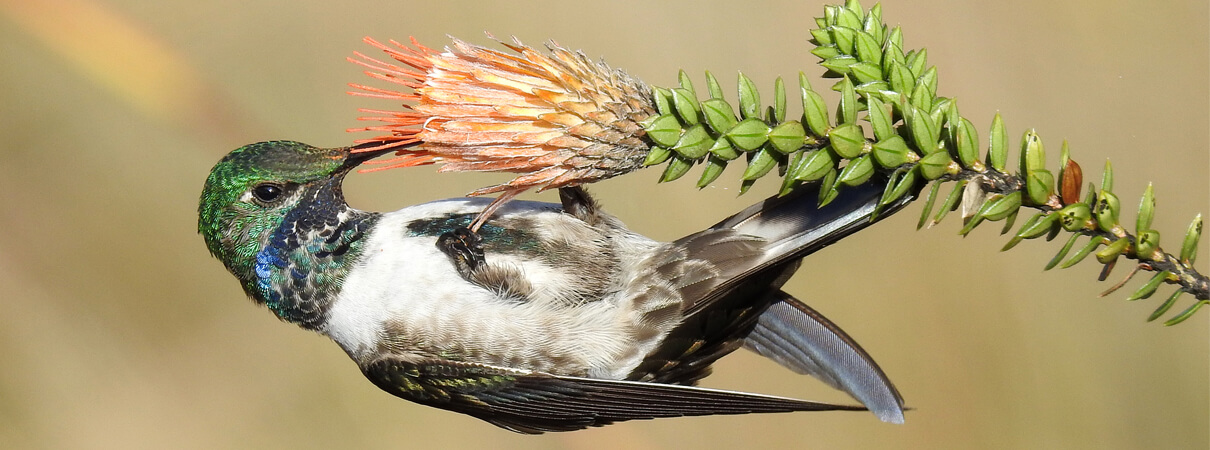
Let’s stay in South America, and this week, instead of a bird that was lost and found, we have a bird that was only first discovered in 2017. That’s right, we’re still finding new, never-before-seen birds. So, what bird escaped our attention for all of human existence? Why, none other than the Blue-throated Hillstar (Oreotrochilus cyanolaemus) and yes, with a silly name like that, it is indeed a hummingbird.

Newly Discovered Hummingbird Species Is Already Endangered

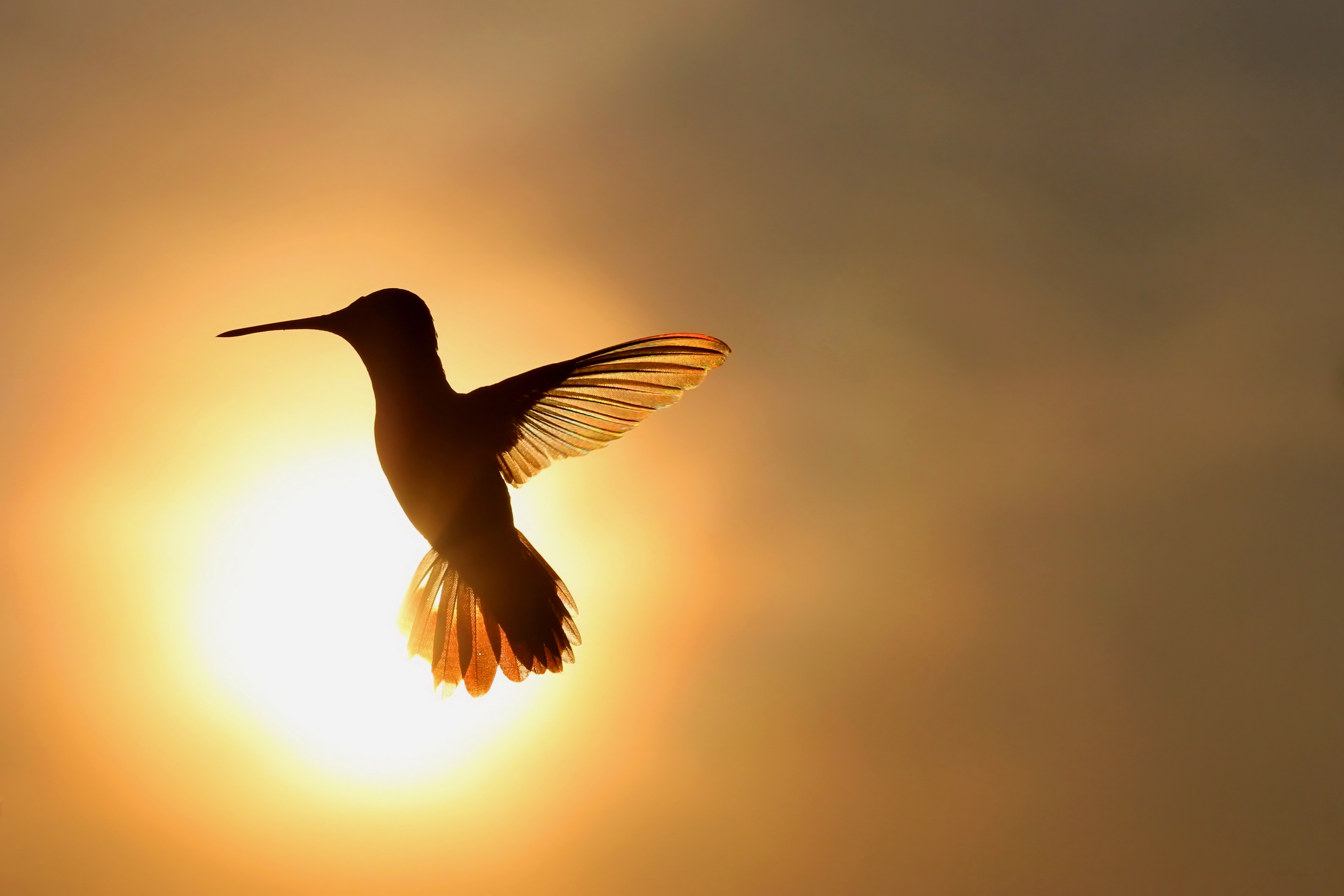
And like all hummingbirds it’s a real looker. They have beautiful blue iridescent throat and green head feathers that distinguish them from the other Hillstar Hummingbirds. Now, I know what you’re thinking: there’s a whole family of Hillstars, why was I not told about this?

Little Hillstar sample pack there. You’ve got the White-sided Hillstar, the Black-breasted Hillstar, the Wedge-tailed Hillstar and the Ecuadorian Hillstar.

So how did they keep themselves hidden for so long? Well, they only live in one remote mountain valley high up in the Ecuadorian Andes, at elevations between 3000 and 3700 metres. So, they’re really more mountainstars than hillstars, in my opinion.

Petition: Protect the Newly Discovered Blue-Throated Hillstar ...

Living at such high elevations, they’ve developed adaptations most other hummers don’t have. For example, they have special oxygen attracting haemoglobin in their blood so they can breathe at the lofty heights. Also, being up where the air is thin means hovering is more difficult. Which, I know, is kinda the hummingbird’s go to thing. As such, when feeding, unlike other hummers, these guys tend to perch rather than hover. In fact, they spend more time perched than any other hummer, so as to preserve as much energy as possible.

Blue-throated Hillstar | American Bird Conservancy

Because they are so newly discovered we don’t know much about them, but it is thought there are only a couple of hundred in existence. As per usual, their habitat is currently under threat from all sorts of things, including fire, grazing and gold mining. Hopefully, this new little star can be protected, because like all hummers, they are super adorable.

They’re a star, they’re on top (of a mountain), somebody bring them some nectar!

14/06/2020
Bird 137 – Blue-eyed Ground Dove

In biology, every now and again, you come across something called a Lazarus Taxon. These are animals that were thought to be extinct but are then unexpectedly rediscovered. Some of the most famous Lazarus Taxons are birds. One of my favourites, the Bermuda Petrel, was thought to have gone extinct in 1620, but was rediscovered in 1951. Pretty cool, but that’s a bird for another week. Instead, for you today, I have the Blue-eyed Ground Dove (Columbina cyanopis), that’s right, it’s pigeon time again.

Blue-eyed Ground-Dove Prospects Looking Up

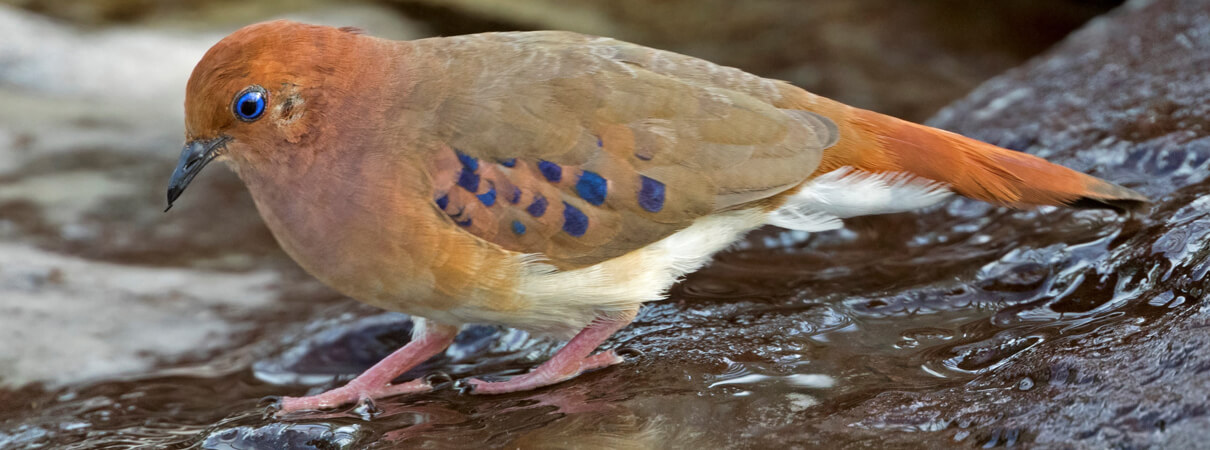
These birds are absolute stunners, what with their sapphire wing spots and matching eyes. They’re native to the tropical savannas of Brazil. It was thought they went extinct in the early 1940s. For 75 years no one saw beak nor feather of them, until 2015 when ornithologist, Rafael Bessa, came along.

Blue-eyed-Ground Dove - BirdWatching

He was out doing unrelated field work when he heard the cooing of a bird he didn’t recognise. He couldn’t see it, but he made a recording of the sound and played it back, hoping to lure the cooing creature into the open. And sure enough he did, and was shocked to see a long-extinct dove suddenly back from the dead.

Blue-Eyed Ghost Bird Rises From the Grave | Audubon

But it wasn’t party time yet. After more field work, approximately 20 birds were found localised around a single piece of private property. A piece of private property the owner was gung-ho on plopping a big old mine right on top of. What followed was years of fund raising and government lobbying. But in 2018 a conservation group, SAVE Brasil, was able to buy the property and the surrounding land and turn it into the Blue-eyed Ground Dove Reserve.

Blue-eyed Ground-Dove | American Bird Conservancy

These little guys aren’t out of the woods yet. Their population is still dangerously low, but hopefully with a protected home and a concerted effort they can be brought back from the brink. The nature reserve has recently opened to tourists, so now more people can come and learn about this most rare pigeon.    

08/06/2020

Bird 136 – Greater Sage-grouse

So last week we met a bird that mates by inflating an air sac on its throat and making a weird noise while all gathered together in a lek. Well, to mix things up, today we’re going to meet a bird that mates by inflating an air sac on its throat and making a weird noise while all gathered together in a lek. 

And that bird is the Greater Sage-grouse (Centrocercus urophasianus). Never say I don’t give you variety.

Saving the greater sage grouse, the most hotly-debated bird since ...

That these two completely unrelated birds have similar mating habits is an example of convergent evolution. Just how odd is it? It’s about as odd as if you came across a society of dogs that had developed a dating app called ‘Tail’.

Anyway, the Sage-grouse looks pretty freaky-deaky, with its spiky tail and white ruff. But when they start their courtship display… well, it’s hard to put it into words what they do, so take a look for yourself:

But basically, they puff up their yellow pendulous air sac, and shake them to make a popping, almost wobble board-like sound. And when you’ve got a whole crowd of males doing it all at the same time, it makes for quite a chorus. 

Greater Sage Grouse @Regran_ed from @birds_adored - ...feel free ...

Just like the Capuchinbird, every male in the region will gather into one place, called a lek. There, each male will stake out a small patch of dirt where he will put on the show, with the more impressive males closer to the centre of the group. Generally speaking, only the alpha male will end up breeding, but he will breed with everyone. Well, not everyone, but we’re talking about 80% here. Apparently, the ladies only want the best. And apparently, even though all them males look identical to me, there is a distinct difference.

Sage Grouse Mating Ritual | Spring Creek Ranch

Yes, that the right stuff. Look at that pendulous sac of air … hanging from that guy’s chin … it brings all the hens to the yard.

So yeah, that’s the Sage-grouse.

31/05/2020

Bird 135 – Capuchinbird

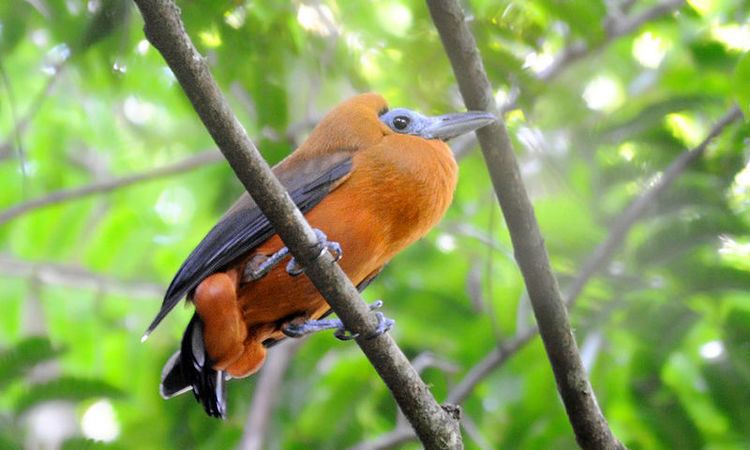
In the Amazon Rain forest there is a freaky little bird called the Capuchinbird (Perissocephalus tricolor), or as I like to call it, the cappuccino bird, because God knows how to pronounce that word. 

ハゲガオカザリドリ Capuchinbird, Calfbird (Perissocephalus ...

As you can see, these birds are freaks. For the most part, their drab, russet colouring doesn’t really recommend them for any great note. But I’m sure you noticed their striking, blue, rather Vulture-like heads. Why this bird opted to lose its head feathers, I’m not sure. Vultures are bald so they don’t have to worry about getting blood and guts on their feathers when they’re neck deep in some corpse. But the Capuchinbird feeds on fruit, so go figure. 

But now, what really makes these birds freaks are their courtship displays. Unlike other birds, males don’t compete with pretty feathers. Oh no, they compete with song. During mating season all the males gather together in the tree tops and compete with their majestic singing.

Capuchinbird - Alchetron, The Free Social Encyclopedia

These gatherings are called leks, and there are numerous birds that use this strategy. I guess it makes it easier for the ladies: there’s just one spot they have to stop by to see who’s got the goods. Now, did I say their singing is majestic? Scratch that. The males make one of the most bizarre noises you ever heard. Some people have likened it to a cow mooing, but that doesn’t quite do it justice. It’s sort of like if a cow belonged to an 80s synthpop band.

They produce this odd noise by inflating air sacs in their throat, not unlike a frog. Watching the birds side on, the sacs quite visibly pop out from their throat, with skin stretched so thin you can almost see right through it.

Just when you thought the bird world couldn’t get more ridiculous, along comes a hot serving of vulture-like, frog-like, synthpop-cow-like cappuccino to prove you wrong.  

24/05/2020

Bird 134 – Fork-tailed Drongo

So in Australia, if you call someone a ‘drongo’ they’re being a bit of a silly git. But let me tell you, the Fork-tailed Drongo (Dicrurus adsimilis) is anything but.

Fork-tailed Drongo | Fork-tailed Drongo, Dicrurus adsimilis ...

These are African birds. They hang out on the savanna looking for food and doing whatever it is Drongos do. But that can be hard work, so the Drongo has come up with a devilishly clever way to cheat Meerkats out of their dinner. 

Imagine for me, if you will, a family of Meerkats. They spend their time scurrying around looking for grubs and beetles to chow down on. While they do this one Meerkat stands sentry for the family, keeping an eye out for danger. Perched on a tree nearby the hero of our piece, the Drongo, watches with jealous eyes. 

BBC - Earth News - Bird-mimics steal meerkats' food

Before long, a Hawk flies overhead. The Drongo spots it before the sentry and lets out a warning call. It alerts the Meerkats to danger and they disappear into their burrows. Our Drongo has earned their trust. Once the danger has passed, the Meerkats re-emerge and go back about their business. 

Where does altruism come from? Discovery of 'greenbeard' genes ...

But then suddenly, they hear the warning call again. Back to the borrows they scamper. Only this time, it’s a false alarm, there is no threat. But in their hast to vacate they left behind their dinner, and now the Drongo swoops down to steal it.

Eventually the Meerkats return, somewhat miffed now. They’ve been fooled once, but it won’t work again. The Drongo again makes the warning call, but this time the Meerkats ignore it. That could be the end of the story, but our hero has one last trick up its wing. You see, Drongo’s can also mimic other sounds. Suddenly a new noise is heard, not the call of the Drongo, but the sentry’s own warning call. This warning cannot be ignored, the Meerkats flee again. But no, it’s just the trickster Drongo. It’s gotten the better of them again. It laughs its snooty bird laugh.

Fork-tailed drongo - Wikipedia

It’s an amusing behaviour, but the interesting part is that the Drongo seems to display a theory of mind. The idea that the Drongo can understand things from the Meerkat’s perspective, has an insight into what motivates them and can exploit it. It’s still an open question if this is the case, but to date, no animal, not even other primates, have displayed conclusive evidence that they possess a theory of mind. Although there is one other contender, the New Caledonian Crow.

So who’s the drongo now? Technically still this bird.

PS, if you’re curious as to how the word ‘drongo’ entered the Australian vernacular and if it has anything to do with the bird (spoiler, it does and doesn’t) I have previously covered this in Bird of the Week 44

17/05/2020

Design a site like this with WordPress.com
Get started