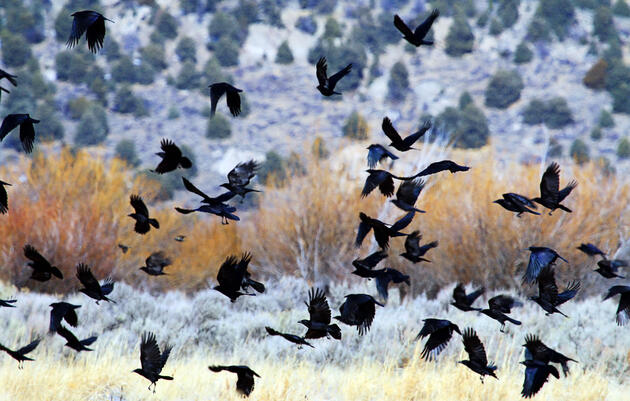
So, we’ve come to the end of our colour exploration. Today is black, and there’s really only one bird we can mention, the Raven. To my great shame, I somehow managed to go over 150 weeks without featuring this most famous of birds. There are many species of Raven, but here in Australia we have (in a shock twist) the Australian Raven (Corvus coronoides).
These are a large handsome bird. They have piercing white eyes that contrast against their glossy black plumes, which under the right light can take on a purplish-blue or even green sheen. You may be wondering if there is a difference between a Crow and a Raven, and there is. Although closely related, Crows tend to be a little smaller, and Ravens can usually be picked by the hackles they have on their neck. These are a kind of elongated throat feather that sort of sticks out.
Along with Parrots, Ravens are some of the smartest birds getting around. There are a lot of examples of their intellectual feats, but my favourite is the way they treat their dead. You probably know that a group of Ravens is called a murder. But did you also know that Ravens hold funerals for their dead.
Given they’re constantly dressed in mourning attire, it’s only appropriate. You see, Ravens live in social groups and when one of their members dies, the whole flock will gather around its body. They’ll perch in trees and make a general racket, lamenting their fallen comrade. However, researchers believe this behaviour has more to do with learning about potential threats than it does with any feelings of loss. The Ravens take in the surroundings and will come to associate the things they see near the dead bird with danger. In the future, they’ll be extra wary around the places where the Raven died, and even birds that never saw it will learn from their peers to shun the spot.
Most animals don’t have strong reactions to their fallen fellows. Aside from us people, Ravens, along with Elephants and Dolphins, are some of the only animals that register the death of one of their own. An appropriate attitude from a bird so long associated with death and doom.
Of course, on rare occasions they do also engage in necrophilia with the dead bird … so who can say what goes in their minds.
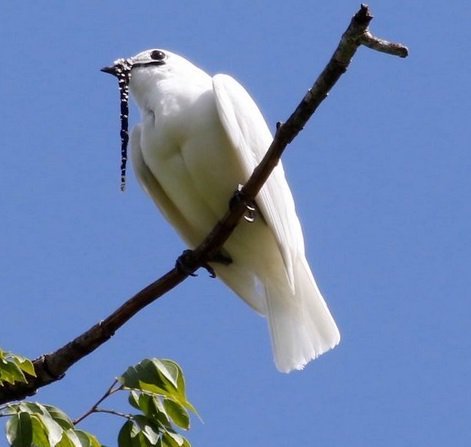
It’s pretty easy to find white birds when you go looking for one. My favourite is the White Tern, a bird that doesn’t mess around making a nest and just lays its egg on a bare branch. Of course, the White Tern was Bird 122. So this week I’ve got my second favourite all white affair, the White Bellbird (Procnias Albus).
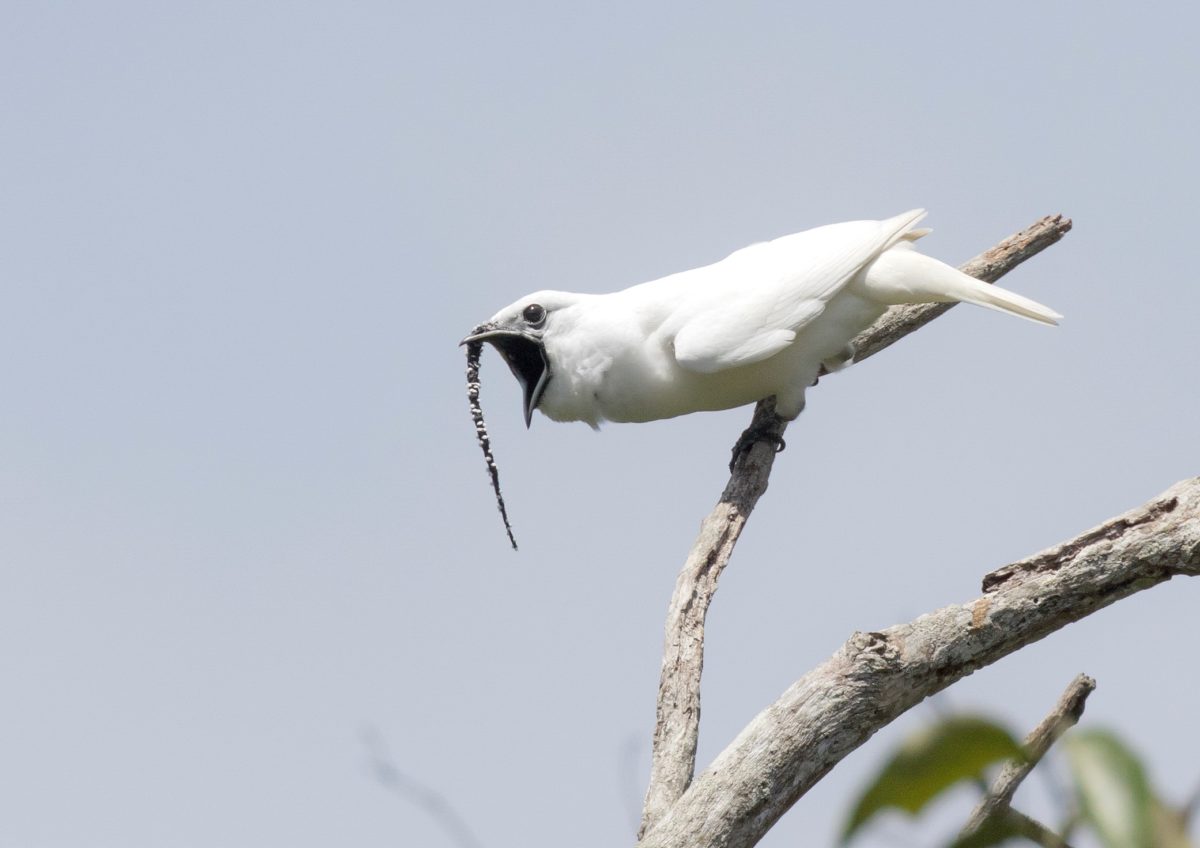
These are a jungle dwelling bird from the Amazon. The males area pure white, while the females are a much more inconspicuous olive green. Now the thing that’s probably caught your eye is the weird dangling flap hanging from its face. This is a fleshy wattle, kinda like what chickens have on their beaks, it’s just longer and grosser looking.
But that isn’t the most extraordinary thing about the White Bellbird. It’s true claim to fame is its voice. You see, the White Bellbird has the loudest call of any bird ever recorded. At its peak they can hit 125 decibels. Just how loud is that? It’s about the same as standing next to an ambulance siren. Alarming, I know.
I mean, if you can open your mouth that wide, something loud is going to come out.
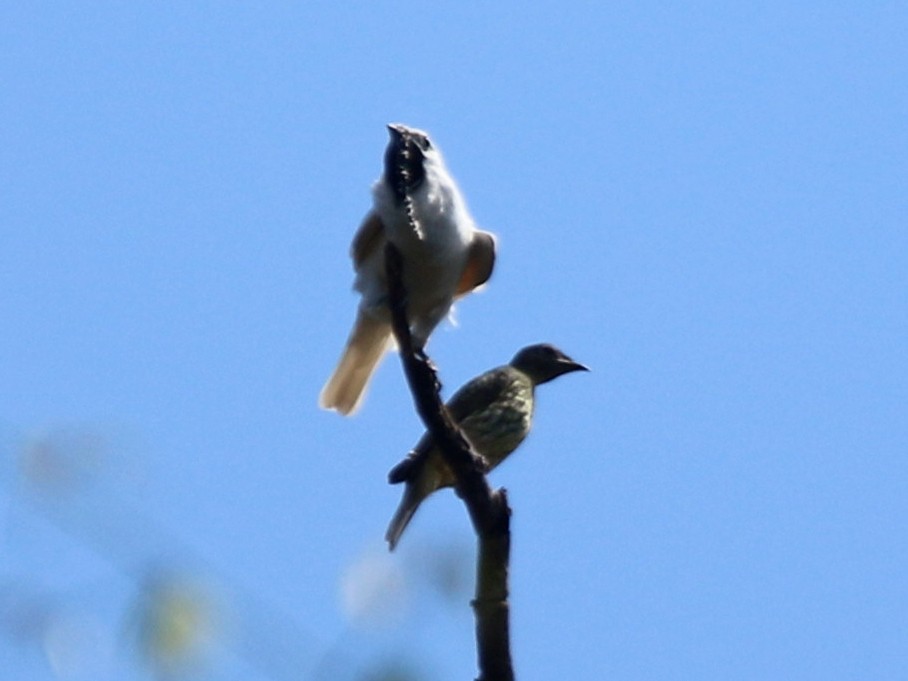
The males scream at the top of their lungs to attract the attention of females. And I thought, I guess that’s fair enough, the jungle is a big place, so you want a loud call to travel a long distance. But that isn’t the case, oh no. The male Bellbird saves its loudest call for when the female is perched right next to it. That’s right, it literally screams in her ear at a level that could possibly cause hearing damage. But I guess that must be what they look for in a mate. I feel like they could do better, though.
Female with obnoxious partner.
Researchers aren’t quite sure why this bird evolved to scream pointlessly, or why the females even tolerate it. Because, honestly, it seems a bit much… But the bird world is a crazy place, yo.
If you would like to experience this majestic, ear-splitting call for yourself, than look no further.
Next week we close out our journey through the colours with black. I wonder what bird that could be?
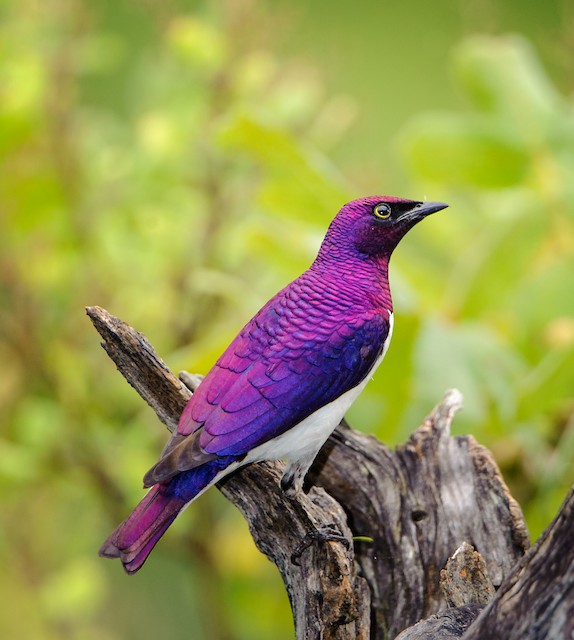
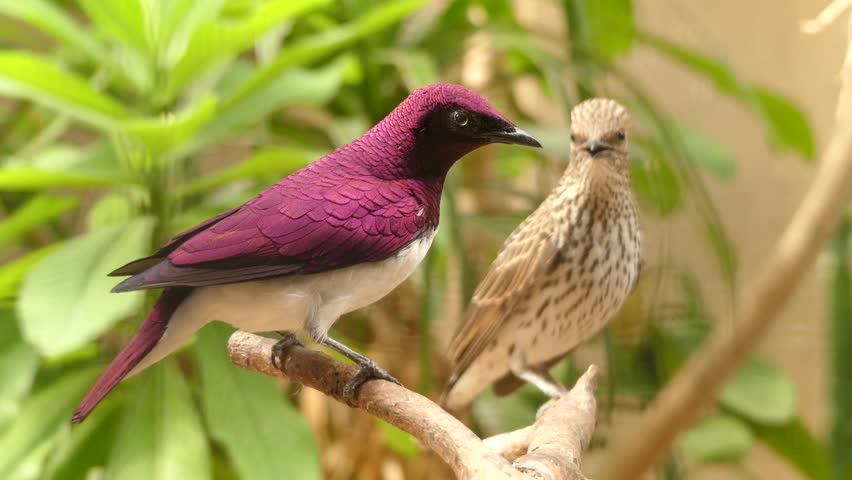
Purple is a rare colour in the bird world. There are a few birds that have the word ‘purple’ in their name, like the Purple Martin (bird for another week), but I’ve really been looking for birds with plumage that pops. Which is why this week I’m going with the Violet-backed Starling (Cinnyricinclus leucogaster).
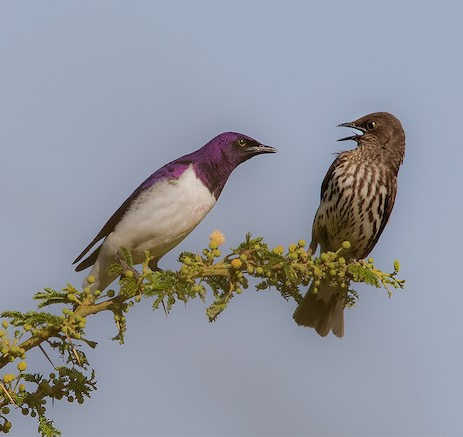
These are a common bird of the African Savannah, and as you can see, they have rather a violet back. As per-usual, the female is less interesting, clothed in grey and white.
Now, I frequently mention that female birds tend to be less flamboyant than males. It has a lot to do with the fact that females select mates based on how pretty they think they are. So, for the most part, male ornamentation is driven by female sexual selection. But there is another reason.
This female is like ‘come back when you’re three shades purple-er, buddy.’
Biological gender in birds is radically different from how it works in mammals.
Quick genetic primer: our biological gender is determined by chromosomes. Females have an XX pair, and males are XY. Female is the default gender for people. All embryos begin as female, and if they have a Y chromosome a gene on it will trigger the embryo to develop as male.
This is not how it happens in birds. They don’t have XY genes. They have ZW genes. A ZZ pair will make a male and ZW will make a female. Which means for birds, male is the default gender. Now, take a little gander at a picture of human genes against bird genes.
You’ll see that the Y chromosome in people is just about the smallest one we have, while the Z in birds is actually rather large. The larger the chromosome, the more genes there are that can code for different attributes. It also means that there are more chances for mutations and changes to occur. Over time that means the males have a lot more chances to develop unique secondary sexual characteristics. Which is why, for our Starling here, the males are such a beautiful and vibrant violet.
Of course, it also means that all females have a set of genes that code for the same male attributes. So, in some rare genetic diseases, females can spontaneously grow male plumes. But that’s a story for another week.
For now, though, that’s part of the story behind birds, their gender, and plumes.
Now, we have come to the end of the colour wheel, but worry not, for next week we look at white.
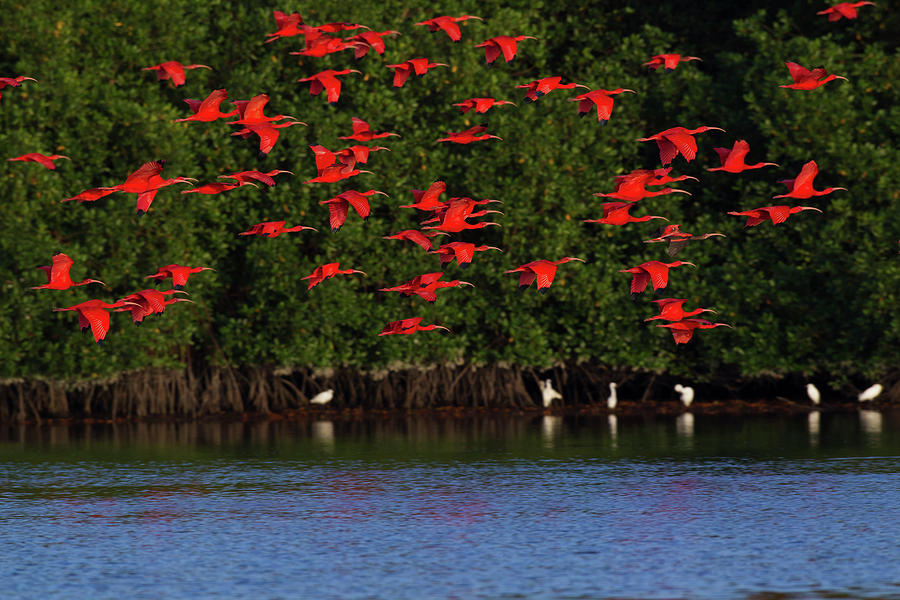
Today we’re going to do a little rehabilitation. I know one of the most maligned birds getting around is the poor old Ibis, or the filthy bin chicken as it is sometimes called. And it’s just not fair. Not fair, because the Australian White Ibis is a great little survivor, but that’s a bird for another week. This week, I want to introduce you to its South American cousin, the Scarlet Ibis (Eudocimus ruber).
That’s right, today is the colour red, and these little guys are working it. They’re a native of South America’s coastal marshlands, where they spend their days wading in the shallows, hunting crustaceans and the likes. They collect all the red pigments from their diet and use it to make their feathers pop. Every one of their feathers is scarlet, except for the very tips of their primary flight feathers.
They also hang out in flocks, and because most shore birds tend to be neutral coloured (all the better for camouflage) the Scarlet Ibis is always the most eye-catching thing chilling out at the water’s edge.
There has been a long running debate among ornithologists as to if the Scarlet Ibis and the American White Ibis are actually the same species. Anatomically they are identical in every way … except one is white and the other is the brightest red there is.
In the small areas where their territory overlaps there have been cases of interbreeding between the two, producing odd pinky coloured offspring. So, in all likelihood they probably are the same species. But we’ll leave the ornithologists to duke that one out.
Join me again next week when we’ll discover if there are any properly purple birds.
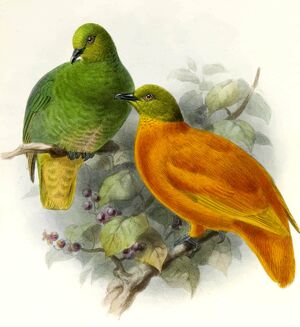
We now come to the colour orange. Now, I know how disappointed ya’ll get because there aren’t more pigeons in your life. So today, I have one hell of a pigeon for you. Say hello to my little friend, the Orange Fruit Dove (Ptilinopus victor).
Now, you look at that pigeon and tell me you’ve seen another bird that’s more orange. I didn’t think so. They’re so orange that they’re also known as Flame Doves.
I know what you’re thinking: where can I find this stunning beauty? Unfortunately, they’re rather rare, and only live on the Fijian Islands. But I guess if you wanted an excuse to go to Fiji this is probably the best and, honestly, only reason I can think of. Fiji: wildly famous for nothing except this pigeon. True fact.
The other fun thing about the Flame Dove is that they have very fine, almost hair-like feathers.
In the above picture you might be able to make out the fringed filaments hanging down over its wings and tail. It’s an odd feature, which as far as I can tell is unique among birds.
Other than that, the females are a gorgeous olive-green, and they live their lives in forests either eating fruit or starting fires. I guess it depends on which name you think is more accurate… Almost certainly fires. They crave the flame.
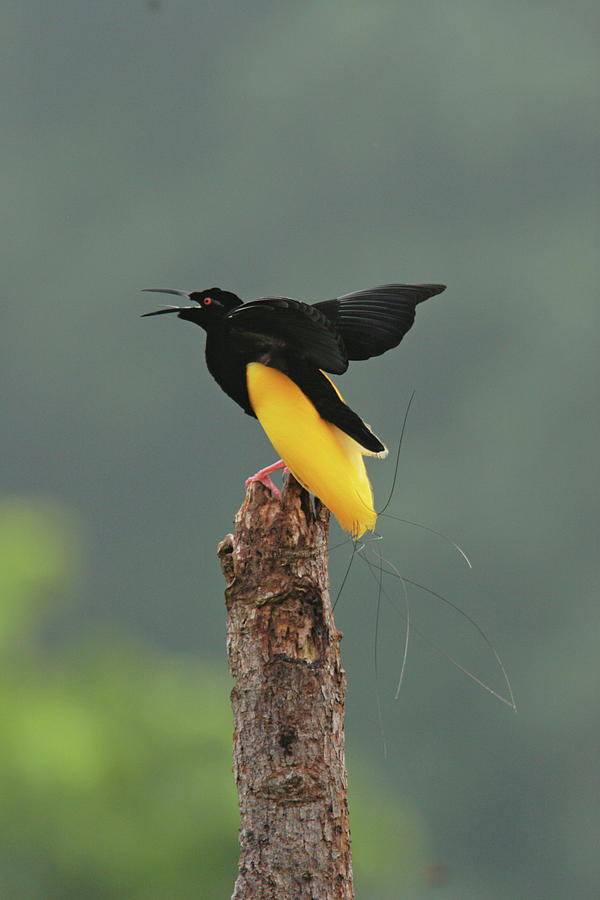
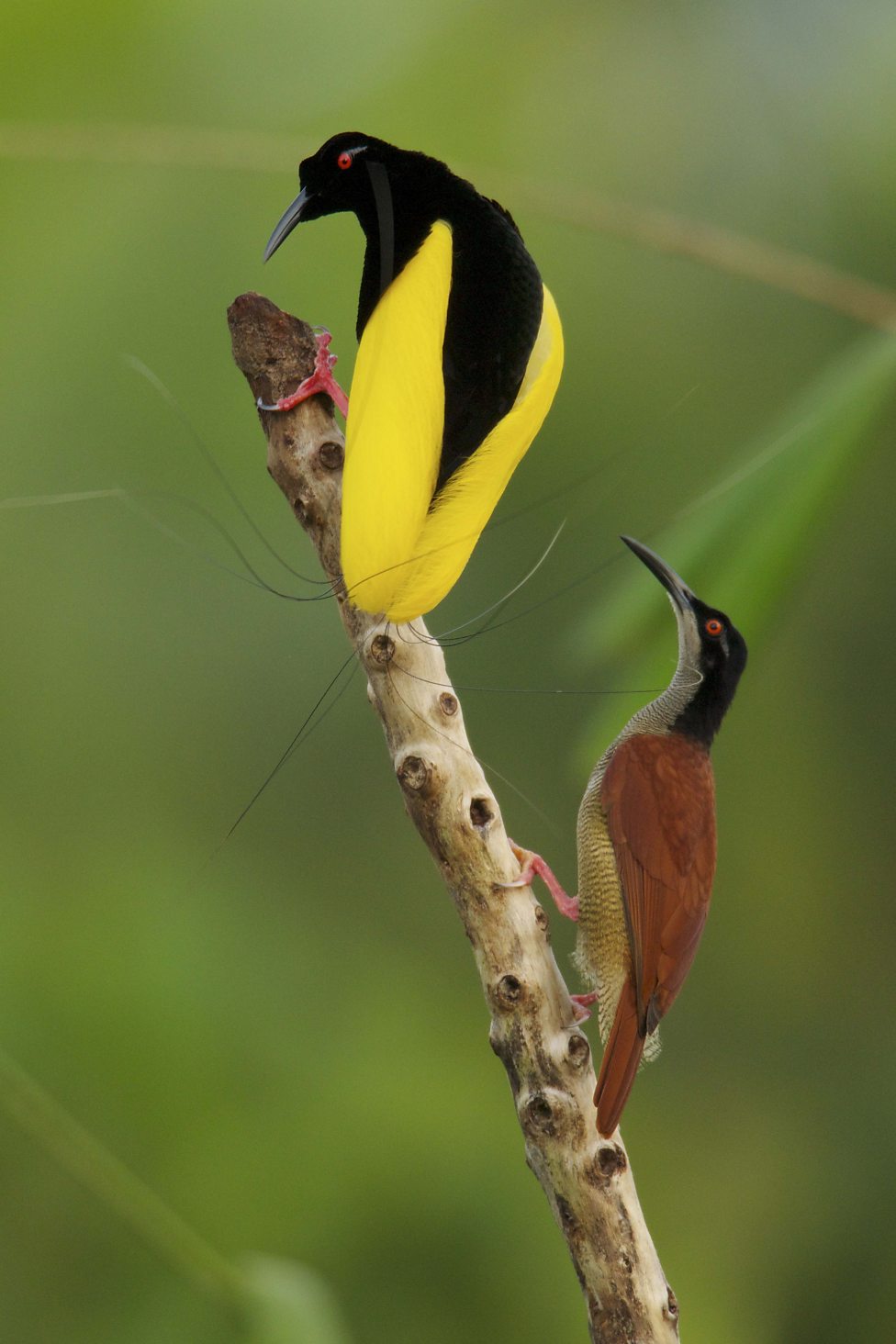
I am cheating a little on this bird. I couldn’t find a drop-dead gorgeous yellow bird that met with my satisfaction, so instead I’m giving you one of my all-time favourites, the Twelve-wired Bird-of-Paradise (Seleucidis melanoleucus)
As you can see, it does have a brilliant lemon-yellow lower portion, it’s just paired with a jet-black head and wings. Its most distinguishing feature, though, are those twelve bent back wires it has for a tail. For a long time, these feathers were a bit of a mystery. You see, like all Birds-of-Paradise, these little guys make their home in the famously impenetrable cloud forests of New Guinea. When the first skins reached Europe, ornithologists had no idea what to make of those twelve bent plumes. In fact, some argued the feathers weren’t even supposed to look that way, that they had been damaged when they got packed for shipping.
But no, that’s exactly what those feathers look like on the living bird. To complicate matters further, those wires aren’t even its tail. Rather, they’re extended plumes that come off its yellow flanks. And so, for over a century the mystery went unsolved, until David Attenborough came along and managed to film the bird’s mating ritual.
The male perches atop a bare pole, extending out of the canopy and waits for a female. When she arrives, the two will case each other up and down the pole. David Attenborough described it as like the game, ‘I’m king of the castle.’ But throughout this game, the male will position himself above the female and waggle those twelve wires across her face, brushing them back in forth.
For some reason female Twelve-wired Birds-of-Paradise preferred to be wooed via tactile sensation. Go figure.
But then all birds from the Paradise family have developed some of the most bizarre mating rituals. People who have followed this email for a while may have noticed that I rarely talk about these birds, partly because I find it difficult to explain any single one without talking about them collectively. So Today, I have something a little different, I’ve written up a longer piece that goes deep into this crazy family of birds, which you can find here. I hope you’ll check it out. This bird that dances like a ballerina is waiting.
Don’t have time to read this story? Why not listen to the podcast.
Of the 10,000 or so species of birds that roam our earth, there is no family as stunningly beautiful, yet staggeringly ridiculous as the Birds-of-Paradise. The family Paradisaeidae contains 42 species in 15 genera.1 These birds live in the cloud forests of New Guinea, its satellite islands and parts of mainland Australia.
They are famed for their unusual plumage and striking sexual dimorphism.2 Although it’s quite common for male birds to be more colourful or ornamented than females (think of a Peacock’s tail), the Birds-of-Paradise take it to a whole new level. They have ostentatious tails, iridescent feathers, features so unique they have their own names, like head-wires, capes or epaulettes.
They engage in bizarre courtship displays, dancing on the forest floor or morphing into unnatural shapes. Some have even developed unique ways to make sounds, either as audible calls or as feather rustles. One can even make its feathers sound like a machine gun.
This stunning diversity has captivated people for hundreds of years. Yet, it’s only in recent decades that we’ve come to understand why these birds appear and behave as they do.
History
With such diversity within a single family, it’s hard to know where to begin. But maybe the best place to start is with their name: Birds-of-Paradise. How did that come about?
The story goes back to 1519 and Ferdinand Magellan‘s attempt to sail around the world. He set out with five ships. Three sank, one abandoned the mission, Magellan himself died on route, but in 1522 one ship returned to Spain and in its haul it carried the most remarkable skins. They were the dried remains of the Greater Bird-of-Paradise (Pardisaea apoda). But they were odd: their feet and wings had been removed. The indigenous tribes of New Guinea prepared the skins in this way to better display the bird’s stunning plumes: a fountain of golden feathers that sprung forth from the bird’s flank.
These skins were traded widely among tribes and between neighbouring islands. When European explorers first encountered the skins they asked why this strange bird had no feet or wings. The locals on the Maluku Islands had never seen a living one, though. The skins had been traded from land further to the East. To satisfy the explorers they spun a wild tale. They said the birds lived in paradise, that they floated high in the heavens, feeding on cloud dew, and as angelic creatures they had no need for wings or feet. Humans could only glimpse them when they died and fell to earth. The legend stuck, and still today we know them as the Birds-of-Paradise. There is still a hint to this origin in the scientific name carried by the Greater Bird-of-Paradise: Paradisaea apoda: Bird-of-Paradise without feet.
Original depiction of the Greater Bird-of-Paradise. Drinking cloud dew.
As knowledge of these birds spread among European ornithologists, it sparked a mania in the nineteenth century. Everyone was champing at the bit to discover new species. There was a catch though: New Guinea is a long way away and the mountainous cloud forests where the birds lived were virtually inaccessible. Any expedition was going to cost a pretty penny. To bankroll these missions, ornithologists turned to royal patrons, promising that in exchange for finance they would name any new discoveries after them. Ornithologists are nothing if not honest folk. They were true to their word, and today many Birds-of-Paradise still bear those royal names.3 We have Princess Stephanie’s Astrapia,4 Queen Carola’s Parotia,5 the King-of-Saxony Bird-of-Paradise,6 Queen Victoria’s Riflebird,7 Count Raggiana’s Bird-of-Paradise8 and Rudolf’s Bird-of-Paradise9 (although today it is more commonly known as the Blue Bird-of-Paradise).10
But let me be clear: these ornithologists didn’t actually go to New Guinea themselves. Do you have any idea how onerous and tedious that journey would be? No, no. They merely funded other people to go and send back the specimens. Now, this is all good and well, but there’s only so much you can learn from looking at a dead bird. Especially if the bird is unlike any other living creature. For example, the Black Sicklebill (Epimachus fastosus) possessed strange ornamental feathers that fanned from its back. There was no other bird they could look at to get an idea for how it may have held these feathers in life, or what they may have used them for. The naturalist, Richard Sharpe, took a stab and came up with this:
It’s possibly my favourite image from the history of natural science. Not only is it an unquestionably beautiful artwork, but it is also completely wrong. The Black Sicklebill doesn’t hold its feathers like that at all. Instead, it cups them over its head, turns itself side on and takes on the appearance of something more akin to a black comet than any bird.
This is part of its courtship display and when the female comes in for a closer look, he will straighten up and loom over her like a black phantom or dancing cobra, with a line of iridescent feathers running down the length of its hood.
The Sicklebill is one of the morphing birds, and we’ll have more to say about them in a moment. The point I want to make here is that no ornithologist had even seen a living one display until the end of the twentieth century, so shrouded in mystery were these wondrous birds for so long.
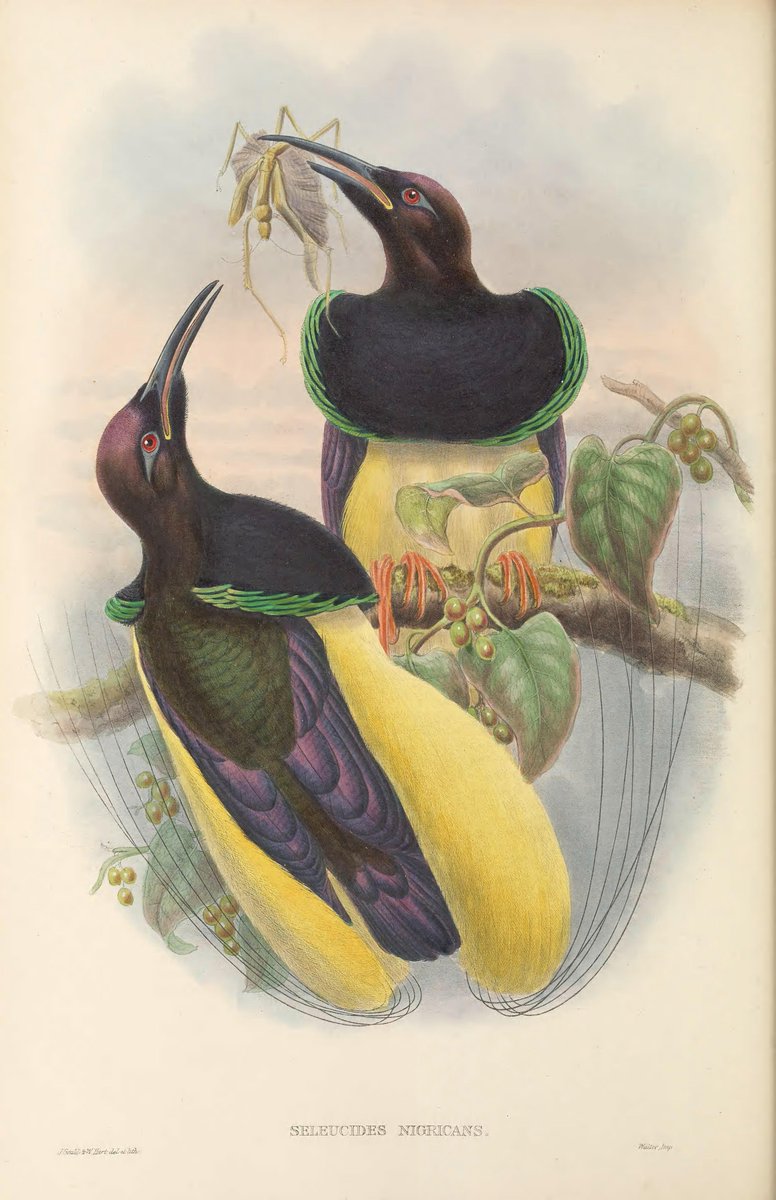
For another example of how these birds mystified those who first examined them, we can look to the Twelve-wired Bird-of-Paradise (Seleucidis melanoleucus).
This image taken from John Gould’s Birds of New Guinea.
Just like the Sicklebill, when this bird arrived in Europe, no-one knew what to make of it. It had a velvet black head, with a lemon-yellow back. But extending from its tail were twelve wire-like filaments that bent backwards. This was most odd. Originally, it was argued they shouldn’t even look that way, that the tail had been damaged when the specimen was packaged for transport. In fact, this is exactly how the feathers appear on the living bird.
It was not until the 1990s, when David Attenborough filmed one for the first time, that it was finally understood what the feathers were for. Once again, it plays a role in the male’s courtship display. The male positions himself on top of a bare tree trunk, protruding above the canopy. The female will join him on the trunk and the pair will chase each other up and down, with the male brushing his tail-wires against the female’s face. Apparently the female Twelve-wired Bird-of-Paradise prefers to be wooed via tactile sensation.
Curiously enough, the black wires that extend from its rear aren’t even tail feathers. Rather, they are elongated central shafts extending from the yellow flank-plumes.
So, we’re only two birds in and already things are getting crazy. Let’s take a step back. Maybe we should begin with where they sit in the broader family tree of birds. It may come as a surprise, but these most extravagant fowl belong to the Corvid Superfamily. That’s right, some of their closest relatives are Crows and Ravens. Looking at any random sample of the males you would wonder how this is possible. But then you would be ignoring half of the birds. Take a gander at the females, and you see that not only is the underlying appearance of these birds rather drab and dull, but you would also understand how such a seemingly hodgepodge collection of birds are in fact all related.
Here we have the Parotia, King Bird, Sicklebill and King-of-Saxony females.
The females are all remarkably similar looking. Take away the males’ showy costumes and you see the true similarities lurking just below the surface.
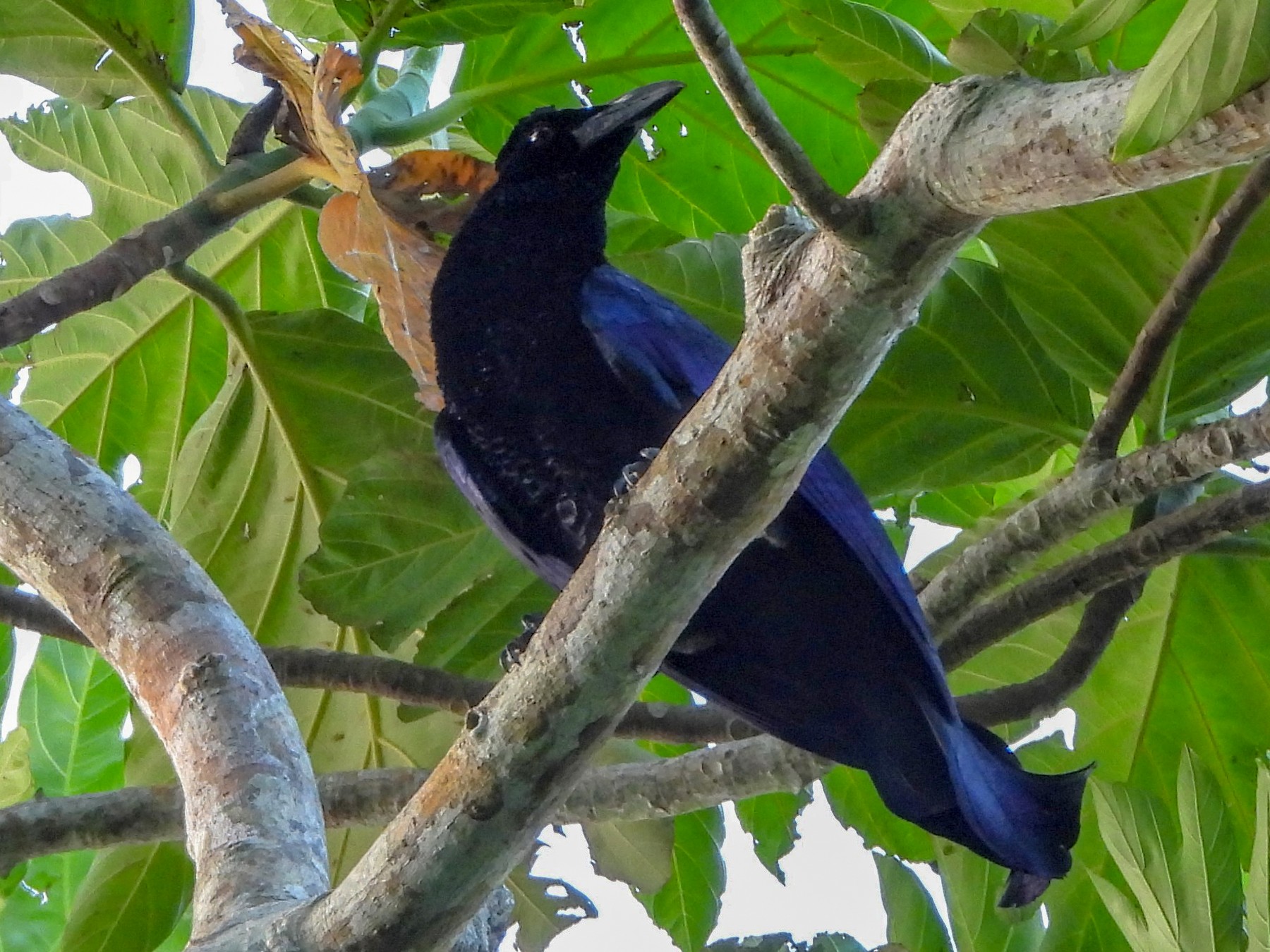
At this point it also bears considering one Bird-of-Paradise that is almost always overlooked: the Paradise-crow (Lycocorax pyrrhopterus).11 Here you see a bird almost indistinguishable from a Crow, revealing the common linage these birds and the corvids share.
But it begs the question: why did this Bird-of-Paradise stay black and crow-like while all the others became as flamboyant as hell? We will answer that question, but first we have to understand something else: courtship. Because at its heart this is why the males look as gaudy as they do. For decades, ornithologists speculated about what function the feathers served.12 As you may know, in nature nothing evolves that doesn’t give the animal some sort of survival advantage. But in the case of the Birds-of-Paradise all of this goes out the window. Plumes of such outrageous colour, length and structure should surely be a hindrance to survival. Charles Darwin once said, ‘when I look at a peacock’s tail, I feel sick’.
Disgusting!
He said this because the peacock flew in the face of the theory of natural selection, because nothing that serves no benefit to survival should ever arise. To solve this paradox, Darwin came up with the idea of sexual selection: a process whereby traits are selected which the opposite sex finds attractive, and so the individual’s chance of reproducing is increased. If natural selection is survival of the fittest, sexual selection is survival of the sexiest. And indeed, for the Birds-of-Paradise, this is exactly what their feathers do. The plumes have been selected to do nothing but appeal to a potential mate.
How they use their plumes, though, is where things get interesting. In their quest for sexy domination they have developed a range of tactics, which can be broadly broken down into two categories. The first are birds that rely on their plumes as things of beauty. The second are birds that use their plumes to transform their appearance. We have already seen the Black Sicklebill do this. We’ll look at each strategy in turn, using examples from across the species, because, let’s face it, that’s really why you’re here: to see birds being weird. And the Birds-of-Paradise deliver in spades.
Mating Displays
Let’s go back to the bird that started us off: the Greater Bird-of-Paradise. There are several species that belong to its genus13 and they all perform courtship in a similar way. The males gather high in the canopy of a single tree. This gathering is properly called a lek.
Here three male Lesser Birds-of-Paradise display together.
To begin their courtship display they open their wings and throw back their golden plumes creating a cascading fan. When a female arrives to inspect them, the male will go through a series of choreographed moves. As we will see, time and again, these dances are always performed in the same way, with the same steps in the same order, because apparently it’s vitally important to get the choreography right.
First, the male will gallop up and down its chosen display branch, calling as it does so. It will then turn its back on the female, presenting the underside of its golden plumes for inspection. If the female likes what she sees, the male will progress to the next step and begin backing into her, flapping his wings as he does so. Next, the male will turn and begin buffeting her with his wings, tapping her head with his beak, all while making a beeping noise. This step can appear aggressive, but the females must be into it, because if this goes well, mating will occur.
A female sees what they got going on.
People who have observed these rituals noted that every female will end up mating with the same male, ignoring all the others. This is true of all Birds-of-Paradise that display in a lek.14 David Attenborough speculated that perhaps the position the male occupied within the lek had more to do with how successful they are than anything else. That by dominating the top spot, it signals to the females that he is the fittest partner. If that is the case, the fabulous plumes and mating displays could be for the benefit of the other males, as a way of asserting dominance. The other more accepted theory is that the rituals are about impressing the females. Between the different species, female preference as to what constitutes sexy is largely arbitrary and so courtship displays have developed in all sorts of crazy directions. The closely related Blue Bird-of-Paradise (Paradisornis rudolphi) has a completely different strategy for impressing the ladies.
The Blue Bird is well named. It has a velvet back head with striking cyan wings, as well as the modified tail-streamers its cousins have. Unlike its cousins, though, the Blue Bird prefers to display alone. It also prefers to display from an upside-down position.15 It will hang from a branch and spread out its feathery tail, whereupon it will begin to vibrate and emit an odd electric-like noise.
The King-of-Saxony Bird-of-Paradise (Pteridophora alberti) has a similar solo display, although one performed from the vertical position. It will start a vine bouncing and then begin to swing two, long head-wire feathers around.
These extremely modified feathers extend from just above its eyes and can be up to twice as long as the bird. Usually the male keeps them swept back over its wings, but during display it will wave them about in an erratic manner, again while emitting an unsettling electric-like noise. The remarkable dexterity it shows in controlling these feathers is all the more astounding when you consider it does it all with the same muscles we use to raise our eyebrows. The feathers themselves are so modified, with the filaments completely fused together into tabs, that they don’t even look like feathers. Rather, they look and feel almost like plastic.
By now you will be coming to realise that the feathers we find in this family are without comparison in the natural world. We’ve already seen cascading plumes, wires and plastic tabs. These are extreme modifications, and whether it’s the tail, the head, the wings or some additional collection of feathers that simply don’t exist in other birds, nearly every member of this family has feathers which have changed in some way. The Splendid Astrapia (Astrapia splendidissima) is adorned with more iridescent feathers than nearly any other living bird.16 Some people have even called it the disco ball of the rain forest.
This kind of iridescent colouration, which is common to the Birds-of-Paradise, is created not through pigmentation, but the structure of the feather on the microscopic level. Down on the nano-level the structure of the feather literally interacts with the wavelength of light, scatting, absorbing and reflecting light that hits the feather at certain wavelengths and at certain angles. Because of the interplay between light and angle it means the appearance of the feather can alter depending on where you view it from. At one moment it may be green or blue, at another yellow and yet another completely black. It’s a trick of physics and the Birds-of-Paradise exploit it to full effect, often to accentuate their courtship displays.
Note how the breast feathers of this Parotia appear to transition from blue, to yellow, to green, to purple, depending on the angle.
When it comes to courtship displays, the more complex it is, the greater discretion the females show, looking for the tiniest variations in the dances that signify a male’s fitness. For many Birds-of-Paradise it takes several years for the males to reach sexual maturity. In their early years, they have the same bland colouring as the females, and will spend a great deal of time practising the moves they’ll need and visiting the display sites of mature males to watch the masters in action. It’s quite a humorous sight to see the immature and ungainly males practising their dances dressed in the wrong feathers.
Here compare the immature males practising their moves against the fully clothed adults.
Some of the most intricate rituals belong to those birds that display on the ground. To really highlight their moves and make sure there are no distractions, the males will clear a section of the forest floor of all leaf-litter. This clearing serves as their court, and some males will maintain their court site for years. Several species do this, including Wilson’s Bird-of-Paradise, the Magnificent Bird-of-Paradise (Cincnurrus magnificus), as well as the numerous Parotias. Of all the birds, though, the Parotias have the most elaborate dance routine.
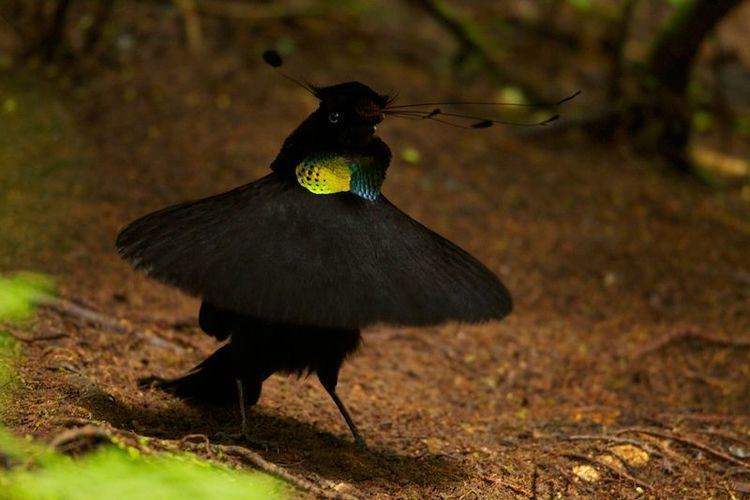
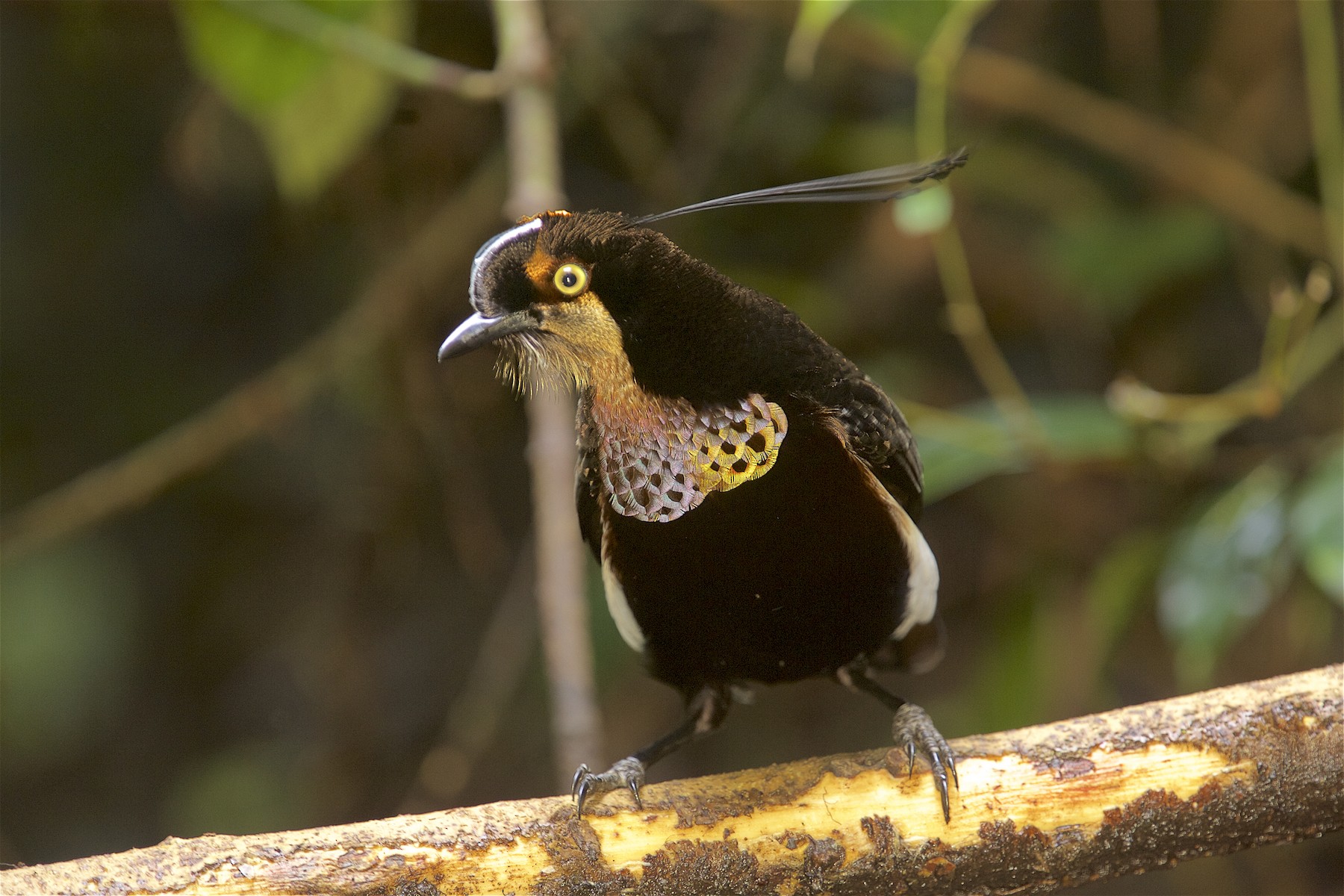
In mentioning the Parotias, we now come to the birds that display by transforming their appearance. Unlike the other birds we have looked at, the morphing birds are less colourful. They tend to be jet-black, with just highlights of iridescent colour strategically placed to accentuate certain features. Parotias are a typical example. They are sometimes known as the Six-plumed Birds-of-Paradise, so-called because extending from above each eye, just as with the King-of-Saxony, they have three long quills, tipped with a black plume. All Parotias share specialised decompressed feathers that can be flared our around their body to take on the appearance of a skirt. They also have a patch of iridescent throat feathers. Each piece of ornamentation contributes to their courtship display. Of all the Parotias, Carola’s (Parotia carolae) has the most elaborate routine.
The display in complex and involves many steps. The male will move between the viewing branch above the court down to the ground. He will bow, bounce, flutter and sway. Each step increases in complexity and builds towards the climax: the ballerina dance. This dance has several elements, but basically involves flaring out his feathers to form a skirt or tutu-like structure around his body. He waggles his head quills in front of him before finally taking a dramatic pause. He dips his head and then flashes his iridescent throat feathers at the females watching from above. Repeat.
Various stages of the display. Note the females watching from above.
If the male is to have any chance of impressing the females, he will have to get each step perfect. Now, when he goes into the ballerina dance, this is where he transforms his shape. But we have to consider the transformation from the female’s perspective, watching from above. When he flares out his skirt he stops looking like a bird, and more resembles a black oval. His head-wires and patch of iridescent head feathers help to trace out the edge of the oval while he dances, and when he pauses to flash his throat feathers it makes for a brilliant contrast against his jet-black body.
Display from the female’s perspective.
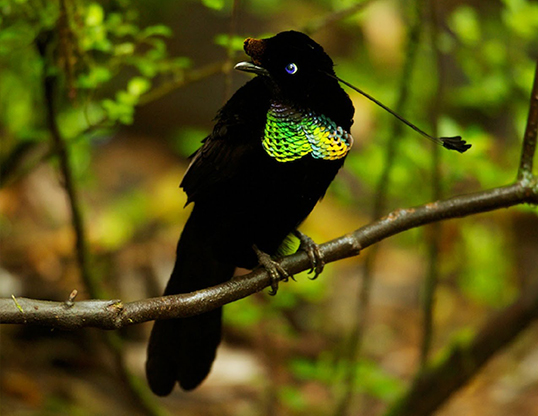
Several other Birds-of-Paradise create similar effects.17 We have already seen the Black Sicklebill, whose extreme transformation skills stumped ornithologists for years. But there are others. The two most prominent are the Superb Bird-of-Paradise (Lophorina superba) and the Magnificent Riflebird (Lophorina magnifica).
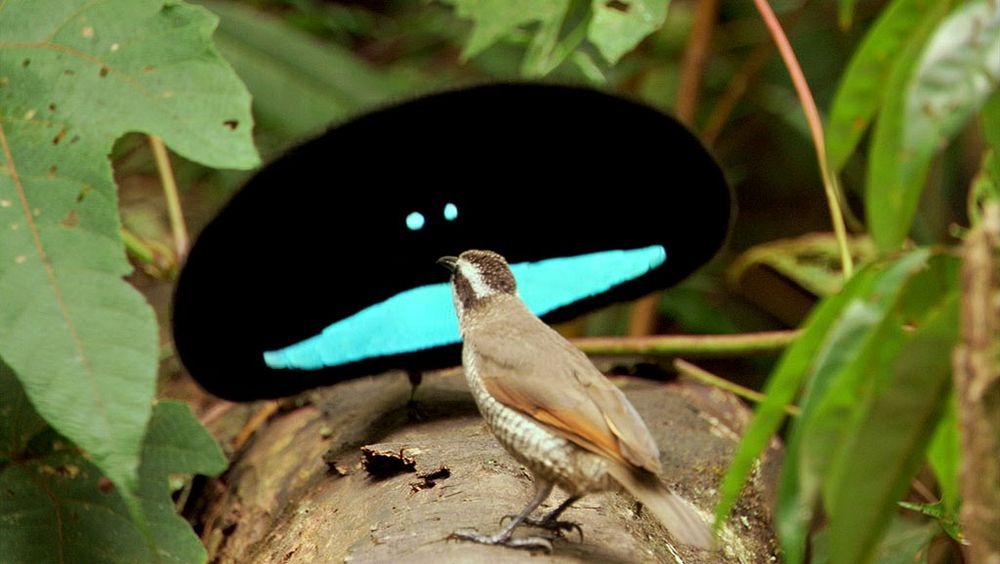
Unlike the Parotias, these birds perform their courtship displays on specially selected branches or fallen logs. The Superb Bird-of-Paradise is capable of one of the most astounding transformations, changing from a small black bird into what is sometimes described as a psychedelic smiley face.
It pulls this feat off thanks to three key features, which when at rest don’t look like much, but when brought together become something quite stunning. First, and most obviously, the bird has a blue, iridescent, delta-shaped breast shield. Second, they have a velvet black cape that extends from the nape of their neck. And third, they have a matching patch of blue iridescent feathers on the crown of their head.
When a female visits the male’s display site, he brings these three elements together in an unexpected way. He begins by pushing forward the breast shield so it extends out to form the mouth of the smiley face. The next step is to take the cape feathers and roll them up over his head, such that they frame the shield, creating a kind of oval shape. He then lifts his bill, so that from the female’s perspective it bisects his crown feathers, creating the appearance of two distinct blue spots, which when paired with the lower shield and framed cape, give the impression of eyes and mouth on a black face. It’s an astounding sight.
Here a Vogelkop Superb Bird-of-Paradise steps through its transformation. Also note the feather tuft on its bill which helps to complete the illusion.
Of course, this is just the beginning of the display. Once the female comes down to inspect the male, he will bounce vigorously around her, being careful to always keep her directly in front of him so as to maintain the visual illusion. As he bounces, he also emits a loud clicking noise. The most remarkable thing, though, is this noise is not vocal, but is rather produced by rubbing his wings together.18
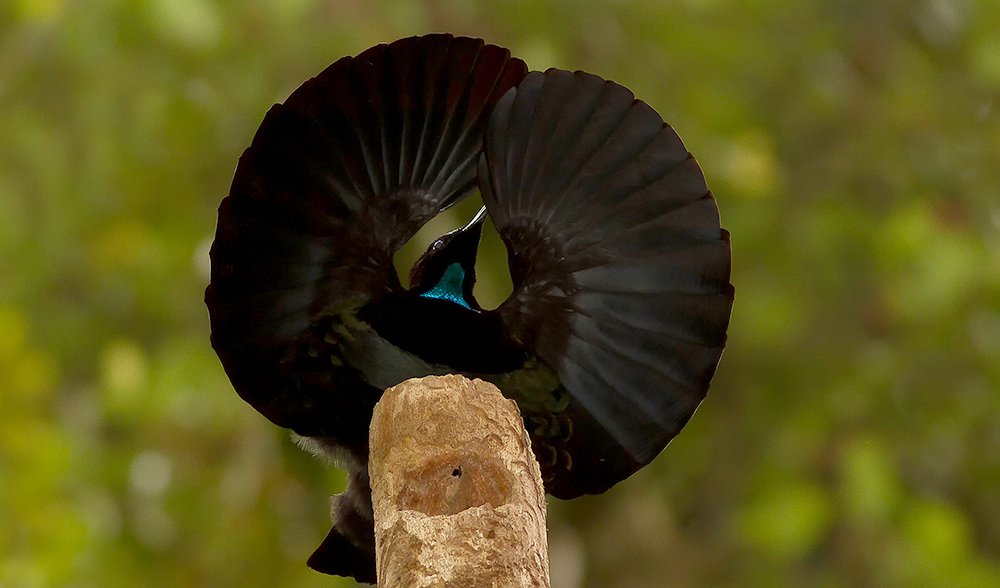
Now, the Riflebird uses similar methods, but to create a totally different effect. Just like the Superb Bird, the Riflebird is also jet black with an iridescent patch of feathers right over his throat. Unlike the Superb and Sicklebill birds though, the Riflebird uses its wings to change its shape. When a female approaches it lifts both wings over its head. However, its wing feathers are highly modified, with the ends rounded off, which when lifted together create two geometrically pleasing semi-circles that frame its head. This is a modification that has selected for shape and appearance over the optimal design for flight.
The courtship dance involves the males jumping up and down on the branch, moving forward at first and then back. As he jumps, he swings his head from side to side, hiding his face behind his wings leaving only his sparkling throat feathers exposed. Just like the Superb Bird, he also uses a non-vocal sound as part of the ritual. As he lifts and drops his wings, they make a distinct whooshing noise, which, thanks to the shape of its feathers, is amplified in the direction of the female.
Birds-of-Paradise also make use of vocal sounds in their courtship. Although in the case of the Riflebird, this is more of a prelude to the display. The bird possesses a pure, loud, melodious call, capable of travelling great distances. He uses this call to advertise his location to any nearby females. It is also a message to any rival males that this is his territory.
Magnificent Riflebird calling for a female.
Many Birds-of-Paradise make a range of unique sounds for similar reasons: the Blue Bird and the King-of-Saxony make static, almost electric-like noises, and a Sicklebill’s call sounds like a zap gun. But there is one Bird-of-Paradise that takes vocalisation to the next level.
Maybe ironically, the Bird-of-Paradise with the most startling voice belongs to the otherwise plain, crow-like bird, the Curl-crested Manucode (Manucodia comrii).
It creates a kind of juttering noise, that starts high and goes to a lower pitch. It’s rather an unnatural sound that has been likened to a UFO landing. It kind of has to be heard to be believed.
Now, these birds are different to many of the other species we have met. Almost all Birds-of-Paradise are polygamous, with males mating with as many females as they can. Not so with the Manucode. These birds partner up and they use their strange, haunting call as a way to keep in touch while they forage. It also acts to ward other couples away from their territory.
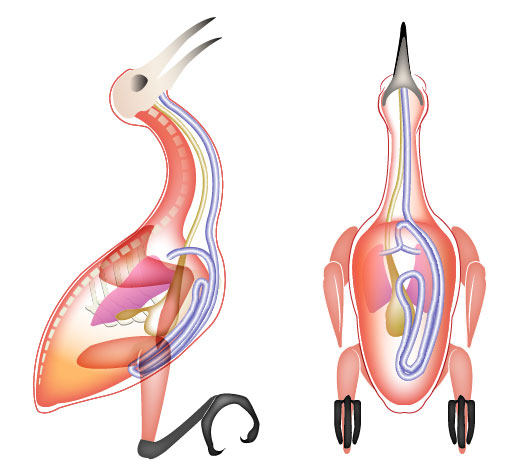
They can make this extraordinary sound thanks to a highly modified trachea.19 In most animals the trachea is only as long as it needs to be to connect all the anatomy up. In the Manucode, though, the trachea extends in between the skin and the muscles all the way down the length of the torso, before looping and coiling (sometimes twice) and heading back up to the the lungs.
Here you can see their looped trachea highlighted in blue.
When they make their call, they really throw their whole body into it. You can see their throat inflate as their trachea fills with air, their wings flutter, they tip their head back and lunge forward as they go through the length of their call. Even though the Manucode forms mated pairs, the unusual vocalisation must still play a role in sexual selection, because, once again, only the males possess the specialised trachea. It goes to show, it isn’t just the outrageous plumes that make the Birds-of-Paradise unique, because even this plain looking one has attributes no other bird has ever evolved.
Speaking of evolution:
Evolution
It’s time to come back to the question that kicked us off: why have the Birds-of-Paradise evolved in this way? If we look at the plainer birds, like the Manucode and the Paradise-crow we find our first hint. It’s no accident that the birds who form pair bonds aren’t as fabulous as those who don’t. The primary purpose of the feathers is to entice a female to mate. Once this happens, the female goes off on her own. She makes the nest alone, incubates the egg alone and raises the chick alone. Meanwhile, the male’s only mission is to mate with as many females as possible.
Displaying Magnificent Bird-of-Paradise.
A male who works as part of a pair to raise its young has no need for showy feathers. He’s value as a mate comes from the assistance he gives to rear the chicks. If a male isn’t providing a service, then mate selection must be done on another metric. Ultimately, appearance will always be the deciding factor, as appearance is the best measure of a male’s health and strength.
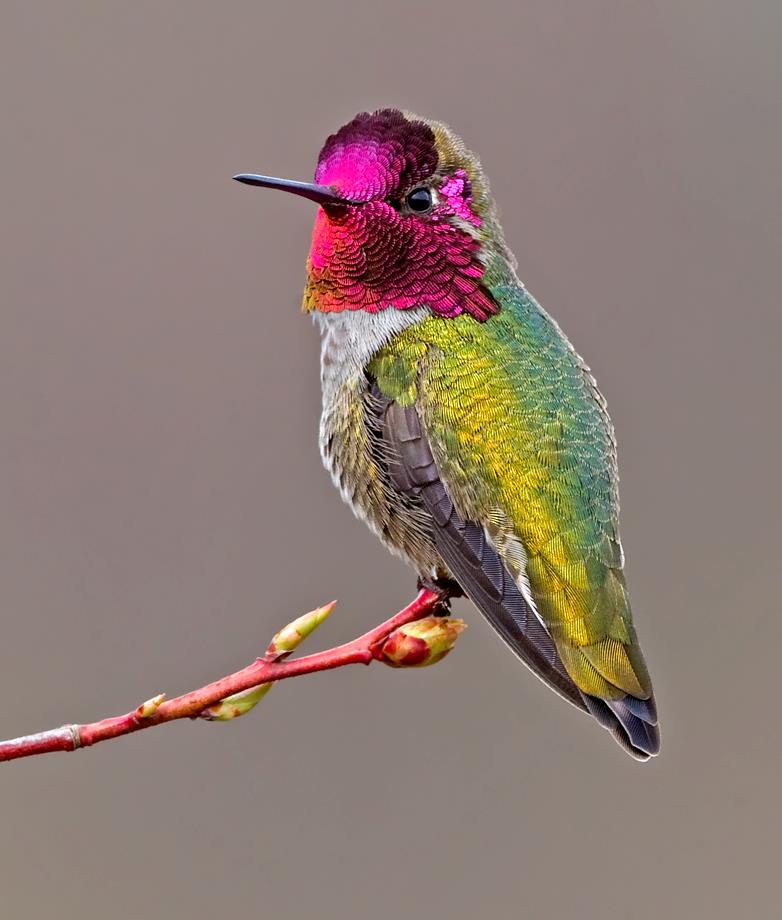
The same is true with all birds. As a general rule of thumb, the greater the difference between the sexes, the lower the chance the male will play any role in rearing young. This is true of ducks, game birds, hummingbirds and pretty much any bird with a complex mating ritual.
Brilliantly coloured male Hummingbirds also play no role in raising the next generation.
As mentioned above, the reason males look so marvellous has nothing to do with their feathers providing any survival advantage, but rather comes about as a process of sexual selection, driven entirely by the females. For it is the females who decide which male they will mate with, based on how desirable they find their traits. Quite literally, the females have forced the males into these bizarre behaviours. It’s almost as if the males have been evolutionarily trapped. Over many thousands of generations of mates being selected for the splendour of their plumes, these traits became exaggerated to the point where the feathers are a hindrance. Take, for example, the Ribbon-tailed Astrapia (Astrapia mayeri).
The bird possesses the longest tail in relation to body size of any bird. It has two white plumes, which can grow to over a metre in length. On a bird that is only about 30cm in size, this is quite a sight. And this long tail is nothing but cumbersome. Watching it in flight, the tail trails behind it like a banner being pulled by a small plane, providing nothing except drag and sapping the bird of energy.
This trait arose, not because it had any use, but because female Astrapias, for one reason or another, happen to prefer males with long white tails. And so it goes with every Bird-of-Paradise.
This form of evolution is called sexual selection and it differs from natural selection. In natural selection a trait will be passed on down the generations if it is useful to the animal’s survival. In sexual selection a trait is passed on only if it assists in getting a mate. This is the reason why the females have remained plain: under this system they have no need for extravagant plumes, and so they did not evolve.
It is also worth mentioning that under this system the male is motivated to mate with as many females as possible. As careful and deliberate as the females are with their choice, the males are just the opposite, and any female will do. This is to be expected. The female has a lot more skin in the game, considering the investment she must make to raise the chick alone. This makes the males a little overly willing to mate with anything that looks like a receptive female.20 It is then curious to note that so many of the mating displays place the male in an awkward situation. Take the Greater Bird-of-Paradise who displays by turning his back on the female, or the Parotias which display on the ground while the females watch from above, the Blue Bird that is literally upside down, or even the Riflebird that displays by waving its wings in front of its face. In each instance, the female has selected for a ritual that places the male on the backfoot.
Raggiana Bird-of-Paradise displaying with back turned to the female.
It’s a method whereby the female can watch the display and take time to deliberate before selecting a mate, while the male, if he becomes over-eager and attempts to forcibly mate, will find himself in a compromised position, allowing the female time to take flight and avoid an unwilling coupling. The females have effectively selected for rituals that keep the males at arm’s (wing’s?) length until she is willing to take things to the final step. In every meaningful way, the females are calling the shots.
But still, we are left with the question of why. Why is this the only family of birds where runaway sexual selection has occurred to such an extent? To answer that we need only look to their home of New Guinea. On this island these birds have no natural predators. Bright conspicuous plumes that might otherwise betray a bird’s location to a stalking carnivore are not an issue, and so the males can get away with being as showy as possible.
King Bird-of-Paradise
Second, in their forest home, all year round, they are surrounded by energy-rich fruiting trees. A female raises her chick alone, because she can. There is so much food available that getting enough for her child is something she can do without assistance, which usually isn’t the case with other birds.21 Likewise, for the male, because finding food is so easy, they have surplus energy that can be put towards growing outrageous feathers. They can also dedicate an inordinate amount of time to learning and rehearsing the necessary dance moves to woe their admirers. Birds that are restricted by the need to find food for survival could never come up with such elaborate, energy-intensive and time-consuming displays. Only in the Birds-of-Paradise does every element come together to allow for the evolution of such splendid creatures. In a very real sense, while the impenetrable jungle of New Guinea many be inhospitable to us, for these birds it truly is a paradise.
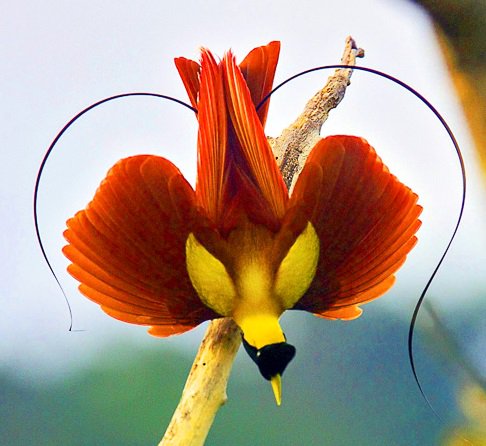
Displaying Red Bird-of-Paradise.
In researching this piece, I relied on work of Sir David Attenborough, Dr Edwin Scholes and Dr Tim Laman.
David Attenborough has had a life long fascination with the Birds-of-Paradise and his numerous documentaries made many ground breaking discoveries concerning their behaviour. For anyone interested, I would recommend the films, Attenborough’s Paradise Birds, and Attenborough in Paradise, as well as his book, The Life of Birds.
Ed Scholes and Tim Laman spent nearly a decade trekking through New Guinea on a mission to record every one of the Birds-of-Paradise on film. They are without doubt the foremost experts on this family of birds. You can find out more about their work through the Birds-of-Paradise Project or their stunning book, Birds of Paradise: revealing the world’s most extraordinary birds.
Notes
[1] Although this number does have a tendency to change from time to time. We will discuss in Part II. [2] Dimorphism: the difference in appearance of secondary sexual characteristics between males and females of the same species. [3] There is one exception. Charles Lucien Bonaparte (Napoleon’s nephew) was a famed ornithologist and devoted republican. He didn’t care for the practice of naming these birds after monarchs, so he gave one bird, Wilson’s Bird-of-Paradise*, the scientific name ‘respublica’: the people’s bird.
Wilson’s Bird-of-Paradise.
* The ‘Wilson’ from the common name is for the English ornithologist, Edward Wilson, who had acquired the first specimen of the bird. [4] Princess Stephanie of Belgium (1864-1945). [5] Carola of Vasa (1833-1907), princess of Sweden and Queen Consort of Saxony. [6] Albert of Saxony (1828-1902), Carola’s husband. [7] Queen Victoria (1819-1901). [8] Count Francis Raggis of Genoa. [9] Rudolf, Crown Prince of Austria (1858-1889), Princess Stephanie’s husband. [10] What that says about European colonialism, I’ll leave you to decide. [11] In 2016 the Paradise-crow was split into two species, the Paradise-crow and the almost identical looking Obi Paradise-crow. [12] Some speculated that they were a signal for individuals to recognise members of their own species. As we shall see in Part II, though, this cannot be the case. [13] The genus Paradisaea contains six species: the Greater, Lesser, Goldie’s, Red and Emperor Birds-of-Paradise. They all have a similar appearance except for some size and colour variations. [14] The six birds in the genus Paradisaea all display in this way, as does the Standardwing Bird-of-Paradise (Semioptera wallacii).
Standardwing Bird-of-Paradise.
[15] The Emperor and Red Birds-of-Paradise also display by hanging upside-down. [16] Something is defined as iridescent when its colour appears to change depending on the angle you look at it from. Think of a soap bubble, or the colourful sheen on the surface of an oil puddle. [17] It is interesting to note that of the shape morphing birds, the figure that is most favoured is a black oval. The Parotias, the Superb Bird-of-Paradise, the Black-billed Sicklebill and the Rifelbirds all create a similar black oval-like shape when they morph.
Displaying Black-billed Sicklebill (not to be confused with the Black Sicklebill).
[18] The Black Sicklebill does something similar during its display. It rubs its wings together to make a knocking, machine-gun-like sound. [19] That’s the windpipe which connects the throat to the lungs. [20] Some have been seen trying to court juvenile males, because at younger ages their plumes resemble those of the females. As we will also discuss in Part II, it means they also don’t always even mate with members of their own species. [21] Having said this, it should be noted that nearly every Bird-of-Paradise will only lay one egg. That is with the exception of those that form pairs. Manucodes, working as a couple, can raise two chicks at a time.
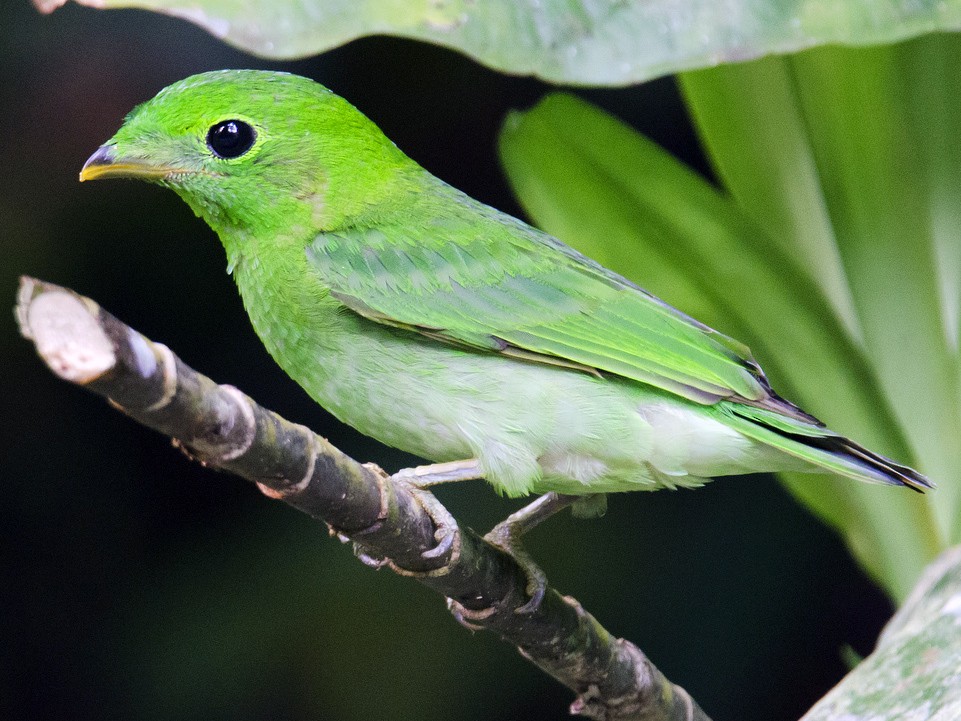
This week’s bird is brought to you by the colour green and the aptly named Green Boradbill (Calyptomena viridis).
As promised, this is the greenest bird I could find that ever did live. These cute little guys are native to the island jungles of Borneo and Sumatra. I quite enjoy their fluffy little face tufts that hide their beaks.
Males and females are similar, although the females aren’t quite as vividly coloured, and don’t have the black ear marking. They do both have the deepest, blackest eyes of any bird I’ve ever seen. So large and round, makes me feel like they’ve really seen some stuff, you know what I mean.
There are obvious advantages to being green if you live in the jungle. These little guys are ace hiders, and quite often go unnoticed high up in canopy.
The way birds create green feathers is rather interesting. You will recall last week we saw that there are no blue pigments in the bird world. Well, when it comes to green the same is true (there is one exception, but that’s a bird for another week). Once again, to make green, the bird can use structural colouration, or they can use a combo trick. They will use a structural colouration to create a blue and then combine it with a yellow pigment. And as you will no doubt remember, blue + yellow = green.
Lots of birds do this, but it’s particularly evident in Budgerigars. In the wild they are naturally green, but you would have seen pets that come in a range of colours. These domestic colours come about through genetic mutations. So, there might be a mutation that turns off the pigment gene making a blue bird, or it might turn of the feather structural gene, which makes them yellow (or both, making them white). So, that’s how you get those different coloured budgies.
It’s also very evident in this one rare budgie who had his pigment gene turned off on only one side and is now split green/blue down the middle.
Endlessly fascinating … at least I think so. Stay tuned for next week’s colour: yellow.
A couple of weeks back I was scrolling about the internet when this stunner slid across my screen.
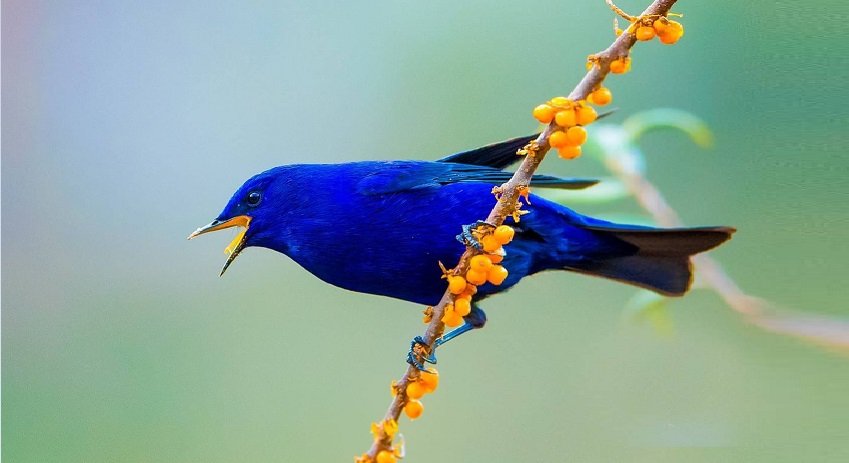
And I thought, holy heck, you are the bluest bird that ever did live. And then I got thinking, well, what is the reddest bird that ever did live and the yellowest etc. So, for the next couple of weeks I’m going to bring you the most extremely coloured birds I could find, and we are starting with the Grandala (Grandala Coelicolor).
These jaw-droppingly blue birds are members of the Thrush family, ironically the same family Black Birds belong to. They live in the Himalayas, of all places. They roam about everywhere from high mountain passes, right down to the valleys where they form into flocks of thousands to feed on berries. Only the males have the eclectic-blue feathers, while the females are a bit on the dull side.
Now, as I have previously mentioned when we looked at the Blue Jay, there is almost no example of a blue pigment that exists in nature. Whhhhaaaaattttt? It’s true, blue is the rarest pigment in the natural world. So how do our plucky little friends, the Gandalas, pull off their blues?
Well, there are two ways to make colour. You can use a pigment: here a chemical absorbs every wavelength of light except for one specific colour which gets reflected and becomes the colour you see. Or, you can use structural colouration. This works on the nano-level and has to do with how the feather is physically structured. It basically interferes with light, reflecting and refracting the wavelengths. The other colours undergo destructive interference until you’re left with just one. In this case, blue. It’s similar (but different) to how the sky looks blue because the atmosphere scatters blue light more than the other wavelengths. If you’re interested, here’s a video that does a better job of explaining than me.
But this does explain why these Grandalas look so extremely and unnaturally blue: it’s a trick of physics, which makes the colour purer. But the same is true for every blue feather you have ever seen. Each bird has a slightly different way of pulling off the same illusion, but for my money Grandalas are the best at it.
So, remember when you were a kid and you found out unicorns weren’t real, and it was super disappointing? Yeah, I know, life is full of bummers. Well, good news, because now there’s a bird to fill that hole in your heart. Let me introduce you to the Horned Screamer (Anhima cornuta).
That’s right, it’s a bird with a unicorn horn. Isn’t it majestic. Like so many freaky birds, these guys live in the Amazon rain forest. Even though they have the face of a Chicken, they’re actually more closely related to Ducks, so go figure.
It’s believed the horn is purely ornamental. It’s made of cartilage and is only loosely attached to the skull. They are also brittle and known to break easily; luckily, they grow continuously throughout the bird’s life, so when they break, they grow right back.
Now, while their horn is harmless, the Screamer certainly isn’t. On each wing Screamers have a bone spur, which they use to do battle with each other, generally during mating season.
This is actually the closely related Southern Screamer, but it’s a great shot of the spurs both species share.
There are reports of broken bone spurs being found lodged in the chests of opponents. When the Screamer wins one of these battles it sings (screams?) a long loud victory song while the loser skulks away.
If these birds weren’t already freaky enough, under their skin they have literal pockets of air to help them float. These air sacks make a crackling sound when pressed. So it’s kinda like bubble wrap found a way to evolve naturally. Which really is quite heartening when you think about it.
So there you have it, the Horned Screamer: the barbaric, bubble wrapped, ogre-like bird of the Amazon. But it’s also a magical unicorn filled with rainbows and happiness.


![Record Shattered for Loudest Bird Call Ever Measured by White Bellbirds in Amazon [Video]](https://scitechdaily.com/images/Male-White-Bellbird-Screaming-Mating-Call.jpg)
























![Grandala bird photo call and song/ Grandala coelicolor (Gr. (andala) cã´elicolar [sic])](https://farm8.staticflickr.com/7536/27631201026_52babbed13_z.jpg)


 Bird of the Week