Bird 256 – Greater Racket-tailed Drongo

Okay, there is a lot going on with the Greater Racket-tailed Drongo. First, we need to deal with its name, because I’m sure you’re thinking, what makes this bird a drongo? Are they a stupid, foolish bird? Well, I have previously covered off that bit of lexical mayhem when we looked at the Spangled Drongo, so check that out for an amusing story.

For today, we have other fish to fry. The Racket-tail lives over a wide range of land, stretching from Indonesia and China, and then across to India and Sri Lanka. Across these lands the bird can sometimes appear slightly different, but the thing that stays the same is its rather impressive tail.

These forked tails are quite the sight. They are formed by two elongated outer tail feathers. Each has a long bare shaft with a webbed flourish at the tip. It makes for an especially handsome bird. And when they’re in flight they are sometimes described as a black bird being pursued by two angry bees.

 By Savithri Singh – Own work, https://commons.wikimedia.org/…

Looks aside, the Racket-tail has some other interesting quirks. They’re great mimics and have a wide range of calls that mirror the songs of other birds, and the Racket-tail has learned to use them strategically.

In the first instance, many biologists believe they use these calls to attract the attention of other birds in an effort to form mix-species foraging flocks. These are instances where birds of many different species pal around while they look for food. By mimicking the sounds of multiple species, the Racket-tail may help to initiate these flocks’ formation. But why would they want to do that? To steal food from other birds of course. 

You see, the Racket-tail is tricksy. Not only can it mimic songs, but it can also mimic the calls of predators like hawks, or the alarm calls of other birds. It makes these noises at the right time to startle its feeding companions and then during the ensuing commotion it steals their food. To pull this trick off the Racket-tail shows a considerable level of intelligence. It understands both the mind of the birds it’s trying to fool, while also seeming to grasp a basic understanding of language. Not such a drongo after all. It’s just a shame it uses all its smarts to be a jerk. But hey, you’ve got to respect that.

THA_64” by soggy_3_16

17/07/2022
Bird 255 – Burrowing Owl

On the surface, there doesn’t seem to be anything overly remarkable about the Burrowing Owl. I mean, I guess they are pretty cute. But no, they look like any other ordinary old Owl. Don’t let looks fool you though, these Owls are special. And I would try to string out the twist longer, but I guess the spoiler is in the name… these owls live underground, they’re Burrowing Owls.

Although there is still a twist. In one sense their name is rather deceptive: Burrowing Owls don’t actively burrow. Sure, they live in burrows, but they do not dig them. There is no burrowing going on. Maybe they should be called Burrow-dwelling Owls. Instead, they move into burrows that other animals have made for them. They like to steal Prairie Dog or Ground Squirrel holes for their own nesting sites. Because they end up living on the ground more than the air, they have developed unusually long legs, so they can see further and run faster.

4 Burrowing Owls and a giant squirrel by Annette Herz
And like … it’s a weird choice right. Owls are famous for perching high in trees and swooping on their prey, not scurrying about like a mole in the dirt. And it’s also risky. Birds live in trees for a reason, it’s safe. On the ground, they have to contend with all sorts of predators, like wolfs and coyotes and whatnot. But the Burrowing Owl has a strategy that keeps the prowling beasts at bay. If anyone comes snooping around its burrow, they will mimic the sound of a rattle snake’s tail.
This hiss/rattle is pretty effective at warding off any introducers. This is an example of what biology-type-nerds call Batesian mimicry. This is where a harmless thing pretends to be something dangerous in order to frighten their enemies. Kinda like fancy lying. But I guess if you have to scratch out a living in the dirt you’ve got to do what you’ve got to do.

10/07/2022

Bird 254 – Snow Petrel

As we shiver through another winter, spare a thought for the poor Snow Petrel. These birds are the embodiment of winter, with their pure white snowy plumes. They are one of only three bird species ever sited at the geographic south pole, so yeah, they know cold like few other animals do. 

From the beginning of their lives, they are bred to endure. They’re renown for having the most southerly nesting sites of any bird. They can nest up to 400Km inland on the Antarctic continent, high in the Theron Mountains. They like to find a comfy place for their chicks to grow, and so naturally favour exposed rock and crevices. 

When they’re not sitting on windswept rocky outcrops, they like icebergs and pack ice. This is where they do most of their fishing and food finding. They keep to loose flocks and are often seen perching together on icebergs and shunning the one bird that says, ‘cold today, isn’t.’ No one likes that guy.

They almost never leave the Antarctic circle. Even in the dead of winter they keep to the icy waters and barren islands to see out the long dark night.

They are close relatives to the Albatross, but even compared to other Petrels they are one of the smallest species. Despite being the runt of the family, they still have a wingspan close to a metre, so I guess small is a relative term here. But these little guys have managed to colonise a corner of the world where few other animals could even survive an hour. It just goes to show, birds are the ultimate creature. 

By Brocken Inaglory – Own work, CC BY-SA 4.0, https://commons.wikimedia.org/…

03/07/2022
Bird 253 – Straw-necked Ibis

In Australia there is no more infamous bird than the White Ibis, also known as the bin chicken. We’re not talking about that bird today. Today, we’re talking about their cousin the Straw-necked Ibis.

The Straw-neck is far more handsome than their white relative. These birds have glossy black plumes that shimmer iridescent colours of purple, green and blue. In the right light, their legs can even shimmer. And, as the name suggests, they also have straw for a neck. Well … spikey yellow feathers that can sometimes look like straw. They’re an especially fashionable Ibis.  

As far as reputations go, theirs is also a good deal better than the White Ibis. These are no bin chickens. They have not made the shift to city living. Rather the Straw-neck has stayed true to their rural roots. They are most commonly found around shallow freshwater wetlands, swamps, lagoons, grasslands and cultivated pastures.

They have a varied diet, but when they’re on farmland the things they enjoy eating most are grasshoppers, crickets and other pests. Creatures that usually like munching on crops. Because they take out these badies the Ibis is sometimes known as the farmer’s friend. A far cry from the bin juice drinking reputation of their city slicker counterparts. 

By Cyron Ray Macey from Brisbane (-27.470963,153.026505), Australia https://commons.wikimedia.org/…

These guys are highly nomadic. They don’t hang around in the same place for long. Rather they’re always on the move, looking for conditions that suit them. They like damp places and shallow water that they can wade into when looking for aquatic bugs and crayfish, which they probe for with their big old beaks.

They also need flood conditions to breed. A good flooding produces a lot of fresh food that they need to feed their babies. When conditions are just right, they’ll gather into large colonies to take advantage of the good times while they last.

And wouldn’t you know it, this year has been a very good year for the Ibis. Remember all that flooding that happened a couple of months ago. Bad times for us, good times for the Ibis. Right now, all across the Murray-Darling Basin the Ibis are having a boom breeding year. Would you like to learn more about it? Good news, our latest podcast episode is all about the bird breeding bonanza that is currently happening in the Murray-Darling, so why not tune in and hear more (SpotifyApple).

26/06/2022

Bird 252 – Australian Pelican

When it comes to mighty birds there are few as impressive as the Pelican. They are some of the biggest and heaviest birds still capable of getting their big butts into the air. On the question of sheer scale, the Australian Pelican isn’t as big as they come, but they have one distinction they hold over all other birds. They have the biggest beaks ever measured. One particularly well-endowed Pelican had a 50cm long pecker.

The Pelican’s beak is unusual for a number of reasons. I’m sure you’ve noticed that it’s a bit more … fleshy than a normal bird. Whereas most birds’ beaks are made of keratin, the Pelican’s pouch is made of skin. The technical word for this appendage is a gular. 

As the poem says, the pelican’s beak can hold more than its belly can. But they use their voluminous bills as part of their hunting strategy. Pelicans are pack hunters. They gather together to drive fish into shallow water where they then scoop them up into their beaks and strain out the water before swallowing them whole. 

But here’s the thing: sometimes a Pelican isn’t always satisfied with an all-fish diet. They’re opportunistic feeders and will pretty much eat anything that’ll fit down their gullet. Even if it doesn’t look like it will. 

If times are lean, they’ll eat other birds. For example, they commonly eat seagulls and ducks. They will sometimes gang up and walk into other birds’ nesting grounds and eat any unattended chicks. Do not leave your children with a pelican, they will eat it.

I do not recommend this, but if you want to see something awful google ‘pelican eats pigeon’ … it’s a bad time for the pigeon that is scooped up and slowly swallowed whole. I haven’t seen any documented evidence of this, but there are folklore stories of pelicans eating dogs too. I’m sure it was a small dog.

This is all to once again remind you that if they could, birds would totally eat you.

19/06/2022

Bird 251 – Tawny Frogmouth

Today we’re going to meet a bird that has taken hide and seek to a whole new level, the Tawny Frogmouth. But first we have to clear something up. Does this bird have the mouth of a frog? No it does not. But they do sometimes put frogs in their mouth … for eating reasons. So there is that.

The second thing we need to clear up is, no, this bird is not an owl. They are often mistaken for owls because of their nocturnal nature and semi-owl-like appearance. They are more closely related to Nightjars and their ilk. The main difference is owls hunt with their powerful feet and tear things apart with their sharp narrow beak. Frogmouths have weak feet, and hunt with their wide gaping beak. They also mainly pry on insects and whatnot (also the occasional frog). 

But the thing that really sets the old Tawny apart is their ability to blend into their surroundings. Birds use their plumes for a whole range of reasons. A Peacock wants to stand out. A Frogmouth wants to vanish. They have what is called ‘cryptic colouration’. 

This is their grey and brown mottled appearance. It is designed (some people might say specially evolved) to resemble tree bark, and when the Frogmouth perches on a branch it all but disappears.

This is their main strategy for staying safe. Rather than flee an enemy the Frogmouth favours staying very very still. They will only take flight if the threat is right on top of them. Their body shape also helps them out. By angling their pointy head into the air they do a pretty good impersonation of a broken branch. 

Because of their habit of living close to human settlement, the Tawny Frogmouth has become a real Australian favourite. It’s always exciting to suddenly come upon a Frogmouth roost, and then because of their tendency to stay ever so still, you can always get nice and close to them. Just don’t bother them too much if you come across one. They’re resting upon ahead of a busy night of hunting. 

In even exciting news, our latest podcast episode is up. The Australian Magpie, delightful minstrel, or murderous maniac? Spoiler alter, it’s both, but now you can hear all about it (AppleSpotify).

12/06/2022

Bird 250 – Sun Conure (II)

Today we are meeting one of the most tropical and colourful birds there is, the Sun Conure, more properly known as the Sun Parakeet. Strictly speaking, The word ‘conure’ doesn’t mean a real lot in the bird word. It’s an old term for new world parrots which has fallen out of favour, but is still used in aviculture and applied to a whole range of distantly related parrots from the Amazon.

Sun parakeets/ sun conures by shankar s.

And that should be your clue that the Sun Conure (parakeet) is a popular pet. And who could blame anyone for that. Take a look at that plumage, it’s like a cocktail with too much pineapple … that can fly.

People also favour them as pets because they can be quite cuddly and affectionate with people they know. Of course, they can also be highly territorial and aggressive with strangers, so I guess if you wanted to trade a guard dog for a guard bird, this is probably your best bet.

Sun conure grooming by Tambako the Jaguar

In the wild the Sun Conure (parakeet) forms into large flock. They’re highly social and spend their whole life palling around with their buddies. If they ever get separated they emit an ear-splitting contact call to find their way back to the flock. That’s also something they do as pets … so … maybe think about how much screaming you can tolerate before you go all in and buy one.

Sadly, their popularity as a pet has had a negative impact on wild populations. Once you add in all the poaching and deforestation going on in the Amazon, the Sun Conure (parakeet) has become increasingly rare in the wild. It has gotten to the stage now where there are more captive bred birds than wild ones.

Colourful flight by Takashi Hososhima

Many nations have strict laws in place on the importation of birds, which has had a positive impact, but still each year many are nabbed from their native home. Soooo, if you do go in for a Conure, make sure you get yourself a certified bred one and not one that was kidnapped from their jungle dwelling friends.

05/06/2022

Bird 249 – Ruppell’s Vulture

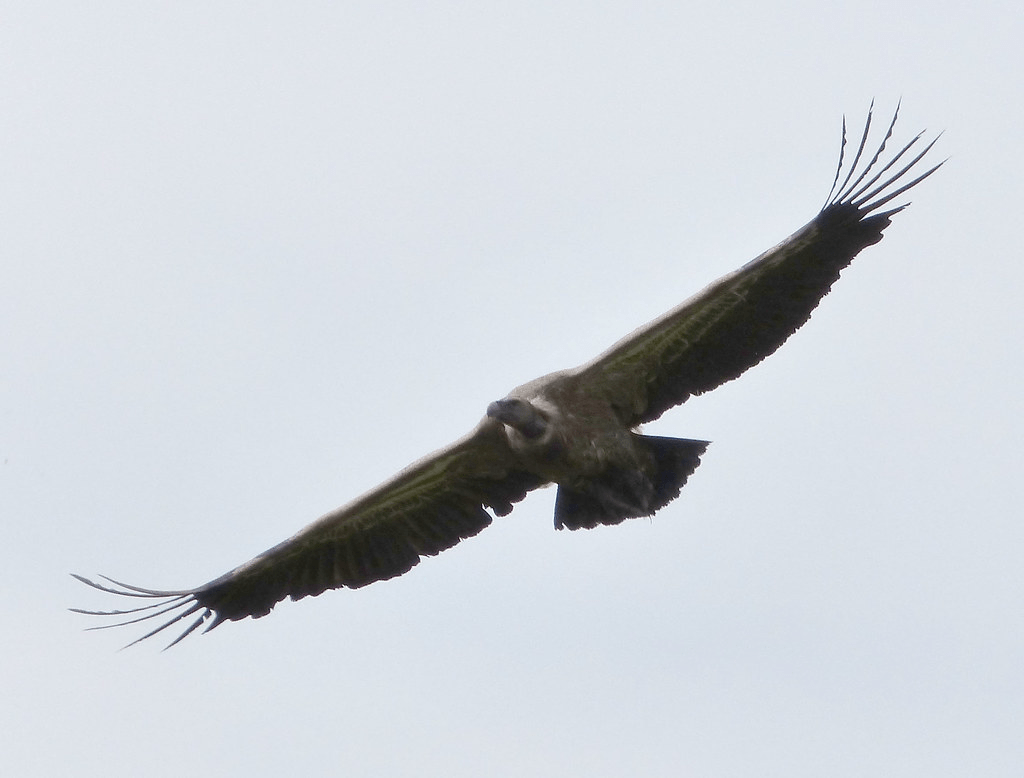
So here’s a question: how high can a bird fly? Well, there is an exclusive club of birds that can get over 8Km up. They include a Crow, a Goose, and a Crane. But the bird that beats them all has a record confirmed height of 11.3Km, and that bird is Ruppell’s Vulture.

We know for a fact this Vulture can get that high because in 1973 a commercial airliner sucked one into its jets while cruising at that altitude. The plane managed an emergency landing without loss of life. Well … except the bird. It got eviscerated. 

But that’s pretty amazing. People can’t even get to the top of Mt Everest, a pitiful 8Km into the sky without needing oxygen. These birds go another three like it ain’t no thing. So what’s going on?

The trick lies in their haemoglobin. They have a special kind of protein in their blood that is basically a magnet for oxygen. So much so, that even under low pressure they have no trouble drawing what they need from the thin air.

Now, you may know that like most eagles and vultures, they’re able to get so high because they ride thermal currents: huge columns of hot air that rise off the warmed earth into the upper atmosphere. But the better question, is why do they go so high? They’ve got great eyesight and all, but let’s be honest, they ain’t seeing anything on the ground from up there. 

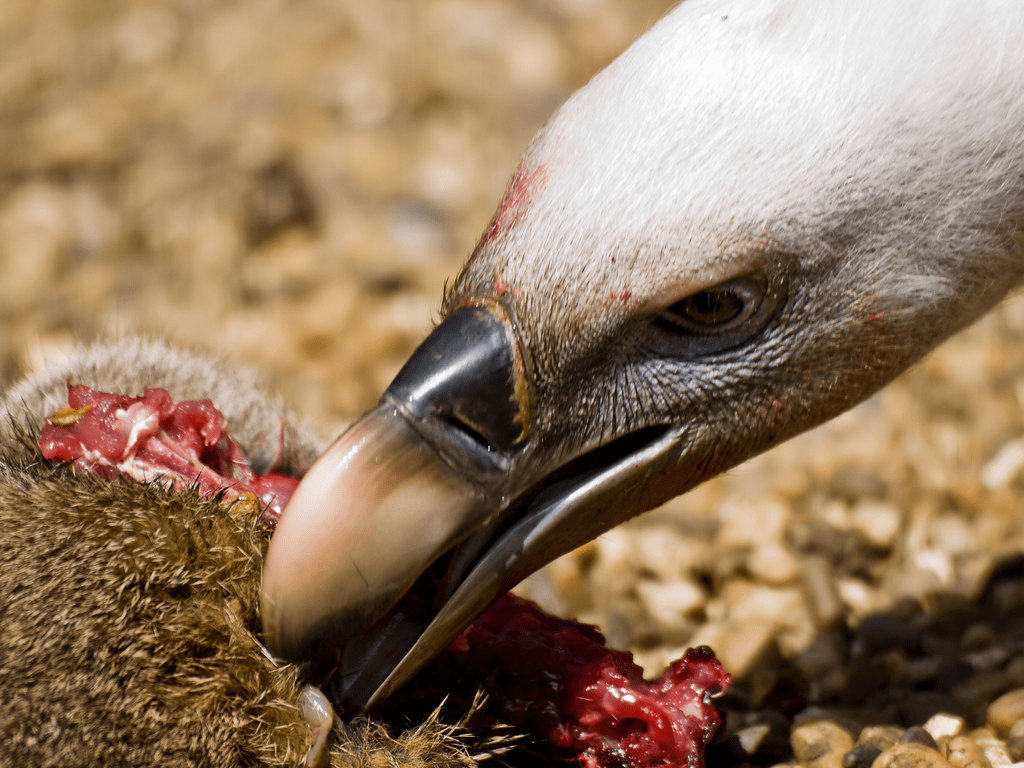
Well, as you may also know, vultures are scavengers, they feed on the flesh of the dead. So, they tend to ominously follow herds of animals. That means, wherever the herd goes, they go. So sometimes they need to migrate long distances. But all that flapping can be a real hassle. You know what’s better? Getting swept up in a thermal current as high as it will go and then just gliding back to earth. Using this tactic Ruppell’s Vulture can travel miles without so much as a flap of a wing. If they time it right, they can even glide from one thermal to the next and ride them like a rollercoaster, up and down the whole way to where they need to go. 

29/05/2022

Bird 248 – Bateleur

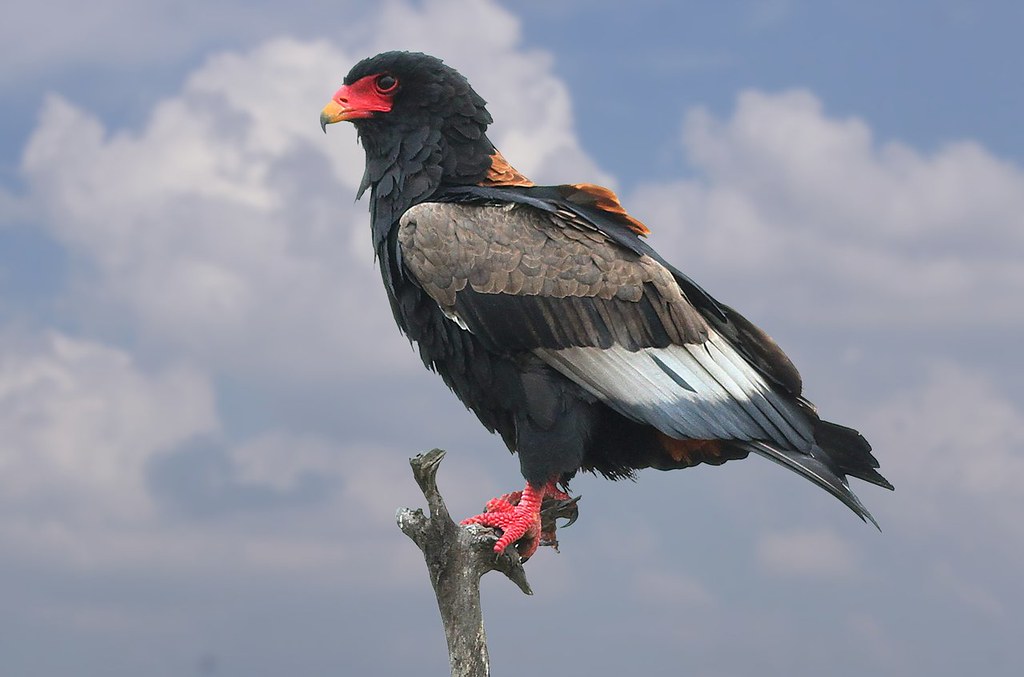
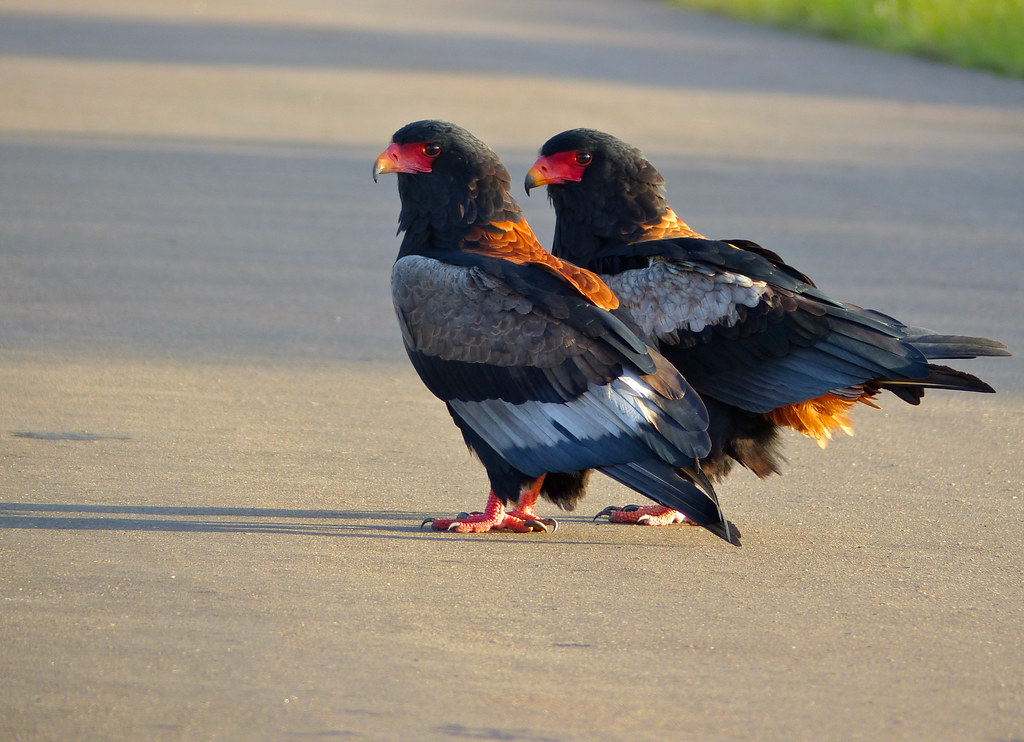
Today we are pleased to bring you a bird that has been described as one of the most strikingly beautiful of all the eagles, the Bateleur.

This is an African eagle that lives in the sub-Sahara regions of the continent. The word ‘bateleur’ comes from the French, literally meaning ‘juggler’, and is a reference to the distinct side to side tilting motion the bird makes while in flight.

Now, everything about the Bateleur is distinctive. We’ve already seen that they’ve been named for their odd flying behaviour, but it doesn’t stop there.

Obviously, just colour-wise you can tell these birds are something a little different. They have grey, black and white patches on their wings. And then their faces, don’t even get me started. Too late, I already have — black hood with a vibrant orange and yellow beak that really pops against the dark background.

But it doesn’t stop there. Oh no. Their silhouette is also bizarre for an eagle. They have almost no tail to speak of along with stubby wings and legs. Even from a distance, these birds stick out like a sore thumb to anyone who knows what to look for.

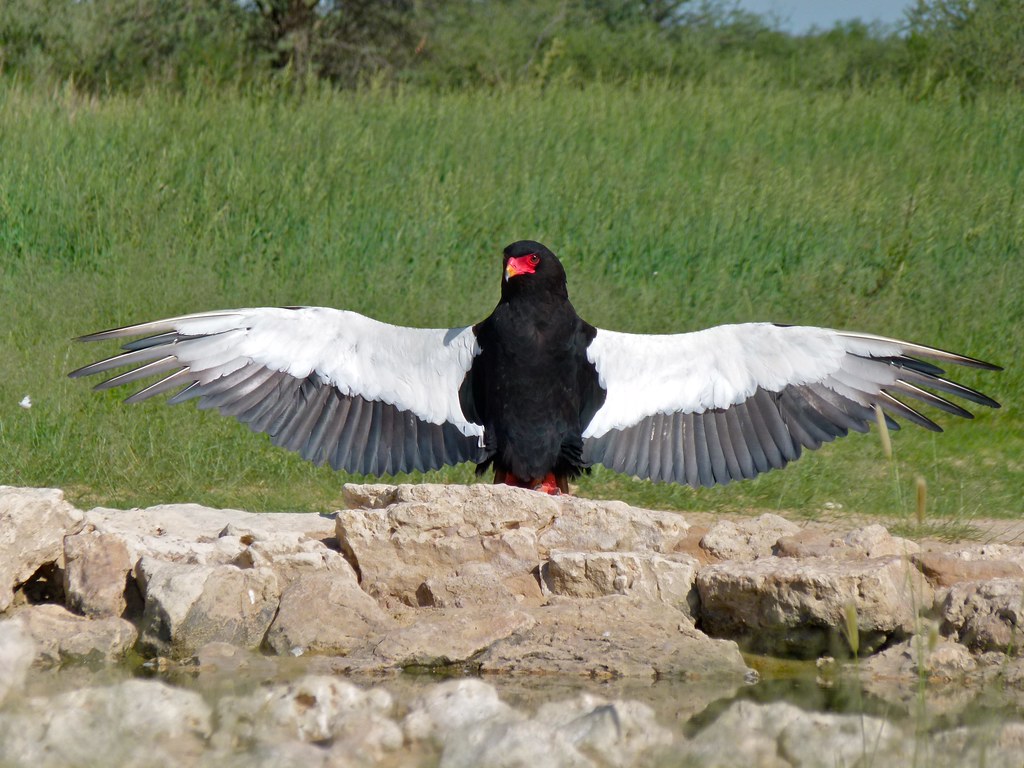
But for my money, the thing that makes the Bateleur truly excellent has nothing to do with how they look, it’s their attitude towards life. these birds know how to pamper themselves. They spend an inordinate amount of time bathing, both the aquatic and sun type.

The Bateleur loves splashing about in water to stay cool, and then they will sit about with their wings splayed and pointed to the sun to warm themselves back up. If birds had day spas, the Bateleur would have platinum membership.

They also have a tendency of laying on ant nests. They wait to be covered in ants before ruffling their feathers. This upsets the ants who then release formic acid. It is believed the Bateleur does this as a way to fumigate themselves and kill parasites that live in their feathers.

What can I say, when it comes to pampering and grooming the Bateleur has it figured out.

22/05/2022

Bird 247 – Japanese Cormorant

On first glance, the Japanese Cormorant (Phalacrocorax capillatus) may seem like any other cormorant. It’s a black and white bird, catches fish, hangs out on rocks where it dries its wings. Rather a common cormorant you might say. Well, once again, you would be wrong.

Japanese Cormorant by Valery Shokrin

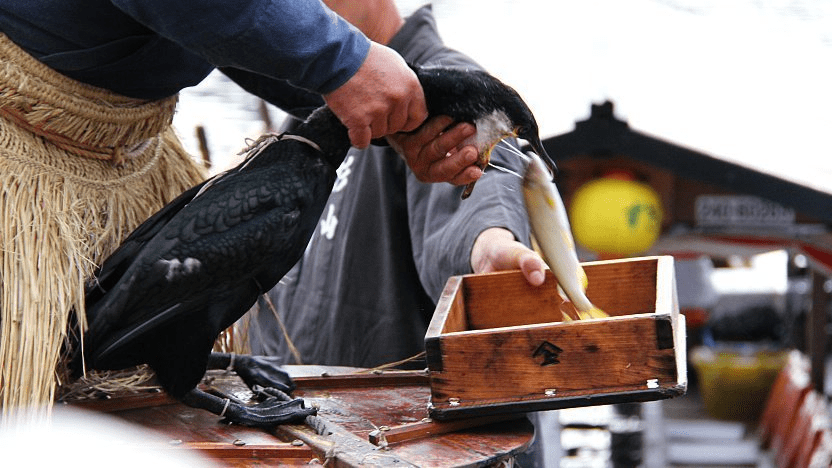
In Japan, people have long used cormorants as a means to catch fish. Of course, in order to get your cormorant to catch and fish and not eat it you need to place a snare around the base its throat. This prevents them from swallowing large fish, while allowing them to hold it in their crop. When a bird has caught a fish, the handler will pull the bird back to the boat, where the Cormorant then spits it up.

Public Domain image

This mode of fishing has been practiced for over a thousand years. On the Nagara River in Japan locals have fished with cormorants for at least 1,300 years. The Japanese taken it very seriously. The fishermen have the official title “Cormorant Fishermen of the Imperial Household Agency” which is proper fancy. Apprentices train for ten years before they can be considered a master. The Cormorants are tethered to a boat on a long line of rope, allowing them enough slack to hunt without risk of escape. They hunt at night and light a large fire off the front of the boat, which helps attract fish, and provides light for the birds to hunt.

One Cormorant fishing was a vital industry, responsible for feeding thousands of people, but these days the tradition lives on as a tourist attraction. In one sense this is positive as the animals are no longer exploited to the extent they were. But in another sense, it has acted to further separate us from the natural world. The practice of Cormorant fishing was a relationship between the master, the birds and the river. You had to understand the habits of the bird to catch the fish. But now the process is industrialized, the role of the Cormorant is largely forgotten, and our understanding and appreciation of the bird diminished. Please pardon the philosophical musings.

This bird was brought to you by special request. Would you like to request your own bird? Good news, it’s a perk for the kind people who support Bird of the Week on Patreon. Why not head on over and see if the bird you’re craving could one day soon wing its way to you.

15/12/2022

Design a site like this with WordPress.com
Get started