Bird 356 – King Penguin

Today we’ve got something a little different: the King Penguin.
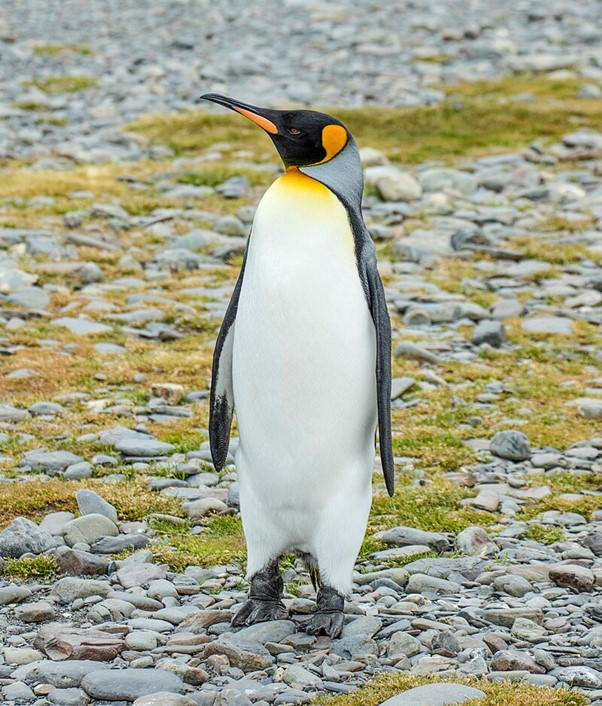
 Now the King Penguin is like a mini Emperor Penguin … if you can call a bird that stands a metre tall mini. They look remarkably similar to the Emperor Penguin, but they’re about 25% shorter in stature, hence the lower regal title. The real difference between the two birds is where they live. The Emperor makes their home on Antarctica proper, while the smaller King breed primarily on the small subantarctic islands that surround the southern continent.

But while that’s all fine and dandy, today I wanted to introduce you to one King Penguin in particular: Major General Sir Nils Olav III, Baron of the Bouvet Islands. That is one fancy name, so what’s the deal? 
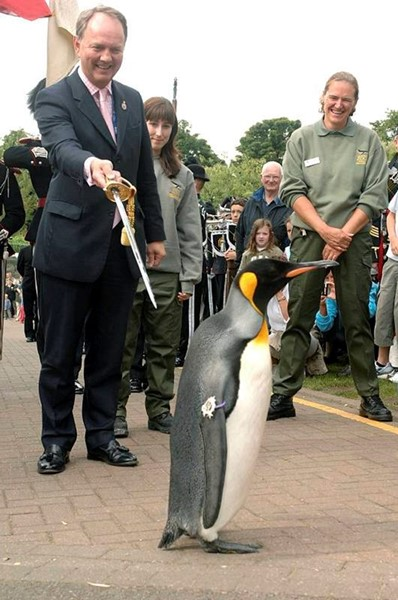
Well, Sir Nils lives in the Edinburgh Zoo in Scotland, but he also serves as the mascot and colonel-in-chief of the Norwegian King’s Guard. Which seems like an odd turn of events. Well, as it so happens, the Zoo first received their King Penguins as a gift from the Norwegian Government way back in 1913. Fast forward to the 1960s and when the King’s Guard visited the Zoo, they took a shine to the Penguins and one of the officers arranged for the Guard to officially adopt one, that penguin was Lance Corporal Nils Olav I.
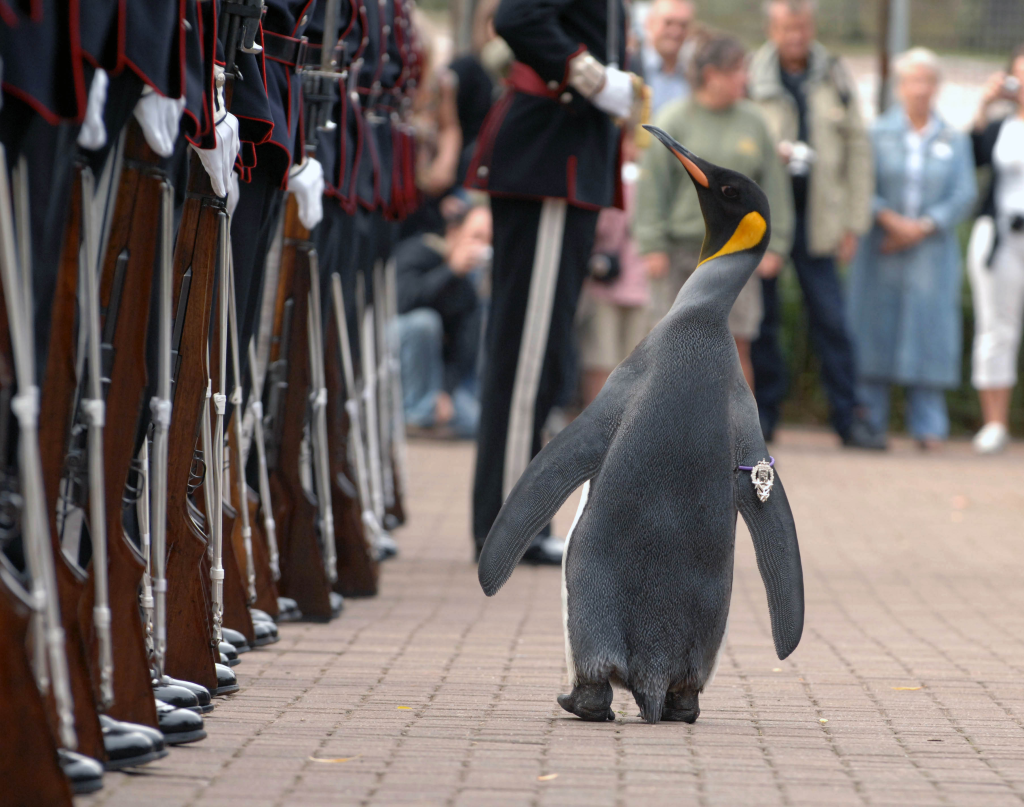
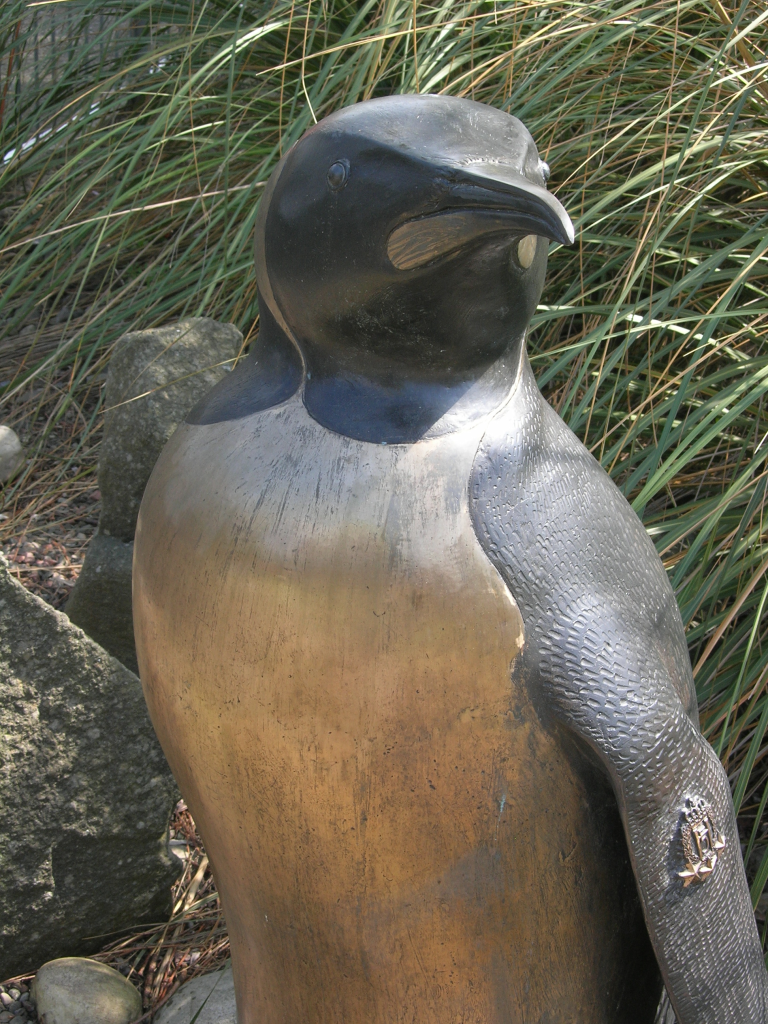
It then became tradition that every time the King’s Guard visited the Zoo Nils would receive a promotion. Since 1972 he has been promoted seven times and currently holds a Knighthood, a Barony and the military rank of Major General (all styles and titles have been officially granted by the reigning Norwegian monarch of the time).  Give it another couple of decades and this penguin will be Supreme Ruler of the World, and frankly I look forward to the glorious day when a King Penguin will finally outrank and Emperor. Nils also has a bronze statue, and makes routine inspections of the Guards.
Now, you may have noticed that this Nils is the third Nils. Indeed, the life span of a penguin is sadly limited, and since the 1960s a couple of King Penguins have come and gone. Nils II took over the post in 1982, and Nils III was elevated to the position in around 2010. So is this just a piece of strange whimsy? Absolutely. But never forget, the greatest mark of maturity is rediscovering the seriousness of a child at play. So I say, give that Penguin another title!

26/05/2024

Photo credit:

1: By Lee Carson on Flickr – Nils Olav on Flickr, CC BY-SA 2.0, https://commons.wikimedia.org/…

2: Sir Nils receives knighthood.

3: By Mark Owens – https://commons.wikimedia.org/…

4: By Farmer erik – Photo taken by myself (Erik Swanson), https://commons.wikimedia.org/…

Bird 355 – Pygmy Falcon

Golly, do I have a special treat for you today. Get ready to meet one of the most adorable little natural born killers you ever did see: the Pygmy Falcon. Look at his tiny face, you just want to smoosh him. 

Let’s not lose our head now people; this is a serious bird, deserves to be taken seriously. Even if it is as cute as a button. The Pygmy Falcon lives up to its name. These little raptors are only about 20cm long and weigh about 60 grams. For some context they’re about half the size and weight of a normal Peregrine Falcon. 

Now, I know what you’re thinking: where can I go to see one? Sad news: they’re African desert dwellers, with two separate populations centred in Ethiopia and Namibia. So probably not high on the list of birds you’re likely to bump into.

But for a Falcon they’re pretty typical: spend their days stalking small things to eat like tiny rodents and lizards. 

They do have one strange quirk. They tend to nest in abandoned weaver nests. I mean, why go to the trouble of building a nest yourself. But then they prominently smear poop on the nest entrance, and no-one is really sure why. The leading theory is that it may act as a deterrent to snakes. And to be fair, a faecal smeared hole would probably deter me from going in there. So that’s a little bit gross, but you know what, no-one is perfect … which is what I used to believe until I saw this bird, 10/10.

19/05/24

Photo credit:

1: “African Pygmy Falcon” by Becky Matsubara

2: “African Pygmy Falcon” by Just chaos

3: “File:African Pygmy Falcon Female.jpg” by Sumeet Moghe

4: “african pygmy falcon, african pygmy-falcon, falcão-pigmeu-de-dorso-cinzento, fauconnet d’afrique, halconcito africano, pygmy falcon” by scaup

Bat 354 – New Zealand Long-Tailed Bat

Today I’m going to tell you about one of the greatest controversies that ever struck the bird world. Each year, New Zealand runs a competition to crown their ‘Bird of the Year’. Such luminaries as the Kiwi, Kea and Kakapo have all previously walked away with the win. But in 2021 a bat, a dirty old bat, was cheekily put on the ballot. Some people call them sonar birds, I don’t buy it.

But even more shocking than its entry into the race was the fact the winged rodent won Bird of the Year without even being a bird. Outrage! Well, if it’s good enough for the Kiwis it’s good enough for BOTW, so let’s see what this guy is all about.

So first up, bats have an unusual claim to fame in New Zealand: they are the only terrestrial mammals native to the island. Go through a list of native fauna for New Zealand and you won’t even find so much as a shrew, they got birds a plenty, but on the old mammal list, the bat is the only one.  

Not only that, but the bat is tiny. They’re only about the size of a thumb and weigh a measly 8-12 grams. They hunt like most other bats, using echolocation in the early evening to track down and swoop upon flying insects. 

But the reason for their inclusion in the bird competition was to raise awareness of their conservation status. The Long-Tailed Bat is critically endangered. And just like the birds of New Zealand, they face similar threats. The introduction of predators, and deforestation has had a devastating impact on their numbers. Their inclusion in the competition was less about courting controversy, and more a reminder of the interconnected nature of … well, nature. Actions taken to protect the bat will help the birds. No creature exists in a vacuum; rich biodiversity in any ecosystem benefits all animals.

So I for one welcome the New Zealand Long-Tailed Bat as an honorary bird. 

12/05/24

Bird 353 – Sultan Tit

It’s time we had a bird with a bit of flair, and there is no better candidate than the Sultan Tit.

Their hilarious name aside (not the monarch of mammarys), they are easily one of the most handsome and striking of all the small songbirds. A more unusual species of Tit, or as the Americans call them Chickadees, the Sultan is also the largest member of the family. They’re a bird from the forests of South East Asia.

The prominent golden crown that they wear so nobly upon their brow is usually flush back smooth when they’re calm and going about their business. But when they become alarmed or agitated that’s when it flairs forward, acting as a sign of warning, making the little bird appear bigger and more impressive.

Despite their bright colours the Sultan Tit is rather inconspicuous in its forest home, with it noisy rattling calls usually being the thing that alerts people to their whereabouts. But here on the internet we don’t have to go schlepping about in the mud and undergrowth to see one, so let me leave you with an extra picture, because honestly, this is the only reason I selected them for this week, because they look so dang cool.

05/05/24

Bird 352 – Eurasian Collared Dove

Today we’re going to meet a bird that has spread over the face of the earth like a novel virus hitching a ride on the world’s airlines: the Eurasian Collared Dove.

But whereas a virus is rather unpleasant, the Collared Dove is a charming bird. It’s a pigeon to start off with, and we all know I love a good pigeon. They’re closely related to the Turtle Dove, about the same size as a common city pigeon, but they have a much sleeker and trim physique. Their most notable feature is the half collar on the back of their neck, fully popped like the the little James Dean rebels they are.

Maybe the most amazing thing about these birds though is not their pigeon nature, but there ability to spread. Collared Dove are not migratory birds, but they are what is called highly dispersal. In other words, they have a built in tendency to seek new lands, striking out to colonise and claim territory with the kind of gusto that would bring a tear the British Empire’s eye.

Just how good at spreading are they? Well, at the end of the 19th Century they had a natural range largely centred over central China, India and into the Middle East. A century later they had spread to all of Europe, even so far as Scandinavia. Over one hundred years they moved westward at a pace of about 45 kilometres and year, until today they are everywhere, although they have not yet established a colony on Iceland.

More impressive then their European conquest though has been their American. In 1974 about 50 Doves got free in the Bahamans. Today you can find Collared Doves in every state of the USA, and all over Mexico. They’re expansion in North America was clocked at the blistering pace of 100Km a year.

While they have the drive of a conquering avian empire, unlike they’re human counterparts, Collared Doves have not had an overly negative impact on other natives birds. Some people fear they may end up competing for resources and could potential spread disease, but most evidence so far shows that they exist relatively peacefully alongside the original inhabitants of the lands they overrun.

28/04/24

Bird 351 – Eleonora’s Falcon

This week we have maybe one of the most devilish birds getting around, Eleonora’s Falcon.

As a quick fun fact, the bird is named after a ruler in Sardinia from the middle ages, Eleonora of Arborea, who was the first person to pass laws protecting Hawk and Falcon nests, so that’s cool.

And at first blush, there doesn’t seem to be anything particularly nasty about this bird. They’re a diminutive species of Falcon, similar in appearance to a Peregrine Falcon, but smaller. As such, for most of the year, their main source of food are insects, because they’re not really big enough to go after larger prey. Eleonora’s Falcon is also highly migratory, moving between Europe and Madagascar, making a 9,000Km journey every year that takes them over the Sahara Desert.

But it’s during the breeding season when their mean streak comes out. To feed their babies they need something a little more substantial than dragonflies. So they switch to hunting small songbirds. But Eleonora’s Falcon is fussy about freshness. So rather than kill and store the little birds, they imprison them, sometimes for days, before feeding them to their chicks. The Falcon achieves this by plucking out their flight and tail feathers and then wedging them into a tight crevice, ensuring that there is no chance of escape. As far as I know, this is the only example of a bird imprisoning its dinner for a future meal. Pretty rough.

20/04/24

Photo credit:

1: “Eleonora’s Falcon – Carloforte – Sardinia CD5A3328” by fveronesi1

2: “Eleonora’s Falcon, Pair” by Francesco Veronesi from Italy

3: “eleonora’s falcon, falcão-da-rainha, faucon d’éléonore, halcón de eleonora” by Paolo

Bird 350 – Pink-Eared Duck

Today we meet an unusual Australian duck: the Pink-Eared Duck.

They’re named after a tiny patch of pink feathers found behind their eyes. But while this may be their namesake it is probably their least distinguishing feature. When it comes to plumage the most recognisable trait is their strong black and white banding, leading some people to call them the Zebra Duck. But really, it is their odd shaped bill that really makes them stand out.

When it comes to ducks, their most defining characteristic usually relates to what they eat and how they hunt. The three main strategies are dabbling: this is where they stay on the surface of the water, but plunge their head underneath to eat any shallowly submerged food. 

Diving ducks: they swim under the water usually chasing fish or other aquatic bugs. 

And sea ducks, which as the name suggests they live on the open ocean. 

But the Pink-Eared Duck doesn’t really fit any of these categories, and as a result, no-one is really sure who their closest relatives are. Instead, they are mainly filter feeders. They use their odd, shovel-shaped bill to filter water, picking out plankton and algae as their main source of food, although they do also go after crustaceans and insects when they’re about. In one sense, it makes this little duck the blue whale of the bird world.

The other odd thing about this bird is their call. Rather than the traditional quack that we would expect from a duck, Pink-Eared Ducks make a chirping, chattering noise, more similar to a small parrot. To catch a listen you can find some audio on their ebird profile here: https://ebird.org/species/pieduc1

14/04/24

Photo credit:

1: “Pink-eared Duck gatton08” by Aviceda

2: “pink eared ducks” by Jim Bendon

3: “Pink-eared Duck” by sufw

Bird 349 – Magnificent Frigatebird

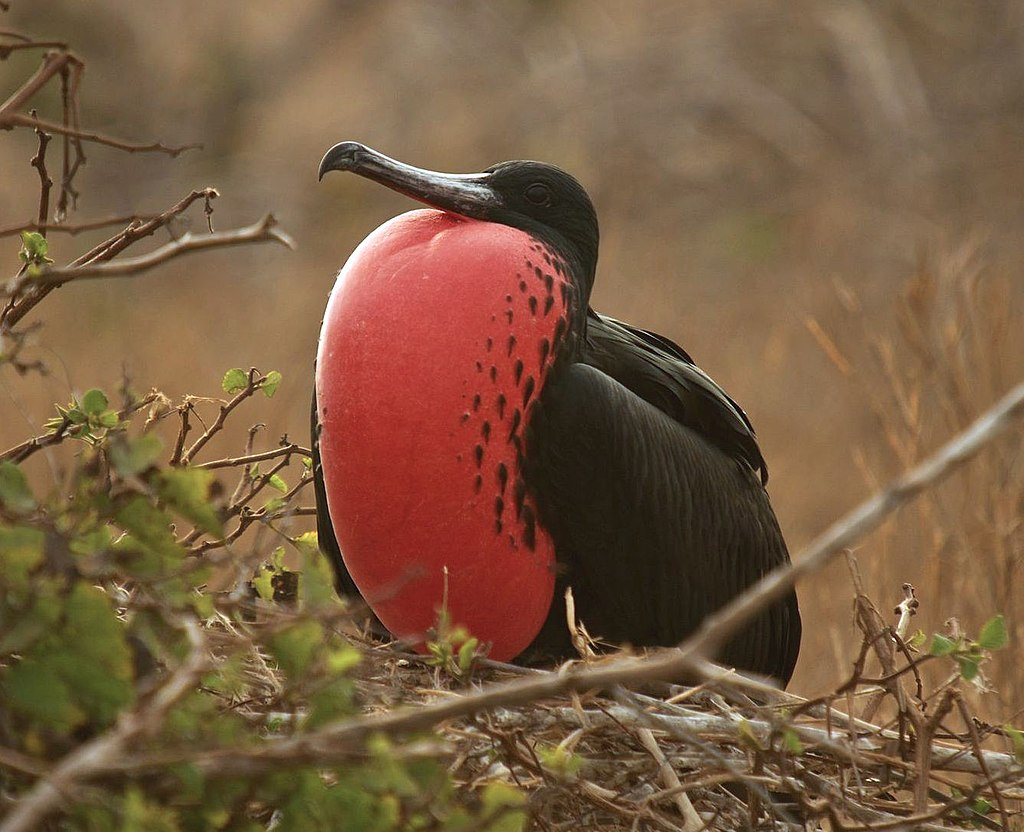
This week we meet the bird that wanted to be a frog, the Magnificent Frigatebird. And I know reading that name you can’t decide if it also wanted to be a sailor in the Queen’s Navy, or if it’s the thing you say when you just don’t care anymore. It’s a bird of many shades, so let’s see what it’s about.

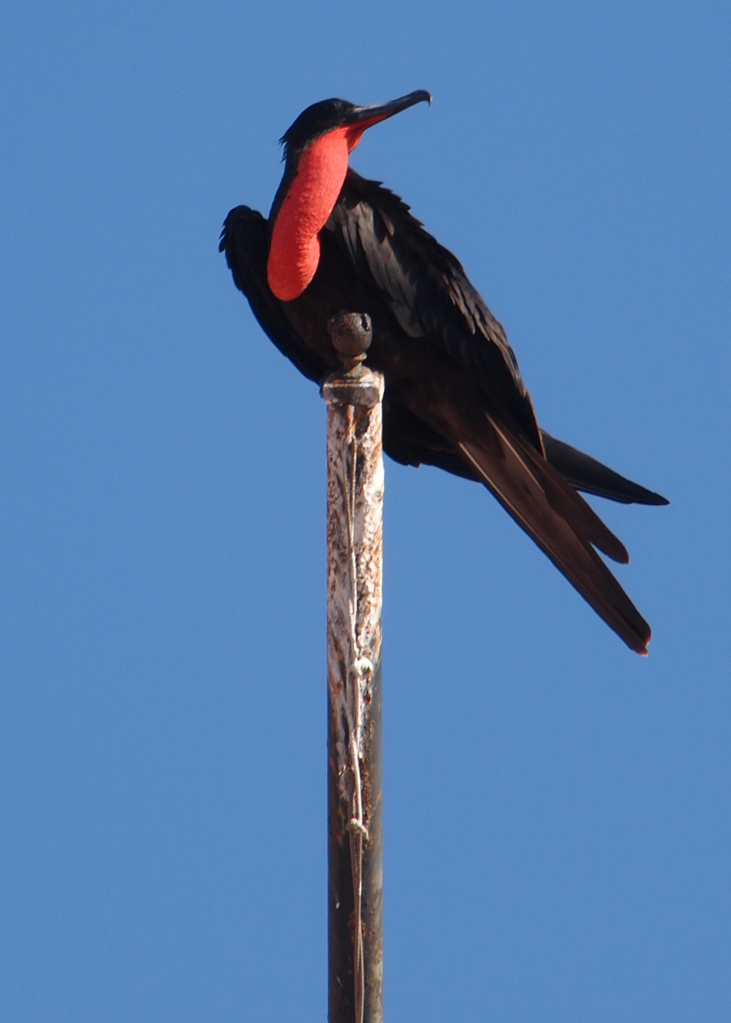
First, we better deal with that throat pouch. The technical term is the gular sac. It’s an attribute of the male and is inflated during the mating season, as a clear an obvious sign to any nearby female that he is perfect father material. Some birds grow colourful plumes, the Frigatebird went all in on inflatable throat pouch. Silly? Yes. Amazing? Also yes.

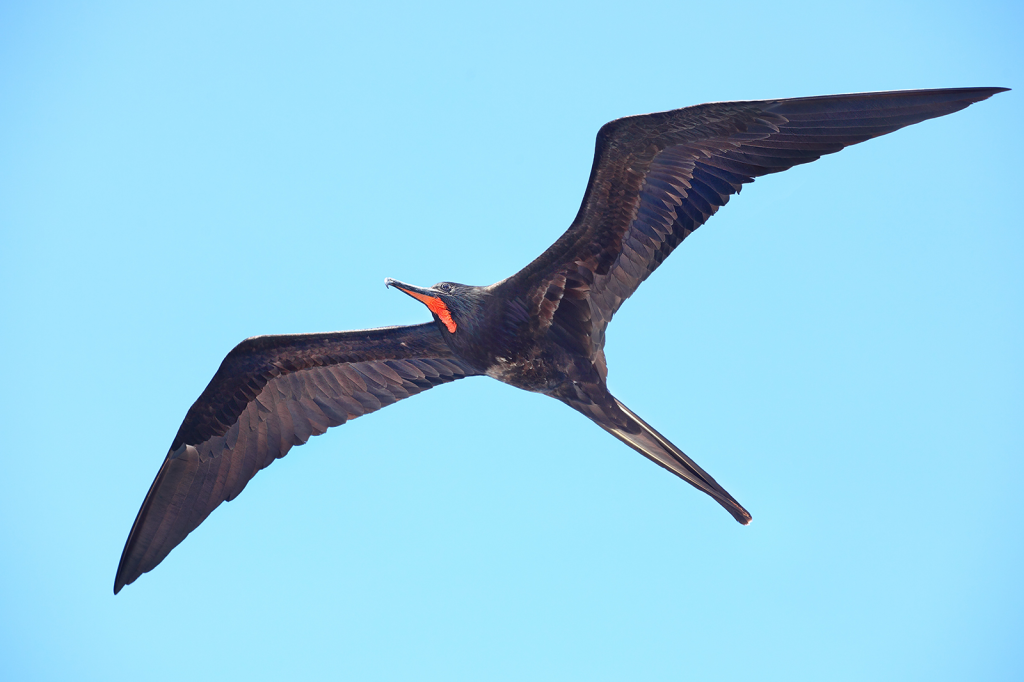
Now, the Magnificent Frigatebird is an ocean going bird of the Norther Hemisphere. They can be found in both the Atlantic and Pacific Oceans. And they have made a couple of odd choices when it comes to the seafaring life. They have long agile wings, often over 2 meters across. This helps them to stay airborne with little effort, which is important because the Frigatebird does not have waterproof feathers. Similar to their close relatives the Cormorants, the Frigatebird doesn’t produce waterproofing preen oil. So while they live life on the open ocean, they never alight on the water, and never dive for their prey.

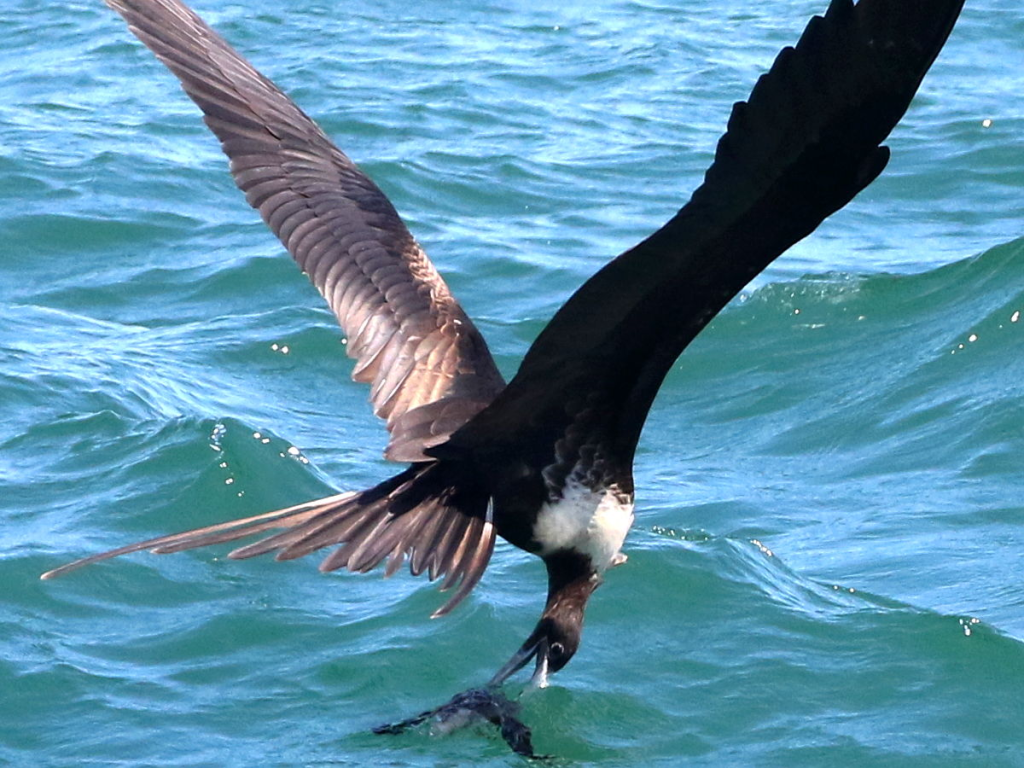
Instead they have two different hunting strategies, designed to keep them high and dry. They will skim along the surface of the water and pluck any prey foolish enough to get to close to the air. Otherwise they will harass other birds, relentlessly bullying and pecking them in the air until they drop their catch. The Frigatebird will then go into a dive, and pluck the plunder from the air before it hits the water. Because of this behaviour they are sometimes called the pirates of the bird world.

So while they may look low-key ridiculous, they remain one of the most feared birds of the world’s waterways. You know, if you’re like a Puffin or something. 

07/04/24

Photo Credit:

1: By Andrew Turner from Washington, DC, United States – Frigate BirdUploaded by snowmanradio, https://commons.wikimedia.org/…

2: By John Picken from Chicago, USA – FrigatebirdUploaded by Snowmanradio, https://commons.wikimedia.org/…

3: By Benjamint444 – Own work, GFDL 1.2, https://commons.wikimedia.org/…

4: By Peterwchen – Own work, https://commons.wikimedia.org/…

Bird 348 – Big Bird

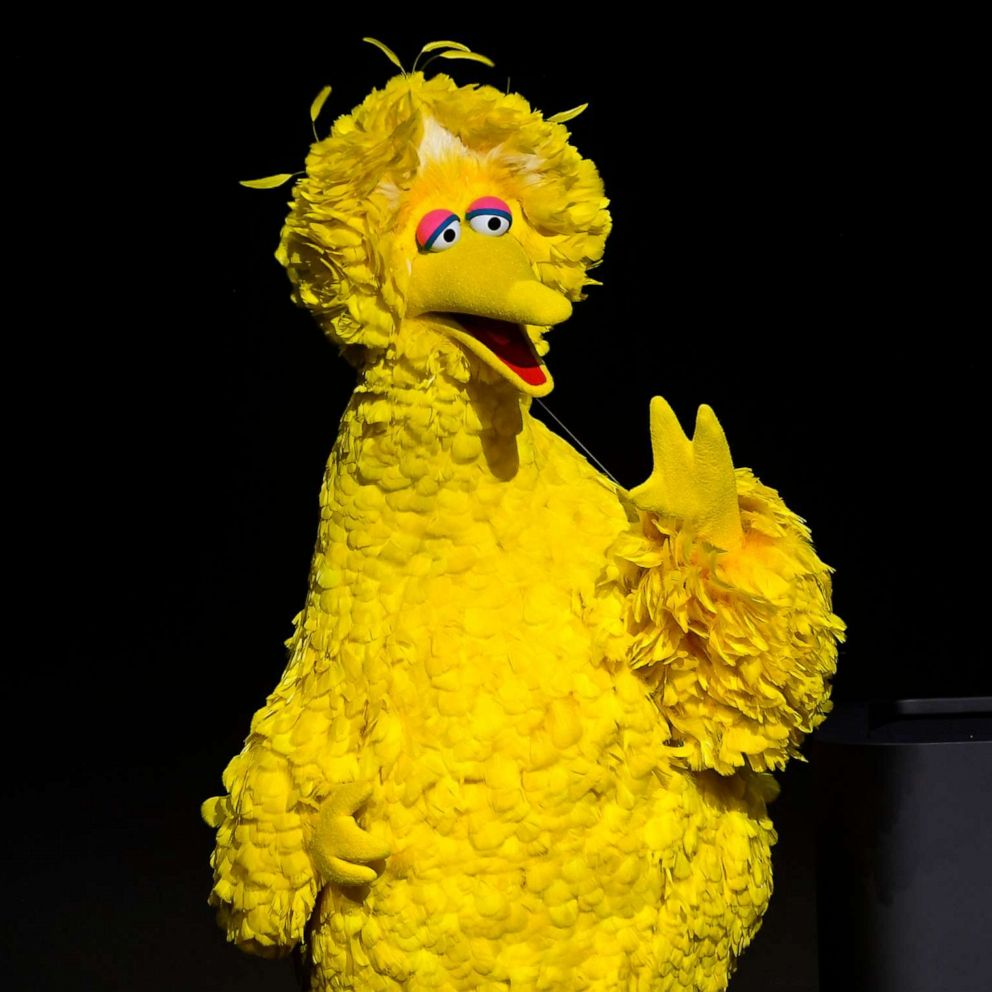
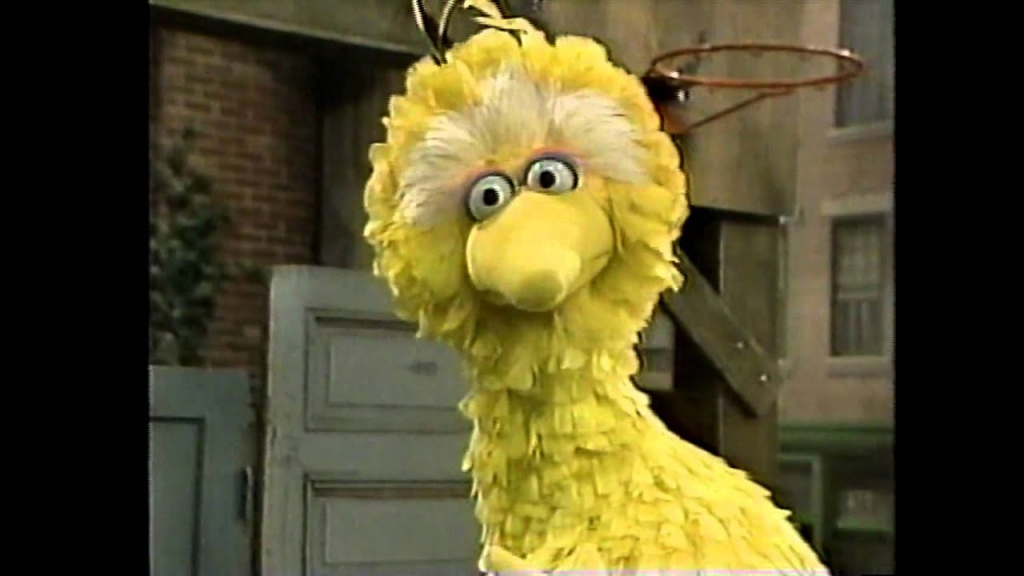
Today we meet one of the great mysteries of the avian world, the Big Bird.

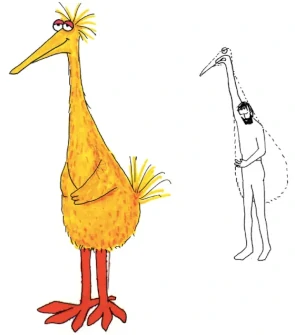
First sited in 1969, the Big Bird has confounded ornithologist for decades. To date, no-one is sure where the Big Bird belongs in the avian family tree. Some claim the Big Bird is an aberrant form of Canary, while others say it is a flightless Golden Eagle. And yet, when we look at its morphology, the Big Bird seems to have more in common with a Stork or other large wading bird. It just doesn’t make sense.   

The Big Bird is an incredibly rare species, to this day only one has ever been sited. While this has lead some to speculated that they are a victim of human development and habitat destruction, the one known individual has adapted remarkably well to the urban environment, and lives almost exclusively on city streets. Much like the House Sparrow, the Big Bird may now be dependent on humans for survival.

Delving deeper into their anatomy, more mysteries are revealed. X-rays show the internal structure of the Big Bird resembles a human wearing a chicken suite. It could be that the Big Bird is nothing more than a decades-long elaborate hoax. Conversely, it may reveal that there is much left in our natural world that we simply don’t understand. 

Either way, more research is clearly needed to get to the bottom of what the Big Bird is and how it fits into the avian family tree.  

I wish you a joyous First of April.

01/04/24

Bird 347 – Keel-Billed Motmot

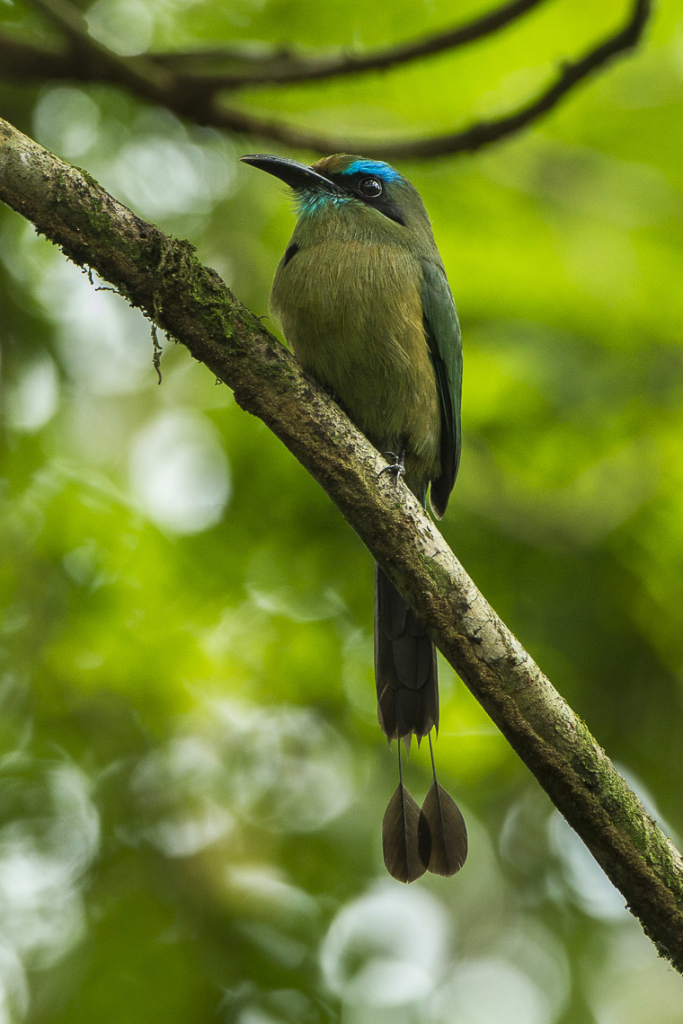
Today we meet a curious little bird from South America, the Keel-billed Motmot. Now, you may have never heard of the Motmots, and that’s tragic, because this family of colourful birds could brighten anyone’s day.

But what is a Motmot? They’re kinda like a Hummingbird if it decided to be carnivorous. They are pint-sized, but related to Kingfishers and Kookaburras, and so these colourful beauties spend their days on the lookout for bugs and small reptiles to eat. 

You may have noticed that fancy little racquet-shaped tail they’re sporting. Researchers have discovered it has an unexpected purpose. When the Motmot is going about its business and it spots a predator, it will stop and start wagging its tail about. This seems counter-intuitive, because the tail wagging display makes the otherwise semi-camouflaged bird stand out in the forest. 

But it is believed that this is a signal to the predator, letting it know that the Motmot has seen it and is prepared to flee if necessary. “But gee whizz Mr Predator, running away is a lot of work, I’m going to waste energy high-tailing it, you’re going to waste energy chasing me, and we both know I’ll get away anyway, so why don’t we just pretend we didn’t see each other and go about our business.”   

Researchers believe it is a display that saves both the prey and predator energy. 

This is a rather rare form of display. Usually when we see birds with fancy feathers and ornamentation it is for the benefit of a mating display. but this is an example of interspecies communication. A quirk of evolution that has given us a rather handsome bird.

31/03/24

Photo credit:

1: By Francesco Veronesi from Italy – Keel-billed Motmot – Sarapiqui – Costa Rica_S4E0981, CC BY-SA 2.0, https://commons.wikimedia.org/

2: “Keel-billed Motmot” by Festive Coquette

3: “Keel-billed Motmot” by ryanacandee

Design a site like this with WordPress.com
Get started