Today I’m going to introduce you to one of the world’s most famous birds. There is probably no bird that has featured in more Hollywood films than the Common Loon (Gavia immer).
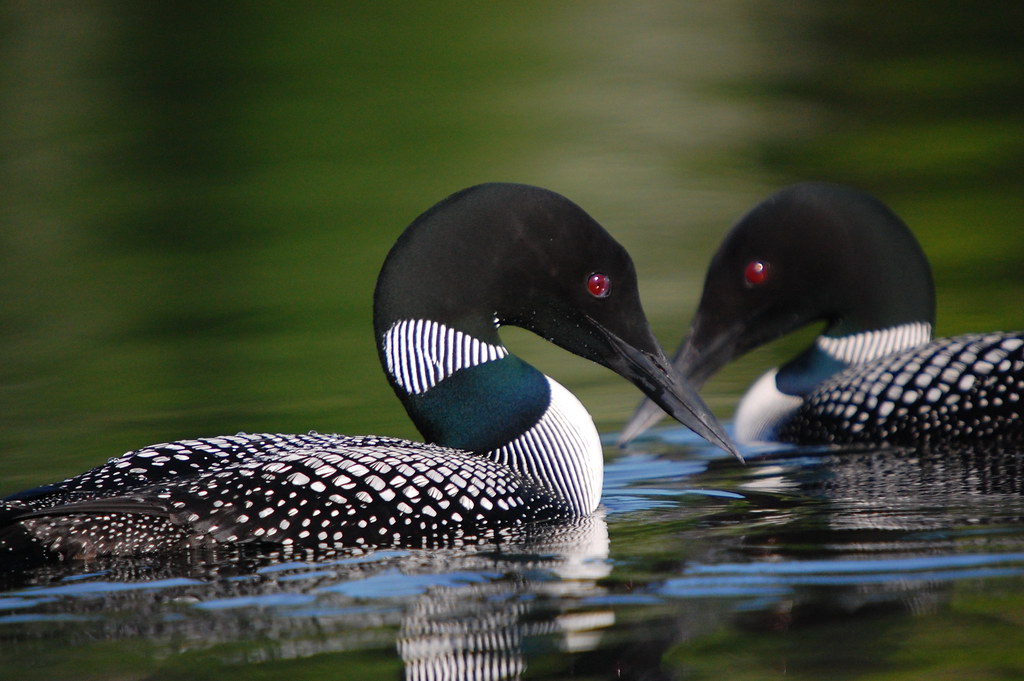
What’s that you say? You can’t think of a single film where you’ve seen this bird. Well, that’s probably because it rarely features in the flesh, but almost always as a disembodied voice. If you’ve seen Game of Thrones, Rick and Morty, 1917, Avengers Infinity War, Harry Potter, Platoon, Out of Africa or literally hundreds of other movies and shows, then you have heard the call of the Common Loon. Or to be more specific, you have heard their wail.
Whenever a film producer wants to evoke a sense of haunting wilderness or isolation overlaid with a touch of the mournful or the melancholy, they go straight to the wail of the Loon. If you’d like a little reminder of this sound, that I promise you’ve heard before, then have a listen.
There is something deeply other-worldly about the long drawn out wail, which is basically just their contact call. It’s the Loon’s way of letting its mate know where it is, and as dusk falls the pair have a habit of calling out to each other to keep in touch. But while Hollywood may have appropriated the Loon for its own purposes, these birds are rather cool.
They’re a North American water bird. There are several species of Loon, but they aren’t really related to anything else. As such they have a couple of odd features … beyond their haunting voice. They evolved to spend their lives almost exclusively on the water. They have larger, powerful flippers that they use to dive and swim under the water in hunt for fish and crustaceans. But as good as their feet are for swimming, they are almost useless on land. Their feet are set far back on their body, which means it is almost impossible for them to stand, so they try not leave the water, unless it’s to make a nest.

For their body size, they also have quite stubby wings, which makes it difficult for them to get into the air. To take off they need a long runway and skip along the surface of their lakes while building up enough speed to get airborne. As such, it is also impossible for the Common Loon to take off while on land, they need to be on water.

To make up for these short comings, the Loon does have the delightful habit of carrying its babies around on its back. And I mean, that’s so adorable there’s almost nothing I wouldn’t forgive them.

05/12/2021
 Bird of the Week