Sometimes there are birds that really work their way into the arts. And when it comes to literature, I can’t think of a bird more famous than the Nightingale (Luscinia megarhynchos)
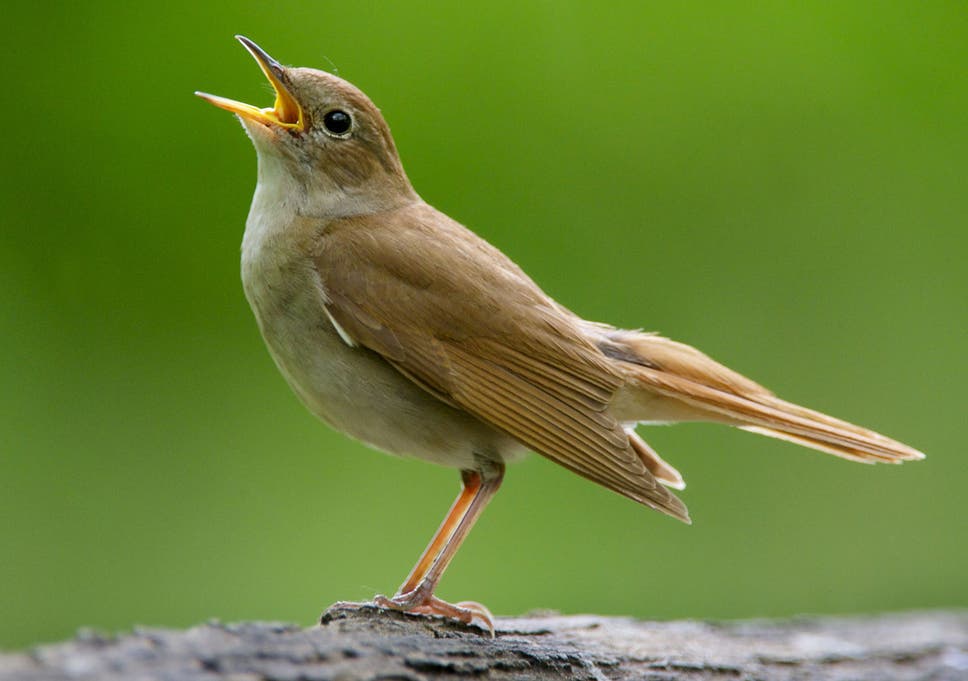
To look at a Nightingale is to be unimpressed. They are a plain, grey-ish, brown-ish looking bird, from the Flycatcher family.
So the Nightingale is famous for exactly one thing, and that’s singing … during the night, as its name suggests. It’s hard to describe exactly what they sound like, so if you have the inclination, and the time, here is a three hour video of a Nightingale singing.
It was originally believed to be the female that sung, but it is now known that only unpaired males sing as a way to attract a mate.

The impressive vocal range, and their strange habit of singing at night served as inspiration for many writers. They were usually used as a symbol of creative expression and have featured in the works of Homer, Virgil, Shakespeare, and most famously in Keats’ poem, Ode to a Nightingale. But my favourite appearance of the Gale is in Oscar Wilde’s fairy tale, The Nightingale and the Rose.
In the story, a Nightingale scarifies its life by singing all night while pressing its heart into a rosebush thorn so a red rose may bloom (apparently that’s the only way to get a red rose: with the blood and song of a Nightingale, go figure). A love-sick student needed to find a red rose to entice his sweetheart to dance with him. And the Nightingale, overhearing his woe, decides that to sacrifice its life for love would be a worthy deed. In the end, the girl dances with a wealthy man’s son, because he sent her jewels. What can I say, girl was a gold digger. Meanwhile, the rose gets thrown in the gutter and the Nightingale’s sacrifice goes unnoticed. It’s a heartbreakingly beautiful story.

Funnily enough, in the same collection of fairy tales there’s also a story about a Swallow that sacrifices its life to do a good deed that goes unnoticed… Guess Oscar Wilde felt birds were more noble and pure than us people.
And you know something? I think he was right.

23/06/2019
 Bird of the Week